Category Archives: Research and Reflection

research point – barthes’ ‘the rhetoric of the image’

Read ‘Rhetoric of the Image’ and write a reflection in your learning log.
• How does Barthes define anchorage and relay?
• What is the difference between them?
• Can you come up with some examples of each?
• How might this help your own creative approaches to working with text and image?

– IaP coursebook – p.79

My final assignment for Context and Narrative drew heavily on Barthes’ essay by using it to provide a model for a ‘made up’ image in the form of the pasta advertisement, juxtaposed with a poem. In planning the image I engaged quite closely with the text, but I shall try to recap here. It is certainly a text that warrants careful re-reading.
Anchor and Relay:

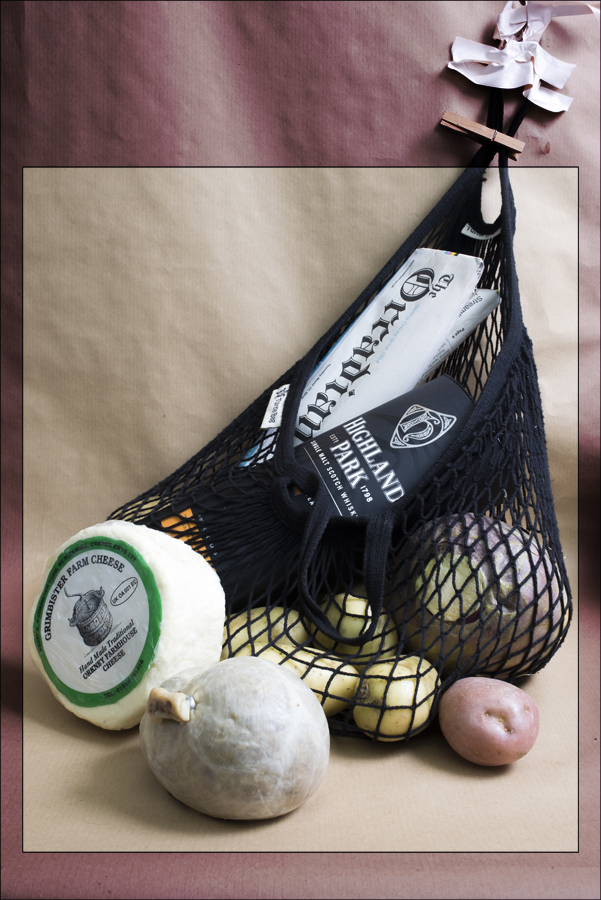
Both are terms relating to text associated with images, a practice so widespread that it is difficult to find ‘pure’ uncaptioned images anywhere. Images are viewed as ‘polysemous’ with a huge range of possible interpretations and meanings. Text can dominate this plurality of meanings when the image ‘duplicate[s] certain of the text by a phenomenon of redundancy’ (anchorage) or else the text can be used to ‘add fresh information’ to that contained within the picture (relay).

So:

  • Anchorage – Text answers the question ‘What am I looking at?’, narrowing down a number of possibilities to that expressed in the associated text. The image becomes a single thing, with an approved reading supplied by the words. In other words the text dominates the process of producing meaning for the viewer. This is the most common way that text is used with images (in newspaper captions, advertisements etc) and represents a reduction of the possibilities of the image.
  • Relay – new, extra information is provided by text (or speech in the case of comic books or films) which augments and moves on the content available in the image itself. Instead of dominating the image, text works in a complementary way to the content of the image.  Image and Text play equal parts in a narration, organised as a series of syntagms (ie in a sequential, progressive way).

Anchors lend themselves to certainty, shutting down options and seem directly related to an indexical reading of the photograph as a direct objective trace of a real object; they specify which set of connotations are sanctioned for the use of the viewer. Relays offer more scope for interpretation and work on the part of the viewer, expanding the possibilities for both connotation and more complex narratives. Relays also  – at least tacitly – acknowledge the possibility of the existance of a narrator, telling the story, while anchors present a story as existing, a latent presence within the image.

Some Anchors – Labels on pictures of food in menus or above the service area in take aways; newspaper captions; labels in family albums; simple descriptive titles.

Some Relays -Dialogue in films (or caption cards in silent films for that matter); Allusive titles relying on knowledge not contained in the image (classical painting based on Greek or Roman myths, say); captions where the information relayed is not present in the image.


I could use this, immediately, in revisiting my (superceded) early idea for assignment three. I had hoped to be able to show my thought processes as I chose where to be at set points in my journey to work in order to be able to make the simplest transition to the next stage.

Starting at Walthamstow Central, sitting in the 3rd coach from the rear of the train allows me to step straight into the way out at Oxford Circus, where – after I go up one level on the escalator – I can then get the easiest, least congested path to the Westbound Central Line Platform. Then if I wait by the waste bin, opposite the peeling paint, I can get on the next train after arriving at White City, disembark and go straight up the stairs.

There was way too much information to get across here, to leave it entirely to the pictures. There is a lot of discussion online about the limitations of the philosophy of ‘show – don’t tell’ in visual story telling; indeed Barthes questioned the idea that we are becoming a more visual/less verbal culture in the original essay in 1964. If I could have added text in some way – sometimes anchoring by reducing the chaos of what you were looking at to a manageable chunk of information; in others adding relays such as recordings of (or the script for) announcements about the next station – I maybe could have got it to work.

I think I will try this, using a mixture of new pictures and audio recordings to augment the slideshow version of that assignment for exercise 4.5…

Reference:

  • Barthes, R (1964) Rhetoric of the Image from trans. Heath, S. (1977) Image Music Text (Fontana Press, London

I have spent a fair amount of time working through the search results produced by using the search string  – Barthes Anchor Relay – on google. It is interesting how everyone seems quite certain of what an anchor is; thinking on relay – mostly still centred around Barthes’ identification of it as a feature of cinematic or comic strip narrative –  is much more diffuse.

nftu #10 – a further thought on August Sander

Reading Max Kozloff’s essay, New Documents Revisited (part of the introduction to Meister, S. H. (2017) Arbus, Friedlander, Winogrand – New documents, 1967.  Museum of Modern Art, New York) the following sentence jumped out at me from the section on Diane Arbus (p.24):

‘Growing out of that tradition [commercial studio practice…based on deference to the sitter’s performance] Sander came to visualize pictures that were about personal performance, not an endorsement of them.’

This seems to me as good a way as any of describing the effect of pictures like that of the Pastry Cook in Face of Our Time (1929, plate 16) as he stands there in his kitchen,  spoon and bowl in hand, hidden behind his moustache in his white coat. There is an implied distance between Sander and his subjects that is vital, I think and that lack of endorsement is at the heart of it…

nftu #9 – personal narrative and a question of curation

Now, I’ve taken all the pictures for Assignment 3 on the underground, I’ve got time to read during my commute again. This morning I read the interview with Sonia Boyce in the Guardian, which (besides the obvious relevance of the furore about the – temporary – removal of Hylas and the Nymphs from Manchester Art Gallery to stuff I had been thinking about the male gaze and the representation of women in art – there’s even reference to Berger’s Ways of Seeing) fired off two quick bursts of associative thought.

1: How my identity as a white, straight man has simplified my ability to inhabit various narratives through my life.

“Even though there were a lot of female students, they were thought about as though they were being trained to become the wives of artists, not artists themselves. As a black person, there wasn’t a narrative at all.” – Sonia Boyce, quoted in the Guardian

(Like Chris Huhne in Grayson Perry’s Ch4 series about Identity, but hopefully less complacently)  I have never really had to consider what I am doing inhabiting any of the roles I’ve played in my life, as they all have seemed a natural result of stuff that I haven’t had to think about, like “being clever” or “being male” or “white” or “middle class”. Sonia Boyce on the other hand has had to write her own story to explain herself (“…she was the first black female artist to enter the collection and, she later discovered to her shock, only the fifth woman. In 2016, she became the first black woman to be elected a Royal Academician...” – Guardian). I wonder how I would turned out with a less friction-free path through life.

2: The extent to which curation is a process of constant, conscious construction (which is also a major strand in all the discussion of the BBC’s plural re-make of Kenneth Clarke’s Civilization)

“Nor do paintings arrive on museum walls by magic. Someone decides to put them up – and, later, to take them down or move them around, which is the job of a curator. This might happen for all kinds of reasons, including the changing of taste or, indeed, a shift in the limits of acceptability.  Hylas and the Nymphs was removed through an impulse to reveal normally hidden institutional machinery to the public, and to invite them to take a stake in it.” – Charlotte Higgins, author of the Guardian article

This set me thinking about the extent to which the various curators – John Szarkowski in particular – of the photography department at MOMA in New York had shaped the general idea of what photography is , not just in America, but here as well.

Where would a British Eggleston have been able to buttonhole a curator like Szarkowski who would have had the clout to catapult him into the art world stratosphere? Of course it is possible that there could never have been a British Eggleston. And there is also the question of whether the art world embracing photography is a good thing in the first place.

I am capable of tracing multiple, parallel paths through American 20th Century Photography (and beyond); I can even name a string of specific canonical exhibitions; but my knowledge of British photography over the same period is much more patchy with plenty of gaps that are filled in my US canon. I know much more about the FSA’s work in the US during the 30s than I do of Mass Observation’s here for example. MOMA has carried out a task to place photography and photographers at the heart of “the culture”  that the great institutions in UK have barely started on. even now.

But there is still scope to dig  here, I think…

(This is not to belittle the stuff that is done by the V&A or The Photographers’ Gallery or even the Johnny-come-lately-to-the-photography-party that is the Tate collossus; but it is striking how much more visible the US photographers are over here.)

assignment 3 – inspiration and research – Paul Graham

I have written about Paul Graham before, during the big post that lies at the heart of my experience of Context and Narrative; I had taken some photographs in his late style and thought that trying to apply this to catching stories on the escalators of the Moscow Metro would be an interesting thing to try. This – alongside the pictures of Walker Evans and Lukáš Kuzma – fed into my work for the “unaware” project in part two of this course, especially the pictures I took during a trip last summer to Kiev.

Wishing to find out more about Graham’s recent work, I had also bought the book collecting his three latest series (The Whiteness of the Whale) and  found an interview with him about the related exhibition of these pictures in 2016 at Pier 24 in San Francisco in 2016. Continue reading

Andreas Gursky at the Hayward Gallery

people looking at art


The picture at the top of this post is – of course –  a composite, made up of parts of three images. While partly this has been done to remove a woman walking through the sequence from right to left, blocking at times the three single figures on in the left half of the final image, it is also a thing I’ve become more and more intrigued by as I’ve moved through level one here, and a thing I’d like to explore further, though probably not during IaP. but who knows?

Twelve From 2017

contact scan of part of a roll of film, exposed c.2008 and processed in 2017

For the last couple of years, as Christmas approaches, members of the OCA Photography Level One facebook group have posted twelve pictures that they have taken (or made) during the year that is nearing its end.

Back in December, I should have been finishing off Assignment 3 (it would have been a few days late, but nothing serious); making a considered pre-Christmas post on facebook could be seen as a major act of displacement. Now, three weeks later, repeating the post here could – charitably – be seen as an attempt to jump start further progress with IaP.

Here they are:

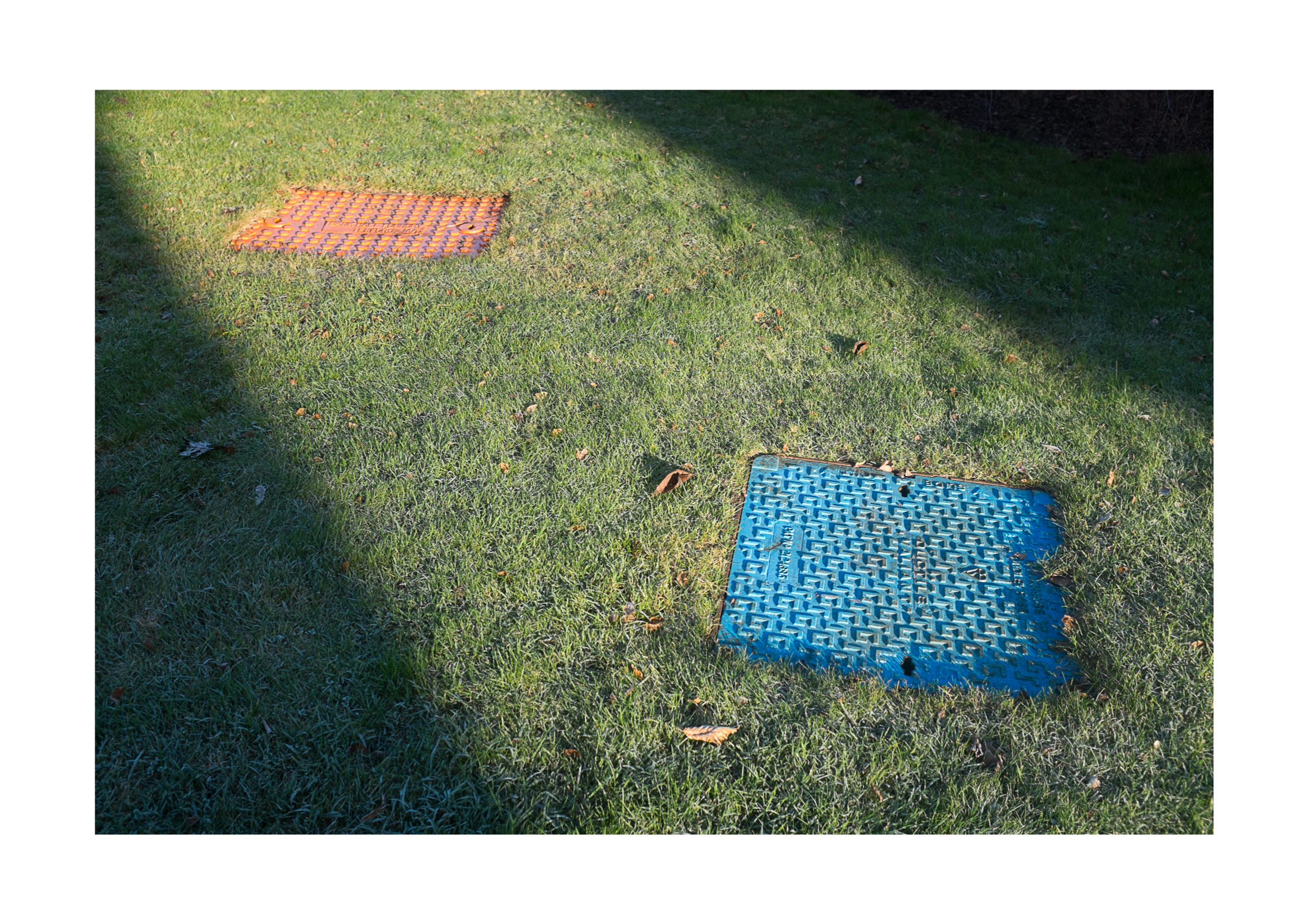
fig.1 – January. Caversham Park.

Colours, light and shadow and shapes. Simple and satisfying.

fig.2 – february – regent st in the rain

Chucking it down. I found an awning and watched people more eager than I was running by to get to work.

fig.3 – march – lea bridge road

A mini cab office. Lots of nice rectangles.

fig.4 – april – walthamstow

I always wondered what the deal with buying a pair of shoes was…

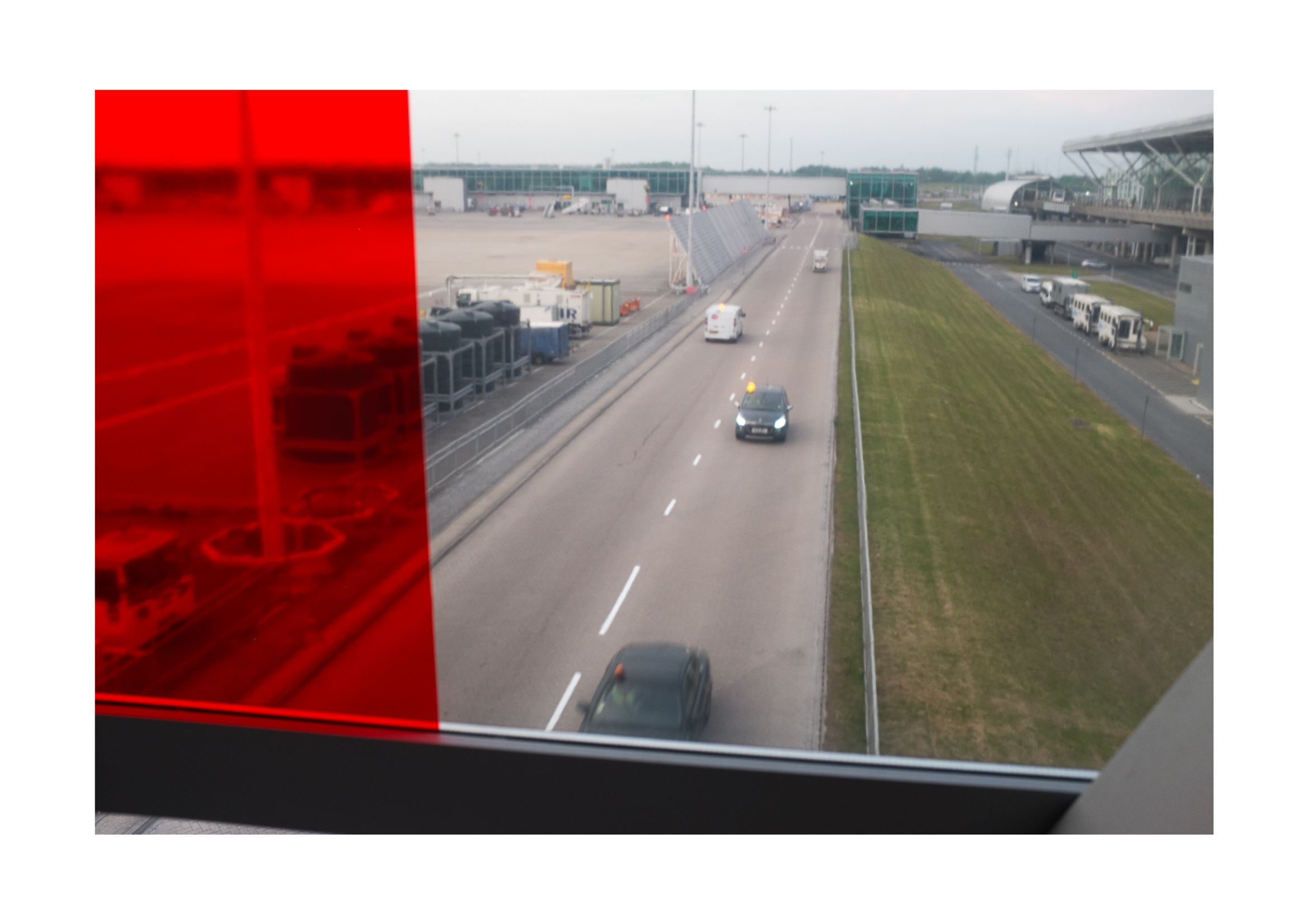
fig.5 – may – stansted

A tricolour. Even though I wasn’t flying to Italy.

fig.6 – june – south of the river

Heading home from a friend’s fortieth birthday party. Nice light for me to feel horribly old in.

fig.7 – july – kyiv

Somewhere off Shota Rustaveli.

fig.8 – august – southend

Idly taking pictures while queuing to go on a rollercoaster.

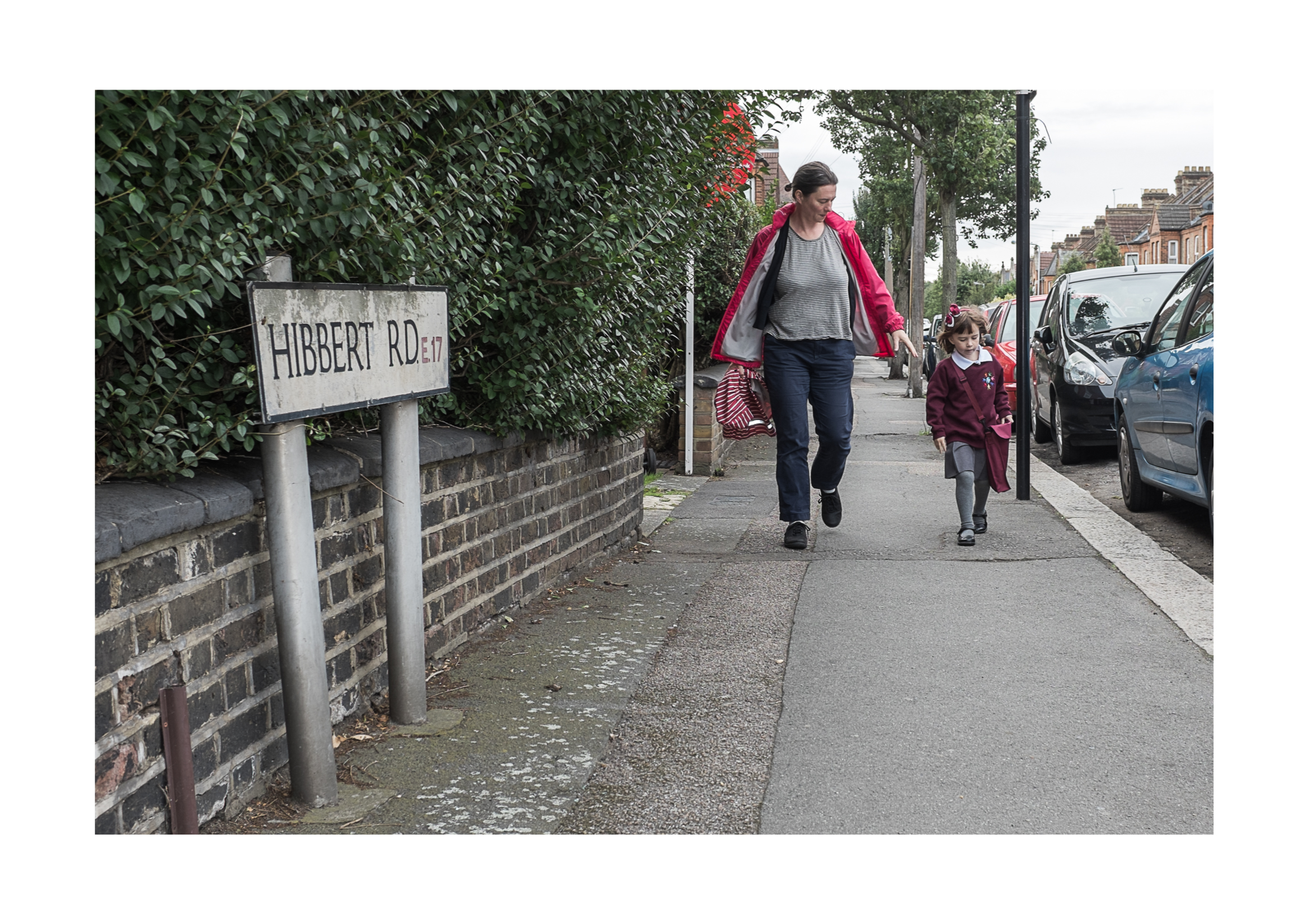
fig.9 – september – walthamstow

Alice starts school.

fig.10 – october – glasgow

Opposite Cessnock Subway. Oddly satisfying.

fig.11 – november – whitechapel

Or maybe Fitzrovia. Delighted at the way the letters on concertina-ed shutters you weren’t supposed to park in front of fell.

fig.12 – december – underground

Bank station. Under renovation.


I captioned the set overall with…

“In the end I narrowed things down by choosing one photograph a month. This is a bit rough on months like July when I was spoiled for choice and conversely rather kind to June.

I have not included any pictures that I’ve used in my log.

If I had to choose again tomorrow, I might not go with the same 12, of course…”

…and posted it at 20.20 on the 20th of December.


I suspect that, at this stage, I should be moving away from individual pictures a bit more than seems to be the case here, although of course, very few of them are just ‘one of a type’ experiments and some of them – February or August, say – could easily be fitted into work done for Identity and Place; December is only the latest of many pictures taken over the last fifteen or so years of underground stations as they are given a facelift; while even the most family-album/documentary-style picture – September, taken on my daughter’s first day at school – is taken in a conscious, thinking way.

It was interesting to work through the thousands of pictures I have on hard drive from last year, if only to get some sort of idea of what I make pictures from when I’m just making pictures. Some themes and styles probably should emerge from this, that will then feed back into my course work. It also is probably part of the process of establishing what my ‘voice’ is.

I said in the text wrapper for the pictures that none of them had been posted here either in response to an exercise or an assignment; I may well use some of them (or ones that got as far as the final long-list) to illustrate the other posts I’m working on now.

The header to this post – while it didn’t make the final cut for the year – possibly comes close to encapsulating at least one of things I use photography for. I finally got round to processing a roll of Agfa B&W film that I had taken back in 2007 or 2008 when friends had bought me a night on The Watercress Line’s Real Ale Train. It was very gloomy and – even though I’d exposed the film as though it was 800 rather than 400 asa – everything came out rather underexposed. Possibly, I should have pushed the film further, but it’s too late to think about that now. However, the reason it almost made my pick of ’17 was because of the way that faces (all belonging to people I am still in touch with) loomed out of the darkness, encapsulating that marvellous time-travel thing that photography is capable of, if only you’ve had the foresight to take the pictures in the first place.

Fiona was in some of the shot’s on the beer train, and there she is in the September picture, walking to school with our daughter; other pictures ripple backwards through other earlier photographs, linked either by subject matter or theme or place. It is hard to harness this in the assignments for the level one courses, but it is definitely there in the photographs I have been taking.


And finally – before I crack on with part three of IaP – by way of further comparison, here are my twelve photographs from 2016:

I could write much more about all this, and try to work out how my work has changed over the last two years, but that would definitely be pure displacement. Time to hit the mid-blue publish button and to open another, save draft for a post…

Four Portraits by Thomas Ruff – National Portrait Gallery, London

at the national portrait gallery – october 2017

There is a landing at the back of the National Portrait Gallery, half-way down the flights of stairs where you are confronted by four enormous heads, three facing you and a fourth on the wall to your left.  Tying-in to the big Whitechapel Gallery retrospective of his work, these four photographs are a small subset of Thomas Ruff’s 1980s’ series, Porträts (Portraits).

I looked at the four women’s faces for a while, and watched other people looking at them; then I went home and found the interview with Ruff referenced at the end of this post. All quotes from Ruff come from this interview; all commentary is mine.


In a way I wanted to blot out any traces or information about the person in front of the camera. I also wanted to indicate that the viewer is not face-to-face with a real person, but with a photograph of a person. Quite often people at the exhibitions say, “Oh, that’s Heinz, that’s Peter, that’s Petra,” because they’re looking through the photograph, confusing the medium with reality. By blowing the portraits up to a colossal scale, I forced the viewer to realize that he is not standing in front of Heinz, but in front of a photograph of Heinz.

At first, I thought the lighting glaring off the – presumably not non-reflective – glass in front of the picture was annoying. But then I began to see it as a further distancing strategy: no matter how close you come to them, either through their sheer monumental scale – I reckon each woman would be about thirty feet tall if these were full-length portraits – or just physically as you are drawn closer and closer, you never get quite close enough to resolve who the person pictured is. And further, as you step in,  you are aware not only of the frame that surrounds each print, but also of the white border around each photograph, drawing attention in turn to the ‘frame’ determined by Ruff as he set up his camera. You are definitely looking at pictures, not at people.


I don’t think that my sitters build stone walls, but rather that they say to the viewer, “You can come this close, but no further.” Maybe my portraits are anachronistic because even though they show every detail of the skin, clothes, and hair of the sitter, they still don’t try to show any of his or her feelings.

Based on Ruff’s discussion elsewhere in the interview, I take ‘anachronistic’ here to refer to the early Victorian view that photographs made ‘automatically’ or without the agency of an operator, inscribed indexically by  ‘the pencil of nature’ rather than the bulb-release of the artist.

The pictures seem to exist somehow outside of history, but Ruff is quite clear that their making was heavily influenced by the zeitgeist of the time of their making in the early eighties. He was working in pre-reunification West Germany; Orwell’s 1984 was being examined as if was a prophecy rather than a cautionary tale written nearly forty years earlier and surveillance imagery was everywhere; in the aftermath of the Baader-Meinhof group’s campaign of bombings and kidnappings, people – and particularly young people, like Ruff and his subjects – in the BRD were continually being asked to produce their identity papers.

It may be that because the ideas contained in Bladerunner are once again in the air (the original was released in 1982; it was the first surround sound film I ever saw, in Aberdeen, the day before I saw Elvis Costello on the Imperial Bedroom tour) but they to me, they look like replicants (Philip K Dick’s term for androids) or maybe, since Ruff is German, Kraftwerk’s robots.

Which in turn moved me onto the Krautrock bands’ (and other groups of European musicians’) attempts to make music that was not rooted in American music – the blues in particular –  instead using repetition (think of Jaki Leibzeit’s drumming with Can or pretty much anything by Neu!) and the rejection of overt emotion (Kraftwerk – the difference between ‘fahr’n fahr’n fahr’n auf der Autobahn’ contrasted with the Beach Boys’ ‘Fun, fun, fun’…) in playing and performance. Is the repetition of the typology in the work of the Bechers happening in the same space as the drumming of Jaki Leibzeit for Can? Is the tension between extreme revelation  of Ruff’s enormous ID pictures somehow linked to Kraftwerk’s cold, yet fascinating and engaging music?

‘Theirs [Arbus and Avedon’s] is a glib, New York version of sentimentality, one that thrills itself with the hysterical belief in antagonism and grit as truth, but that’s sentimentality all the same. Provocative as their pictures may seem to be at first, people love them – perhaps counterintuitively – for that titillating myopia, because they corroborate, rather than challenge, our baser preconceived notions.They never make the more evolved leap to a form that genuinely tries to create a unique means for people to perceive one another.’

As a starting point for further thought, this rejection of American culture seems worth noting. I am of a similar age (or a bit younger) than Ruff, and I remember The Clash being ‘bored with the USA’ and all the other rejections of ‘Rock‘ by the musicians I was picking up on during the late seventies and early eighties. There’s something to explore here, some balancing European photographic tradition to be examined as parallel to the American one developed and sustained by MOMA and Szarkowski…


More immediately though, one of the things that is becoming apparent to me as I work through IaP and receive (somewhat unfavourable) tutor feedback on my assignments is that it is easier to produce art-style pictures of people that you don’t know. Also, as I have already quoted Grayson Perry as saying – if they’re not smiling, it’s probably art (with it’s counterbalancing ‘if they are smiling, it probably isn’t’).

Ruff has already discussed the way that photographing older people  – he uses the examples of Richard Avedon and Diane Arbus – whose story could be said to be written on their face, can lead to a sentimentality of approach separate to the question of whether they are smiling or not (although generally in both Avedon and Arbus, they are not) , before he adds photographing your children into the mix:

All parents want their child’s smile as proof that they’ve done a good job of parenting and that the child is happy. My [Ruff’s] portraits look so Apollonian because the sitters provide a perfect surface onto which the viewer can project anything, bad and good experiences alike. They’re neutral and friendly, like Buddhas. They’re vessels you can fill with all of your wishes and desires.

This is close to Gombritch’s idea (discussed in Bate) of sfumato, or of leaving space for the spectator to project their own self into a picture of a stranger by reducing individual identifying detail in the picture, but it takes it a bit closer to what I was trying to do with some of the photographs in assignment 2. I used pictures of my children, on holiday, and  – in two of them – they were looking happy! 


‘[Ruff’s subjects were] people between the ages of twenty-four and thirty-four, and life hadn’t yet left any signs on their faces. They weren’t babies, but they hadn’t had too many bad experiences, either. They were in that state in which everything is still possible.

I had thought this too, looking at the pictures at the NPG. I had even gone on to think about the difference between the four pictures on display here and the (fascinatingly and variably readable) pre-execution mug-shots taken in Soviet prisons during the great terror that I had sat and watched sliding by as part of the Images of Conviction exhibition at the Photographers’ Gallery last year.

What I had not thought about was how this meant that I would be unable to make a similar portrait of my generation, now as today (when we are moving through our fifties) our faces are too battered, too readable for this approach to work. ‘Sentimentality’ would have reentered the picture space. This raised the question in my mind of whether James (who is fifteen) was old enough to be pictured in this way as a blank canvas, devoid of my sentimental projections as his father (Alice, at four-and-a-half, definitely is not).

I set up Ruff’s 1987 standard portrait lighting (you can see the two diffused strobes, placed right and left, slightly above the eyeline, reflected in the pupils of his subjects) and stood James in front of the most neutral of the living room walls. I told him ‘to look into the camera with self-confidence, but likewise, that [he] should be conscious of the fact that [he was] being photographed, that [he] were looking into a camera.

Unlike Ruff, I did not use a view camera (you could make a significantly larger-than-life print of these from the files produced by camera though) but James did a grand job of being my subject I think; I will include the first picture of the three above in the revised set for Assignment 2 I put in for assessment, next year, replacing the one of him buffeted by the wind on the boat as we headed north. I would not use the profile (too obviously a mugshot reference, and so adding prompts for a reading) but may also put in the picture of the back of his head. We’ll see.


I will go to visit the full retrospective at the Whitechapel Gallery next week, I think. There will probably be a longer, update piece…

All quotes have been taken from an interview with  Ruff by Gil Blank, originally published in Influence Magazine (Issue 2, 2004) and accessed online at Gil Blank’s artist’s site on 12/10/17

NFTU #8 – A quotation from Lewis Baltz

Anyone can take pictures. What’s difficult is thinking about them, organising them, trying to use them, montage them in some way so that some… some… some meaning can be constructed out of them. That’s really where the work begins.”

– Lewis Baltz interviewed by Studio Arte for Contacts 2 (viewed on  vimeo, 5/10/17)


Which is pretty much why I signed up for the OCA in the first place, but articulated better than I could have at the time. Or now probably.

Worth keeping in mind.

(Thanks to Andrew Fitzgibbon for linking to the interview on the OCA discussion forum)


on the portrait chapter in Bate – a resusable reference

I have read this chapter again and again. I have referred to it on numerous occasions here and in my log for Context and Narrative. A summary of what is in it will be of benefit, I think…

After starting off with a potted history of the development of portrait photography in the nineteenth century, Bate gets onto the two topics I’m going to discuss here: What are the elements of a portrait photograph and how do we read them? and What is it that we do when we look at pictures of people and why do we like to do it? Continue reading

Project 2.2: Aware – Harry Callahan and Julian Germain

Two of the photographers we are pointed towards during this project seemed to have sufficient similarities in approach to be considered together, here. Julian Germain’s For Every Minute You Are Angry You Lose A Minute of Happiness (2005, but taken between 1992 and 2000) and Harry Callahan’s pictures of his wife Eleanor and his daughter Barbara, tiny among the geometry and space of Chicago (taken on outings between 1952 and 1954) both were made without any seeming expectation of their becoming a finished body of work. Both series were made under ‘real’ conditions but – and presumably this is why they are here in the ‘aware/studio’ half of the chapter – using heavier, larger format equipment than the lightweight cameras used by Evans or Kuzma or Parr in the ‘unaware/street’ half. Continue reading