Category Archives: ASSIGNMENTS

assignment 2 – contact sheets & general notes

1: Orkney is notoriously flat; Flotta is even flatter. (Ha!)
A friend from University whose dad worked for years making documentaries in Scotland told me that cameramen used to refer to an “Orkney Shot”; a shot framed so that something – anything – acted as a stop on one or other sides of the frame, to stop the eye just sliding through and out. This is maybe a bit unfair on Orkney, but once you’re out of the towns, there is an awful lot of sky over quite flat horizons and – if you want to take a picture of some foreground thing, it is likely to have sky behind it. My first thought almost all the time was to make sure that the sky didn’t simply blow out, and in processing the pictures back at my sister’s house, to keep some interest in the overcast sky, while raising the general lightness of the the land and the objects on it. Also, on an overcast day, there isn’t a lot of contrast around as the sky acts as an enormous soft box, spilling diffused light over everything; black and white was not going to work for my Flotta pictures and anyway, the muted range of August colours is quite attractive. All the assignment pictures therefore remain in colour.

2: Generally, I took fewer photographs of each thing than I did during assignment 1. To an extent, I think this was a result of limited time on the island concentrating my mind somewhat, but it also marks less of a tendency to think that tiny little things – marginal reframes, a slight shift of my weight – will result in a profoundly better photograph; rather the pictures where there a many shots were taken because of something I was consciously trying different things with: the windmill shots were repeated to try and vary the timing of the blades in relation to the corners of the frame, and the pictures inside the searchlight emplacement (# 3 in the final selection) were trying different flash settings, trying to get a still dark inside, but not black balance between inside and outside and a couple of different lenses. On the whole, i think I was much more consciously taking pictures, rather than just concentrating on what was in the frame. It also felt more like fun at times. I hope this shows in the pictures.

3: Buildings in Orkney were traditionally made from stone, and now tend to be made from breeze-blocks and then harled. The wartime installations used that most uncharacteristic material brick, with some parts made from reinforced concrete. There were a lot of corrugated iron nissen huts too. Quite a few nissen huts are still in use, and the  brick buildings have lasted well despite wind and rain and neglect. The reinforced concrete is starting to go though (and signs are going up saying, don’t enter the buildings because they’re dangerous) but you can still see that the batteries were designed by people who’d recently qualified as architects and were throwing their dreams of Bauhaus into the war effort.

4: It’s remarkably easy to lose track of time when you’re walking and taking pictures, and thinking and looking. It’s easy to see fro the contacts that the amount of time spent getting to Buchanan Battery far outweighed the time I had to get back to the ferry (even if you allow for some of sheet 1’s pictures being taken on the boat back to the mainland). While taking the pictures on sheet 6, I had a late lunch; sheet 7 was all taken as I walked, picking up my pace as time slipped by. I still managing to stop to take some, but not that many pictures, although a close look shows that they’re much more rushed than the earlier ones, and there were glaring things I missed, like the spot of rain on the lens spoiling some farms set among rather nice overhead cable geometry). The two shots of the ferry approaching the slip on sheet 7, show how close I came to missing it. Really, I should know better…


assignment 2 – background

the signal station at the entrance to scapa flow, flotta

the signal station at the entrance to scapa flow, flotta

In the feedback for Assignment 1 Dave, my tutor, suggested that for the next one, I limit myself to an area one kilometre square, to try and establish more thematic continuity between pictures than I had managed in the first assignment. Fairly early on during part two, I had identified that I should be able to get all the elements needed for the pictures in Jubilee Park, Leyton and had even begun to take some pictures as ‘sketches’ for the early point pictures.

Then I went off on holiday to Orkney.

At this point, I had pretty much all the photographs I needed for the first 5 exercises of Elements of Design, and some for the remaining three exercises. During the first week in Orkney, I got quite a few of the others. While I did manage some sorting and editing of pictures, I had also intended to spend some of my time writing up the exercises and the reading I’d been doing in my log, but of course time in the evenings seemed better spent with relatives or drinking beer with friends or just staring into space. Which is as it should be on a holiday, really.

Then the one large chunk of time I was going to get to spend on my own (abandoning children, partner and all for a whole day) came round with a forecast of clear weather. I decided to go to take a ferry to one of the smaller islands and spend the day exploring and taking pictures. The idea that I could take the assignment pictures there began to form in my head. I wrote down the photo requirements for the assignment in my day book, charged batteries and made sandwiches, and set my alarm to allow me to catch an early ferry.

The island I’d decided to visit was Flotta…

The word Flotta means “flat island” in old norse and at its highest point, the island is only 59m above sea level. From the trig point you get a very good idea of Scapa Flow laid out around you:  there’s the two main towns on the mainland – Kirkwall and Stromness – and also have a great view southwest into Longhope bay and of the various even smaller islands scattered to the north and the south.

The mouth of Longhope bay is guarded by two martello towers built to protect convoys before they set out for Canada during the American war of 1812. During the two world wars, you’d have seen the fleet at anchor in Scapa Flow, and also the boom defences (big, heavy steel nets, hung from floats) used to close off the two main ways in and out of the anchorage. There were gun batteries built on the east and south sides of the island and the fleet control centre stood at the south-east tip. There were anti aircraft batteries and searchlights and barrage balloons. It was a busy place during the war, and there was a large (1800 seat) cinema and concert hall, over by the two piers on the west side of the island. Many of these buildings and emplacements are still there, and in a fairly good state.

buchanan battery, looking east towards south ronaldsay

buchanan battery, looking east towards south ronaldsay


Now, the boats anchored in Scapa Flow are likely to be tankers, waiting to be loaded with crude from the Flotta Oil Terminal, whose rows of storage tanks are fed by a pipeline from the Forties field in the North Sea.

These waves of activity – war, war, oil – have fed into Orkney’s economy topping up the islands’ finances way beyond the level that it could have reached relying on agriculture alone. Flotta has been at the centre of all this, as it is at the centre of Scapa Flow. It’s population is low (under 80, I think, and most of them retired), and the primary school closed a couple of years ago when all the children on the island had gone to the secondary school in Kirkwall. Most of the oil workers commute out from the mainland, but the island isn’t completely dead. There’s still a post office; land is farmed; boats come and go.

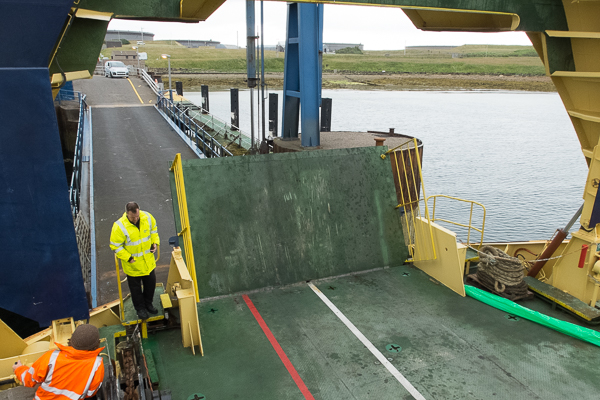
On Friday 1st August this year, I was heading out from Lyness on one of them, with 7 hours to explore and take pictures before the last boat back in the afternoon.

arriving on flotta, with the oil terminal in the background

arriving on flotta, with the oil terminal in the background


The ferry puts you ashore on a slip in the middle of the western side of the island and I had decided to walk round the southerly loop, only going out along the thin peninsular to the north if I had time before the ferry returned to take me away in the afternoon. On my way, I intended to visit as many of the gun batteries on the east side (overlooking Hoxa Sound towards South Ronaldsay) and the south side (overlooking Switha Sound towards Hoy) as I could. I also wanted to take in the Fleet Direction Centre at Stangar at the south east point of the island. Then I’d follow the coast back round to the slip, passing the airstrip that had been built for the construction of the oil terminal in the 70s and the cinema on my way.

As always, I was wildly optimistic (or easily distracted) and after detours to the wind turbine by the trig point, off to investigate a nissen hut near the village and other bits of general looking at stuff and thinking about things and taking pictures and that, I only really managed to take in the first battery (Buchanan), the signal station (where I had my lunch) and the airstrip. It was enough – just – to get the pictures for the assignment, but another hour or so would have been nice…


assignment 1 – personal review

Demonstration of Technical and Visual Skills

  • Materials: as a totally online assignment, this only really applies to the way the pictures are laid out on the blog. I think the way i’ve laid things out on the virtual page demonstrates the beginnings of being able to control the way wordpress works, but I suspect that without the ability to work directly with the style sheet, I won’t be able to take this much further.
  • Techniques: the first part of the course has dealt pretty exclusively with the effect of different lens focal lengths, framing (both at the time of shooting and altering this as part of post-production) and the placing of objects within the frame;  I have consciously chosen the way I have applied this to the pictures – there aren’t any “happy accidents” – and things like fairly constant use of stopped down lenses to keep as much in focus as possible is deliberate; I applied techniques to the pictures I had decided to take, and generally they have turned out as expected.
  • Observational Skills: it was enjoyable to spend large parts of my day with a part of my head ticking away, translating things that were around me into usable representations of the abstract concepts that made up the pairs.
  • Visual Awareness: and likewise, I think I managed to isolate things in a way that allows the quality that made me notice them in the first place to be apparent, even if it is only in the context of the pair at times, rather than in a standalone picture.
  • Design and Compositional Skills: I don’t think any of the pictures jar as compositions, although the bit of the section I have probably most need to do more thinking about is the more formal stuff around balance and theories about the division of frames; the pictures feel right, but I don’t know if I could demonstrate why to my satisfaction yet.

Quality of Outcome

  • Content: some of the qualities depicted come across more strongly than others – I am unsure for example whether ‘smooth’ contains too many unsmooth elements, while ‘many’ feels nicely like a jostling throng of signs; generally though, I think all 17 photographs are worth looking at and engage the viewer on a level where they are not simply ‘a church spire’, ‘a man in long grass’, ‘a closed venetian blind’ etc
  • Application of Knowledge: the main knowledge required here was the ability to use my camera and to process the resulting images in a competent way; I  think I have achieved this.
  • Presentation of Work in a Coherent Manner: the commonalities between the pairs (one portrait, one landscape; the phonetic titles; the subdued colour) combine to tie the pictures together as a group, rather than leaving them feeling like a number of photographs that just happened to end up together; this is more obvious in the blog post, than in viewing the full-size pictures one after the other, but some of this sense of a conscious set still comes across, I think.
  • Discernment*: I think some of the subjects a unusual and tangential enough to qualify as showing discernment…
  • Conceptualisation of Thoughts & Communication of Ideas: as stated above, I think the pictures generally express what I want them to express; some do this better than others.

Demonstration of Creativity

  • Imagination: my approach to this assignment has been more observational than imaginative; I have seen pictures and then taken them rather than plucking an idea from my head and then making it flesh (or rather ones and nothings); I had some more obviously imaginative ideas for some of the pairs – an upturned glass which was half-full of ice and the same glass surrounded by a puddle of water for solid/liquid, say or using the same subject for each of the opposed pictures, finding the contrast in the same object – but these tended to clash with my dual-location scheme, and also would have slowed me down as, mostly, they involved a much greater degree of fabrication.
  • Experimentation: I have used equipment more consciously in pursuit of an affect than I have generally done in the past; the part one exercises were genuinely enjoyable to plan and shoot, at least in part because they involved actually putting theory (which generally i was aware of but had not actually worked through systematically) into practice.
  • Invention: as with Imagination, above, I think  I have approached this in a way that is more observational than inventive.
  • Development of a Personal Voice: The pictures have all featured subjects that are part of my day-to-day life, so in some way reflect who I am; however, I think I have more of a sense of fun, or humour, than these pictures suggest; over the remainder of the course, I must strive not to come across as so po-faced…

Context

  • Reflection: to comment on the qualities of my reflection in this “reflection” piece seems dangerously close to crossing the line into navel gazing; I quite like my belly button and am glad it’s not an outie, but don’t feel I can comment here further…
  • Research: I think I worked out a clear approach to the assignment and then set out and followed it, expanding my list of subjects as I went.
  • Critical thinking (learning log): I am happy with the way my log is developing as a record of my journey through the course, with the proviso that i need to speed up my writing up both exercises and the work I am doing – reading and looking – around the practical stuff. I realise that I need to get back into the way of just writing and getting it down rather than agonising over every phrase…

* I realised while writing this that my idea of what discernment actually is was a bit hazy.  So I looked it up:

‘As a virtue, a discerning individual is considered to possess wisdom, and be of good judgement; especially so with regard to subject matter often overlooked by others’ – Wikipedia (my emphasis)

assignment 1 – contrasts

1: The Pictures

Black and White
walthamstow, black

1: blak (adj) – of the very darkest colour owing to the absence of or complete absorption of light; the opposite of white
wʌɪt - Of the colour of milk or fresh snow, due to the reflection of all visible rays of light; the opposite of black

wʌɪt (adj) – Of the colour of milk or fresh snow, due to the reflection of all visible rays of light; the opposite of black

Many and Few
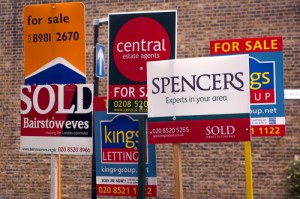
signs - walthamstow

3: ˈmɛni (adj) – a large number of

wʌɪt - Of the colour of milk or fresh snow, due to the reflection of all visible rays of light; the opposite of black

4: fju (adj) – a small number of

 Smooth and Rough
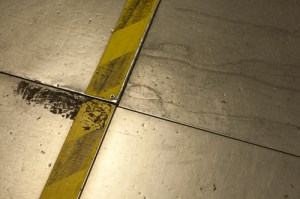
walthamstow, black

5: smuːð (adj) – having an even and regular surface; free from perceptible projections, lumps, or indentations
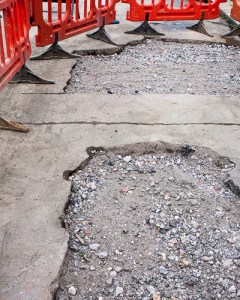
wʌɪt - Of the colour of milk or fresh snow, due to the reflection of all visible rays of light; the opposite of black

6: rʌf (adj) – having an uneven or irregular surface; not smooth or level

Still and Moving

7: stɪl (adj) – not moving or making a sound

signs - walthamstow

8: ˈmuːvɪŋ (adj) – in motion

High and Low
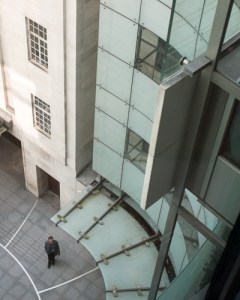
9: hʌɪ (adj) – far above ground, sea level, or another point of reference

10: ləʊ (adj) – located at or near the bottom of something

Broad and Narrow
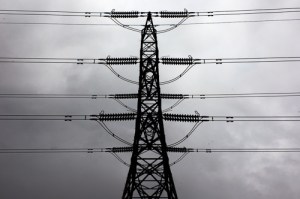
11: brɔːd (adj) – having a distance larger than usual from side to side; wide
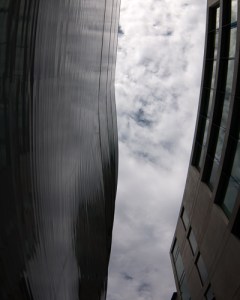
12: ˈnarəʊ (adj) – of small width in relation to length

Diagonal and Round
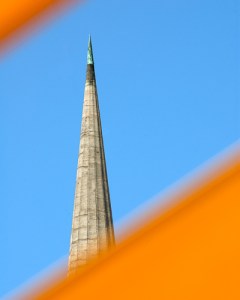
13: dʌɪˈag(ə)n(ə)l (adj) – (of a line) straight and at an angle; slanting
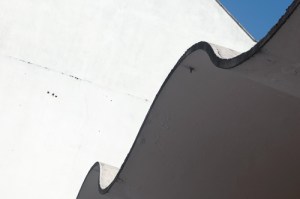
14: raʊnd (adj) – having a curved shape like part of the circumference of a circle

Continuous and Intermittent
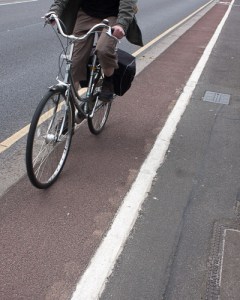
15: kənˈtɪnjʊəs (adj) – forming an unbroken whole; without interruption

16: ɪntəˈmɪt(ə)nt (adj) – occurring at irregular intervals; not continuous or steady

Light and Dark

17: lʌɪt & dɑːk (both adj) - with little or no light

17: lʌɪt (noun) – the natural agent that stimulates sight and makes things visible – & dɑːk (adj) – with little or no light

2: Notes on the Pictures

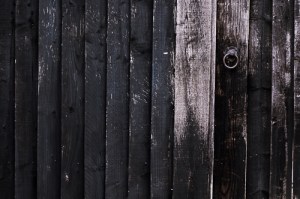
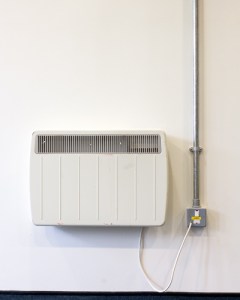
Black and White – Something totally white or totally black would simply have been absenses, rectangles of #000000 or #FFFFFF respectively.  Against the white of the online ‘page’, ‘White’ is merely very pale grey. The main difficulty in taking these was getting the exposure to the point where white was ‘white’ rather than mid grey without blowing the highlights and for black to be ‘black’ while retaining some sort of variation…

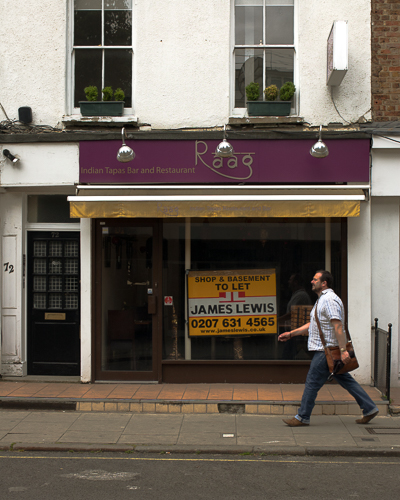
Many and Few – Good examples of the need to seize the moment and take the photograph rather than storing ideas away for another day. I spotted a perfect ‘Few’ on my way to work one morning but didn’t have time to take the picture; the next day a second agent had been engaged and the shot was no longer there. I ended up finding a different single sign, and made the picture posted here of it. Likewise, the day after I took ‘Many’ one of the signs, and with it the single cluster of signs was gone; a few days later there were only four.

Like ‘Black’ and ‘White’ I suspect ‘Few’ makes less sense on its own than it does twinned with ‘Many’.

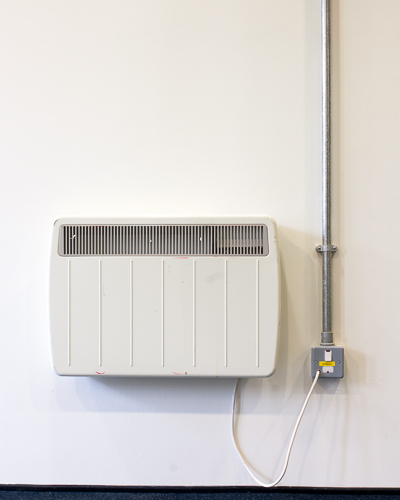
Smooth and Rough – I took a few tryouts (I dind’t have a tripod with me, but wanted to see what it would look like with different lenses) for ‘smooth’ at a point when I intended to use the black and yellow tape for intermittent. As soon as I had it downloaded onto my laptop, I realised that the way the light bounced off the metal floor made it made a better candidate for smooth. Now I see how pitted the surface is in places and how the edges of the plates don’t quite sit level where they join in a conscious division of the frame, and I wonder if maybe it isn’t that smooth after all. Although of course, in the most part, it is…

Rough had been going to be a stretch of lumpy, uneven pavement gridded diagonally by the shadows of some railings. Then, one evening on the way home, the road round the corner was closed because of a burst water main. The pipe had been fixed, but the road-surface had not yet been made good. I was five minutes later home than I’d intended.

I like the was the yellow of the tape and the orange of the barriers stand out in the individual pictures as well as adding a further level of clash between the two images.

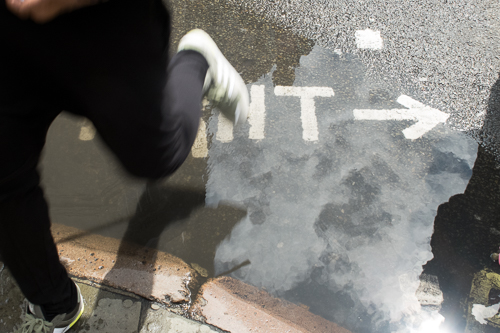
Still and Moving – ‘Moving’ is the only photograph in the assignment that wasn’t taken ‘for’ it; rather I was taking photographs of people’s reflections in the (rather unusual) puddle and the LOOK RIGHT sign on the road when people started moving through the frame. The effect worked, and I started thinking about a suitable ‘Still’ to pair with it.

‘Still’ is the only image that has been cropped heavily from a landscape formatted photograph. The portrait formatted version had too much foreground and didn’t have and of the cloudy sky; I didn’t like it, but didn’t remember that ‘Moving’ was already set as landscape and, anyway, I thought I was going to use one of the pictures of the couple seated on a bench with a barbecue for ‘still’ (see the contact sheet). This therefore is the only picture I would automatically replace with another if the assignment was going to be printed – there just aren’t enough pixels there to allow a print much larger than 8 inches on its longer side.

High and Low – ‘High’  took 3 goes to get right: the first had loads of reflections on the glass, so I gave up and remembered to bring my circular polariser the next day; then I didn’t have enough time to hang about waiting for someone to pause in the right position at the bottom of the converging lines and the glass awning, far enough from the edge of the frame, then the third day I got it. A good example of taking too many digital photographs, before arriving at one that works. ‘Low’ was relatively easy, once I’d worked out that framing the spire through the trees’ branches gave as good an idea of it being ‘up’ and ‘beyond’.

Also, of course, ‘High’ could be ‘Low’ and ‘Low’ could be ‘High’, but I decided to go with them titled this way round as it then became a reference to the camera’s (or rather my) viewpoint and – as such – could possibly do something to puncture shift puncture the purely literal, realist meaning of the pair of pictures, shifting them from the iconic to the indexical…

Broad and Narrow – I tried a variety of narrow lanes off Oxford Street before deciding that the one used here worked best. To make the space between the two buildings less, I used a 16mm lens, the widest lens used in any of these. Then, realising that ‘Broad; needed some context in the form of something that would express itswideness, I first tried lying under a pylon and shooting up, but it just felt enclosed; then I tried the side-on shot here and liked the way that wires stretch out in a balanced and symmetrical way form the central pylon, puncturing the edges of the frame and giving the idea of the picture being wider than it actually is.

Diagonal and Round – I’d seen the spire in the gap between a cafe’s two spans of awning and thought it would make a good picture. It then took at least 4 goes to get it right. Problems were caused by the way that if sunlight did not directly strike the cloth of the awning, either they were a mucky brown or the sky was completely overexposed; the sun only fell in the right place for an hour or so around lunchtime, and it wasn’t alway sunny at that time – a dull sky still was horribly overexposed. Then, once that was sorted, I discovered that you only got enough spire if you moved back from gap and compressed the image with a long lens. Eventually it was sunny, and I had my 70-300mm zoom with me. It would have been good to have added a tripod into the mix, but that’ll have to be notched up to experience…

It took so many goes to get ‘Diagonal’ right, that when I noticed yesterday that it should have been paired with ‘Round’ rather than ‘Curved’ that my heart sank, but I determined to find a definition of ‘Round’ which would fit Curved. Sorry. Next time RTQ! Also, I like ‘Curved’ – a pleasant and quick break from the stress of the sequence of composition shoot and like the inverted triangle of rhyming blue sky echoing the steeple of All Souls.

Continuous and Intermittent – On the way back to work after lunch one day, I noticed how the ‘give way’ lines at the end of Riding House Street were a lot less regular than most. ‘Intermittent’, I thought and also rather liked the way people looked, crossing the road. After a false start with a pedestrian crossing further down Regent St (on the contact sheet) I settled down and framed up the shot that’s used here and then had a bit of a wait for a single person to walk into the empty space at the left of the frame. I’d intended to do ‘Continuous’ with a bicycle skirting along double yellow lines, but then noticed how nicely continuous the cycle lane edging was where the road ran down hill to the bridge of the Lea that takes you to Clapton. I shot uphill and downhill, and decided that the downhill run worked better with its long inverted V almost as far as the vanishing point, even though it meant that instead of having a cyclist going away meant they were travelling in the same direction as the pedestrian in ‘Intermittent’.

Light&Dark – just the one exposure, properly exposed for both the light and the shaded parts of the image and with a nice variety of shapes created by the battered slats of the venetian blind.

3: Technical

All pictures were taken with a Nikon D50 using a variety of lenses with focal lengths ranging from 16mm to 300mm apart from ‘8: Moving’ which was taken with a FujiFilm x-20. ‘8 Moving’ was cropped to the same 3:2 aspect ratio as the other landscape format pictures. Post processing was carried out in Adobe Photoshop Elements 6 (mainly removing spots caused by my dirty sensor)  and Adobe Lightroom 5.

4: References

All definitions and pronunciations from Oxford Dictionaries
contrasts # 2 – ideas & approach

rejected internal contrast - large and small

rejected internal contrast – large and small

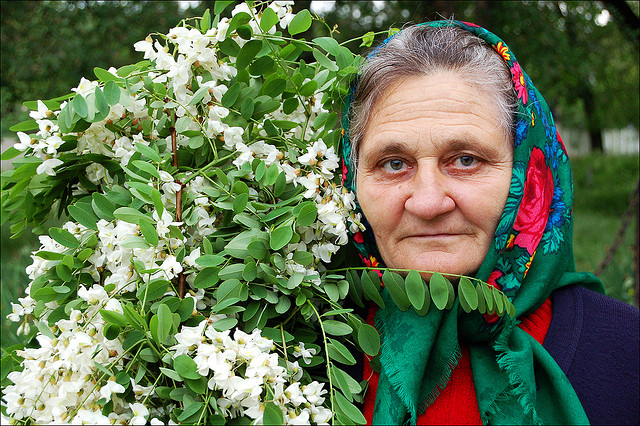
At the start-of-course chat with my tutor, Dave, we talked about putting additional constraints on this exercise, which seemed like a good idea. Thinking later, I also thought it would might also help if I established some extra contrasts between the two pictures of a pair and one way of doing this would be to choose two locations where all the pictures would be taken.

So, one picture of each contrasting pair has been taken in the area around Oxford Circus, representing the area I move in when I am at work and one has been taken in Walthamstow, the area where I live and am not at work. I don’t think it’s made the contrasts any more contrasty, but it did impose a discipline on the exercise and will have had an effect on the subject matter.

Further to this, each pair has one picture taken in landscape format and one in portrait (cropped down to a ratio of 5×4, following the advice on page 15 of The Photographer’s Eye (Freeman, Ilex Press, 2007) that vertically, 3:2 can seem “a bit extreme” due to a tendency to ground the subject nearer the bottom of a frame, regardless of orientation; also, I reckoned that there would be less of an onscreen clash of picture size moving from one image in the pair to the other). This meant that for at least the first picture of each pair, I had to take one in portrait and one landscape.

Lastly, I had hoped to get some sort of further technical contrast between pictures such as one taken with a wide lens and the other with a long lens or one stopped down and the other with the lens open. I didn’t manage to stick to this one for many of the pairs but I didn’t worry too much about it.

Then, to help come up with ideas for the pairs, I made took a library card for each contrast and jotted down ideas for either or both concept, as I thought of them, or saw things which might fit. I tried to use things that already existed rather than needed some degree of setting up, spotting things that illustrated the state I was looking for rather than making something for the effect. Some of the pairs, I rejected outright as I couldn’t get beyond some very obvious idea into something more interesting (sweet and sour was one of these); others went through several iterations of an idea before one came up that stuck and was photographable (many and few started as a busy tube carriage and an almost empty one before I spotted the cluster of 6 “For Sale” signs on my way to the tube; then it took a bit longer to find a single sign somewhere in town) and others moved from one pair to another (the yellow and black hazard tape on the metal floor was originally “intermittent” and only become “smooth” after I’d taken some test shots and seen how the metal reflected the light in a way that suggested a high degree of polish).

Once I had 3 or so of the ideas in place I began taking photographs, getting them onto my laptop and then – usually – doing one or more re-shoots. Very few of the pictures submitted were right first time, or even first shoot, although I think I got a better hit rate as the Assignment progressed and the deadline got closer.

As I went on, I got better at planning shots and having the right equipment with me for the first go – the early pairs (High and Low, Diagonal and Curved)  went through numerous iterations as I took in a different lens, or a tripod, or a polariser on the next day and the next; for the later ones (Rough and Smooth, Intermittent and Continuous) each picture was taken on shoot one after I had worked out what I needed to fit into my bag before I went out that day. If I can carry this on to the rest of the course I will have gone a long way towards eliminating the  (ultimately) non-productive hours I have spent on this part of the course, easily exceeding the 80 estimated in the introduction…

initial contrasted pairs

I have taken all the photos (I think – I leave space for indecision or panic to prove otherwise) for the “Pairs” Assignment, but have not done any writing up on the getting there. This -four contrasting pairs I had taken before I started this course – is a start…

Busy & Quiet
busy

london underground, 2010 – zorki-s

quiet

london underground, 2010 – olympus xa

Young & Old
young

moldova, 2006 – nikon d50

old

moldova, 2006 – nikon d50

straight & curved
straight

liverpool street station, 2007 – pentax espio 120mi

curved

kibble palace, glasgow 2007 – pentax espio 120mi

night & day
StB-night

moscow, 2003 – fujifilm finepix s304

StB-day

moscow, 2003 – fujifilm finepix s304

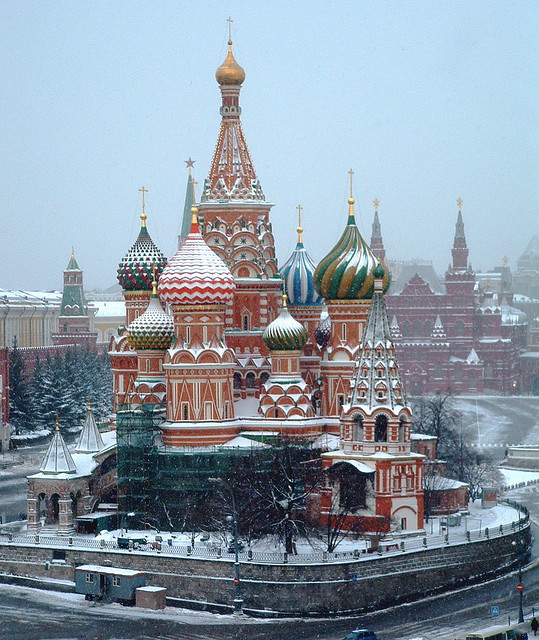
My first thought about these, is that they were all taken quite a long time ago. Possibly, I have stopped taking things that distil down to an opposable quality, but I doubt it. A better way would be perhaps to make other connections between the two photos in each pair: the London Underground; people in Moldova; glass roofs with iron framework; a tourist cliche in Moscow. And this then suggests that a contrast is only a contrast if it is seen in conjunction with its corresponding opposite. This seems a good place to start.

And then, there is the question of other contrasts and oppositions between the two pictures. The two pictures taken on the underground are very different by way of “feel”: one feels cramped and crushed (taken with a 50mm lens) one open and spacious (taken with a 35mm lens, which isn’t that much shorter, but I am much further away from the nearest thing you can focus on). “Young” is seen from a distance, but “Old” is a big close up. “Straight” is – just – colour and the main lines run vertically; “Curved” is black and white and the lines run through the frame horizontally.

The two shots of St Basil’s are probably the most one dimensional – what makes them interesting is that they are taken from a high viewpoint (out of the window of my room in the – now demolished – Hotel Rossiya) that is not normally available to people with cameras; I don’t think that is enough for their equivalent to be included in the assessment. Equally, Young and Old would work better as a pair, if they both weren’t standing on the right side of the frame.

So, for the assignment, where do I start? I will accept that the contrast will need more than just the subject matter to be activated, although the abstract state will not necessarily need to be obvious from just one of the pictures. Beyond this, one or more technical oppositions – long lens v short lens; portrait v landscape – will help in expressing the contrast. I will try and introduce formal contrasts to highlight the differences between each photo in a pair.

Other things that may not be necessarily obvious – each photograph in the pair being taken in a place with different connotations, say – can also help with this. I shall take one photograph of each pair in one of two locations. I shall try and ‘rhyme’ elements of various pictures, giving some idea of a series of connections greater than just the contrasting states depicted. I hope overall there will be some unity that ties the whole assignment together.

Let’s see shall we…