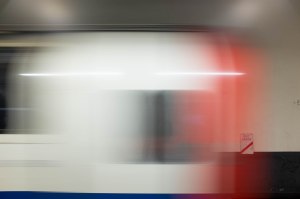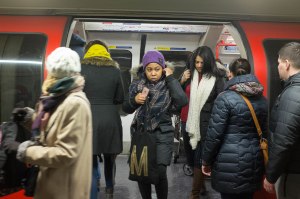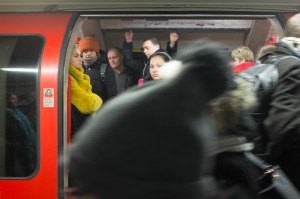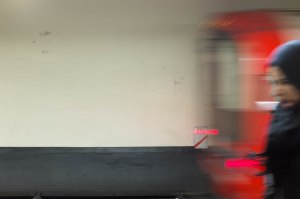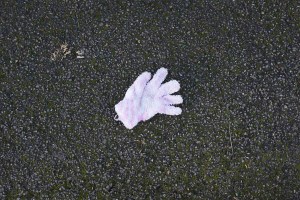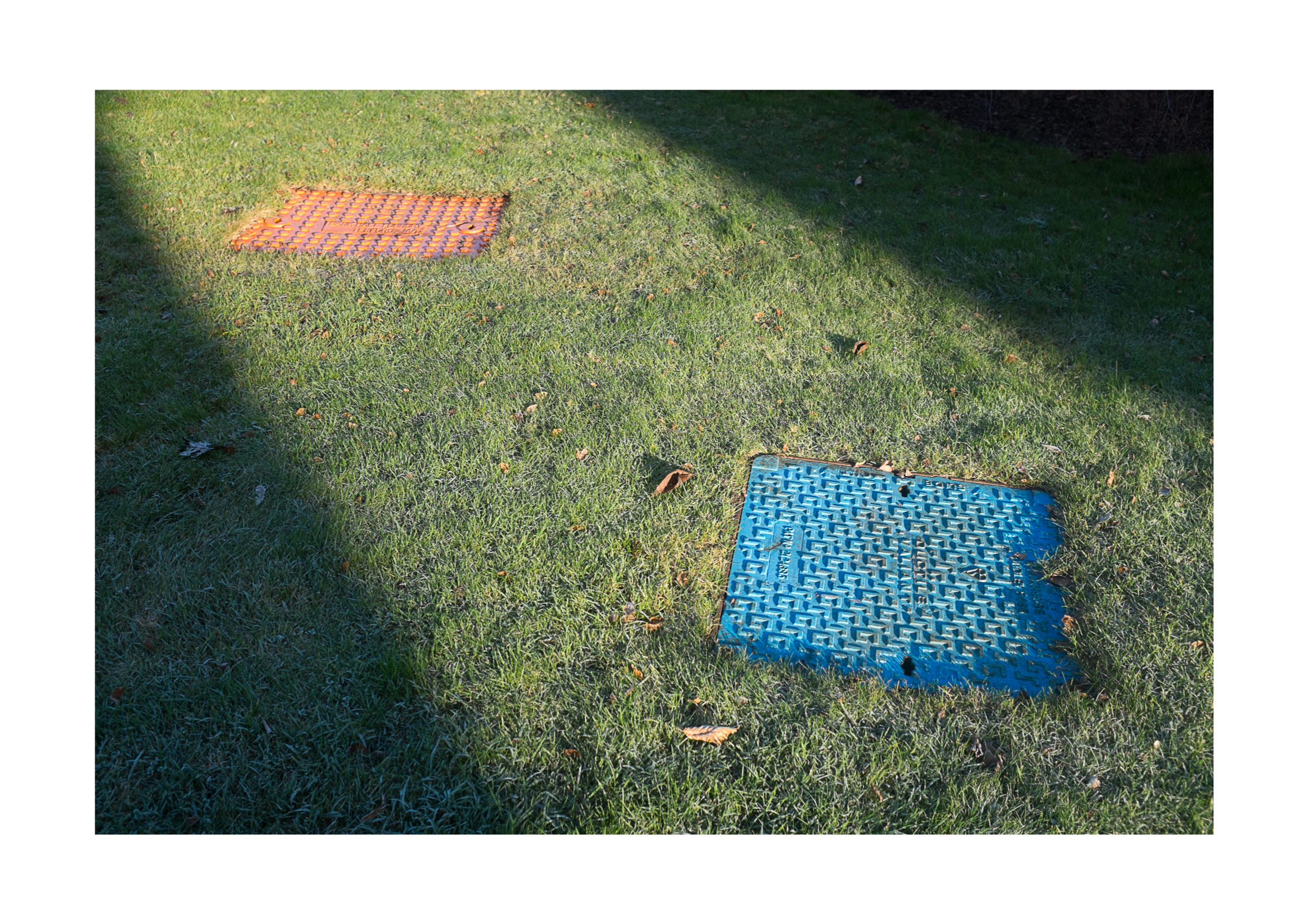
Author Archives: Simon Chirgwin

Assignment 3 – A Mirror


The Pictures:

This slideshow requires JavaScript.

(The gallery/slideshow feature does not appear to have a way to disable auto-start. I will continue to look for a way to let you start the show playing once you’re ready, but suspect I need to upgrade my wordpress account.)

Statement:

I was born on a small Scottish island, living there until I was eighteen, Despite – or maybe because of – this, I have always felt that, by nature, I am a creature of the city. I enjoy the bustle, the sense that things are forever changing and evolving around me, that nothing is ever static. But also, I enjoy the anonymity offered to me by my unmarked presence in a crowd of which I am only a small part.

In his book, The Language of Cities, Deyan Sudjik explores this tension between being alone and yet – at the same time – of being part of something much greater than just your experience of it. He sets out the ways by which those who belong to a city differ from those how simply visit. And of the many ways that people can acquire a sense of belonging in that most rootless of modern places, one of the most potent is to be found in the way people navigate their way through the the complexities of its public transport system.

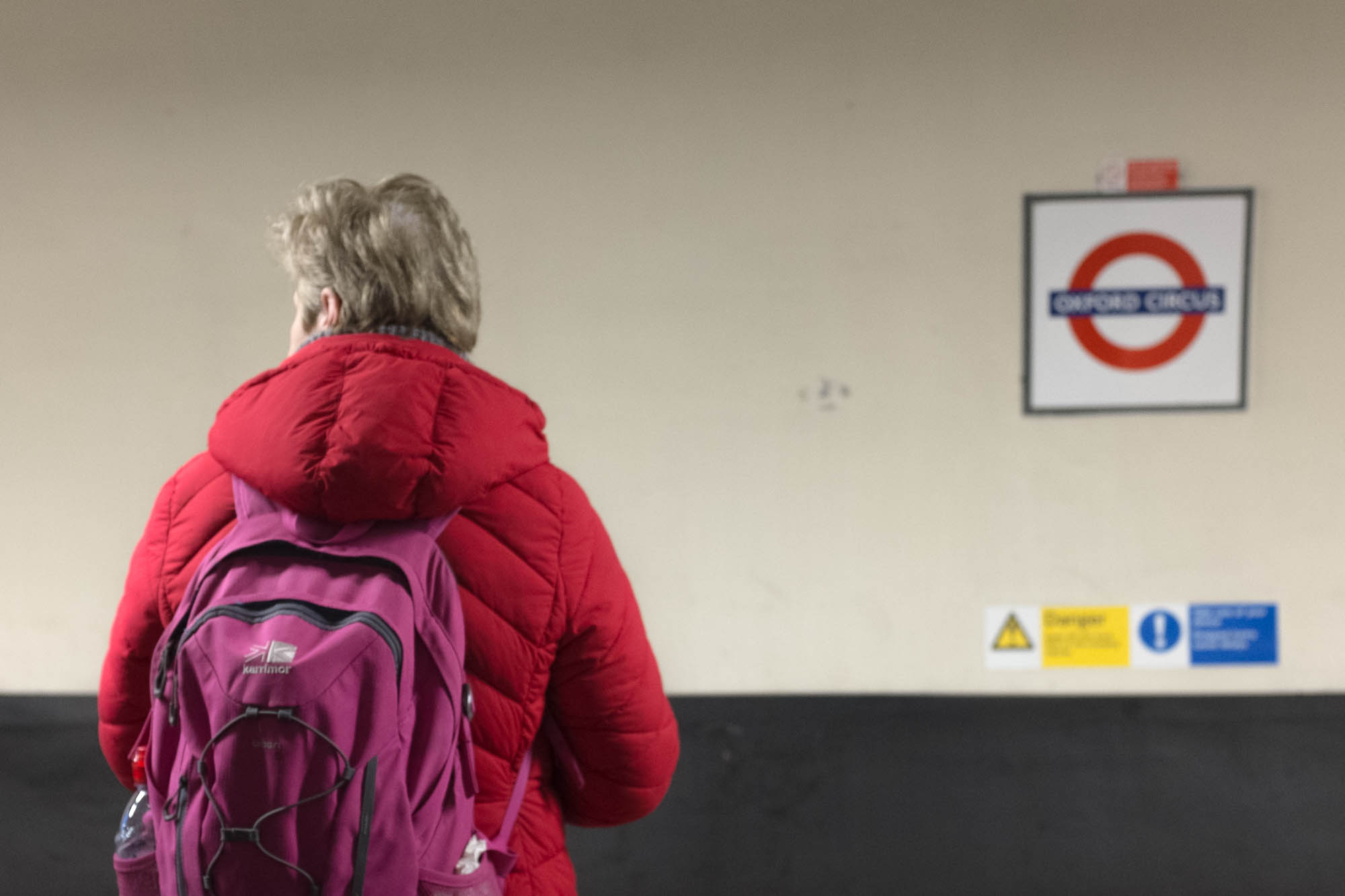
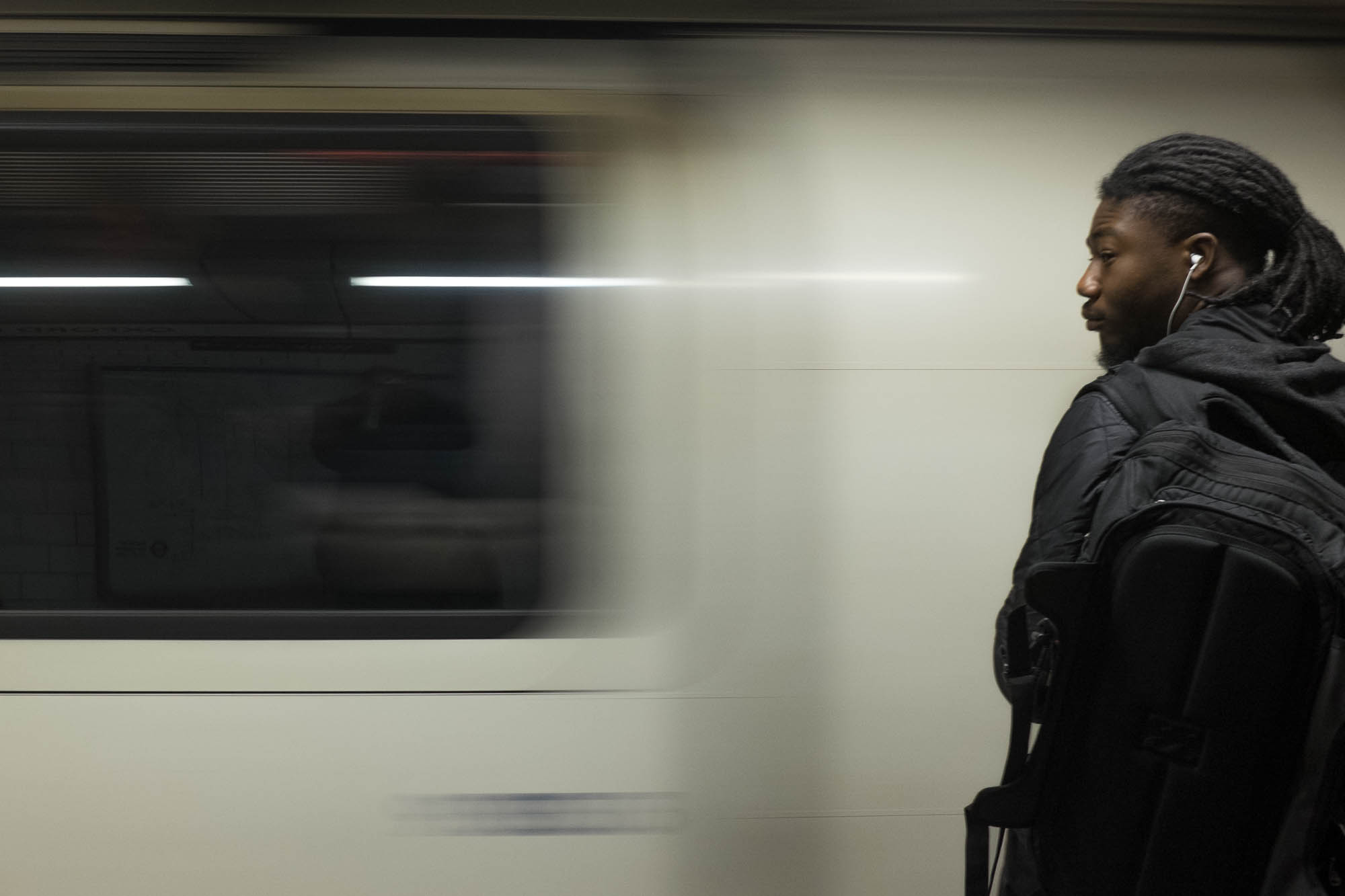
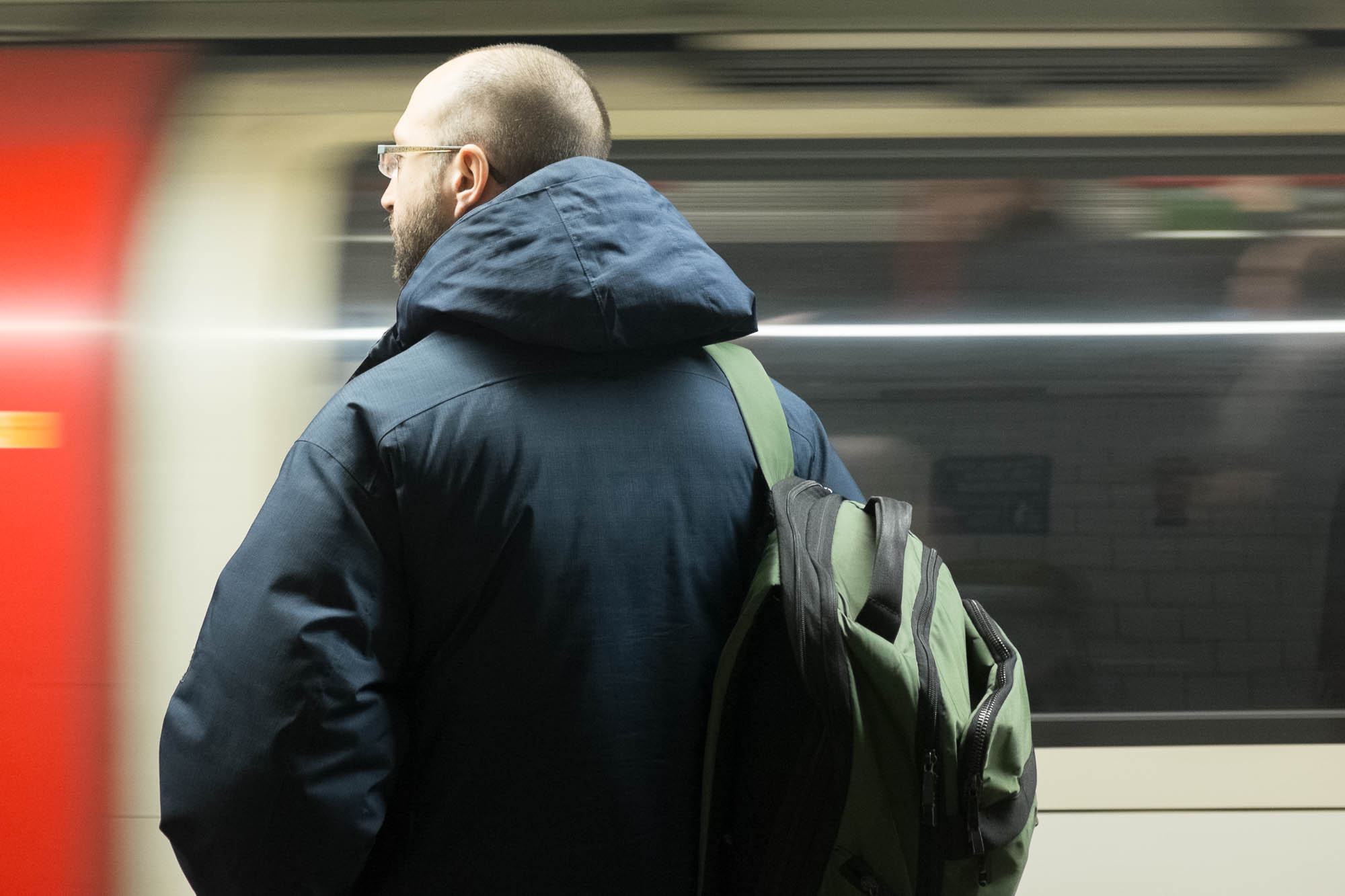
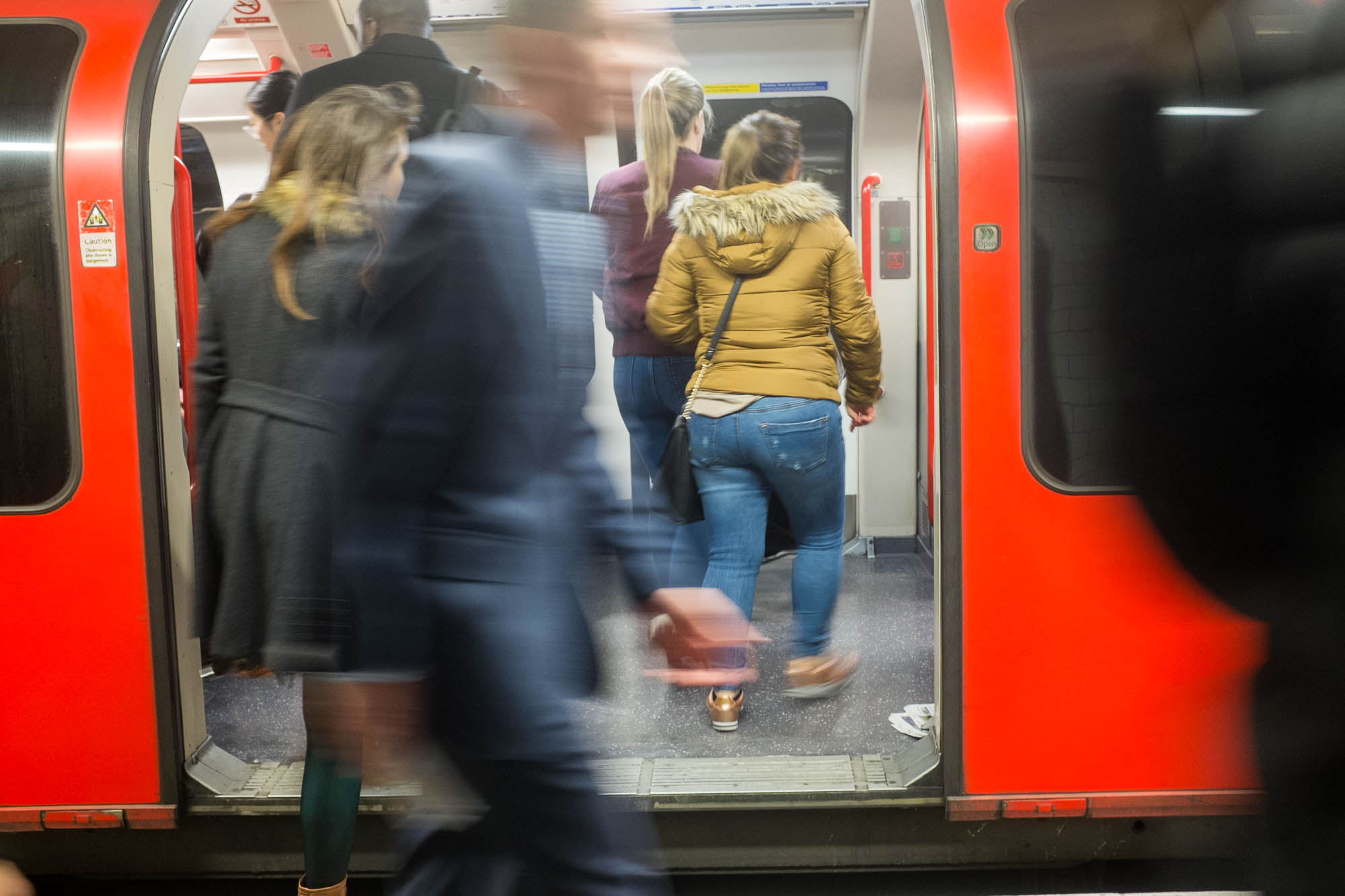
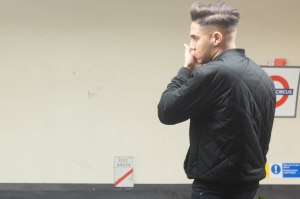
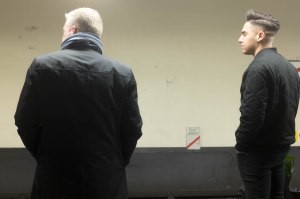
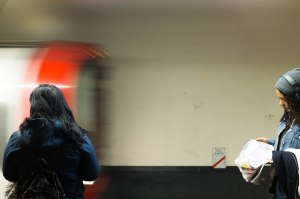
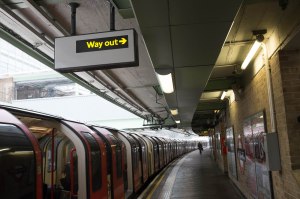
Based on the most recent available statistics (collected in 2016) more than 225,000 people enter or exit Oxford Circus Station daily, making it the fourth busiest station on the London Underground. Eight times a week I pass through Oxford Circus station on my way to or from work.  Normally, I join the further mass of people who change from one line to another without actually leaving the station.

We  find ways to idnetify where we need to stand in order to be in front of a door when the next train finishes sliding into the station and we make sure we will be in the right carriage to leave our final stop by the shortest route. We have glyphs and other markers; marks on the wall and scuffed spots on the platform.  We recognise other people doing the same and identify with them; we may even begin to spot the same faces recurring, day by day, over time.

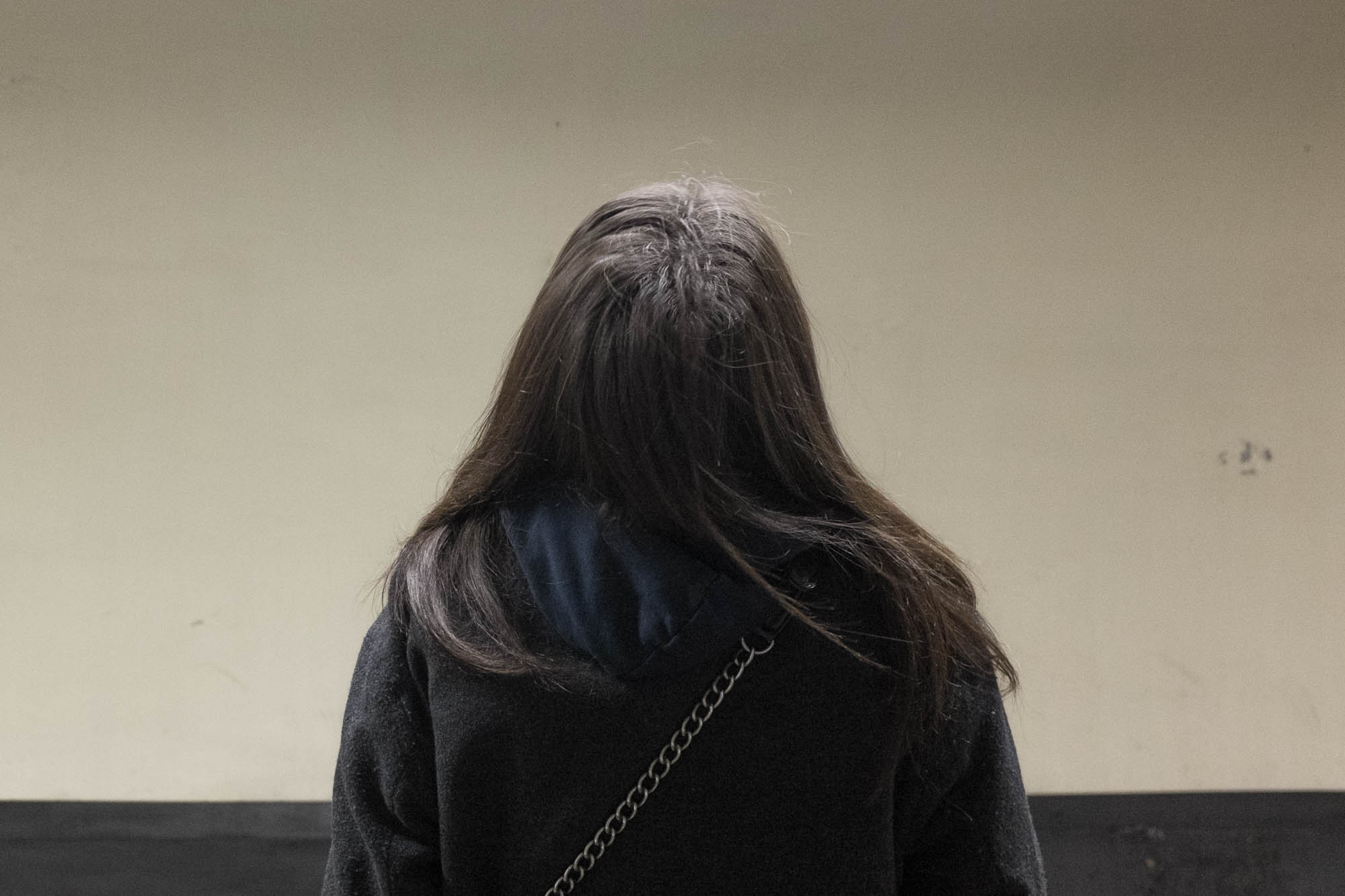
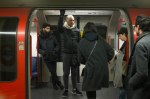
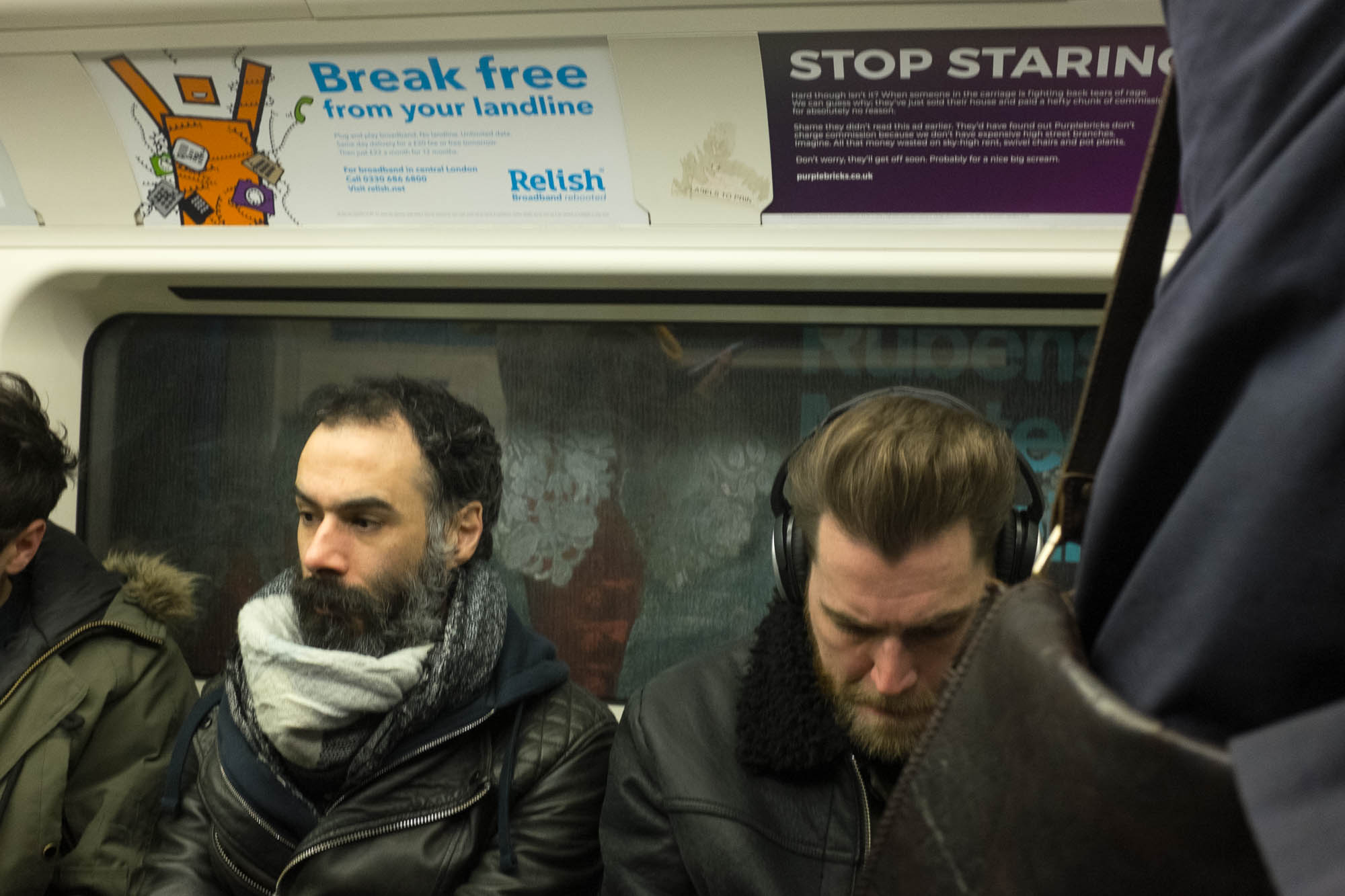
But as we make our daily commute, we shut our eyes or find other ways of vanishing into ourselves, into our phones, our newspapers or our books. We do not make eye contact with one another; nor do we stare. We distance ourselves, becoming alone again amongst the thronging people around us.  But at the same time, sharing transport helps makes us part of a functioning community, not getting in one another’s’ way, standing on the right and walking on the left and letting people get off the train before boarding ourselves. We share our journeys with each other even if we only rarely acknowledge this..

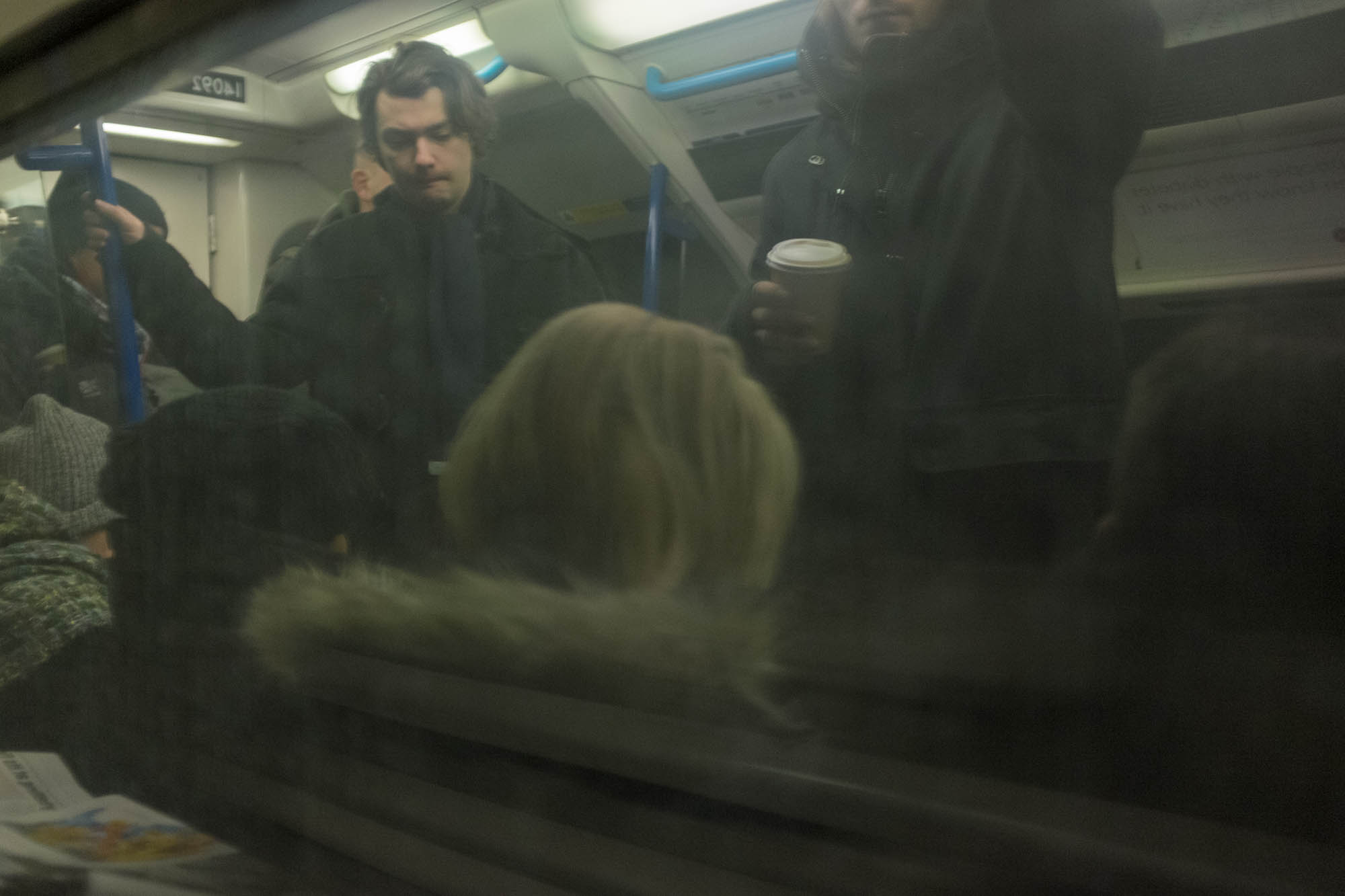
Normally when I am taking pictures,  I feel that I am putting distance – a pane of glass perhaps –  between myself and the event or thing or person that I am photographing. Taking the pictures for this project has worked differently, opening me up to my surroundings, making me more aware of the people who surround me as I travel to work. I am able to see myself reflected back at me as they do the same things that I do. 

They say there are a million stories in the naked city; mine is just one of them and parts of it are very like the many other people’s stories, too…


A more traditional, prints-on-a-wall presentation of the pictures is shown in this post.


Reference:

  • Sudjic, Deyan (2017) The Language of Cities. London, Penguin

Assignment 3a – A Mirror (alternative presentation)

Statement:

I was born on a small Scottish island, living there until I was eighteen, Despite – or maybe because of – this, I have always felt that, by nature, I am a creature of the city. I enjoy the bustle, the sense that things are forever changing and evolving around me, that nothing is ever static. But also, I enjoy the anonymity offered to me by my unmarked presence in a crowd of which I am only a small part.

In his book, The Language of Cities, Deyan Sudjik explores this tension between being alone and yet – at the same time – of being part of something much greater than just your experience of it. He sets out the ways by which those who belong to a city differ from those how simply visit. And of the many ways that people can acquire a sense of belonging in that most rootless of modern places, one of the most potent is to be found in the way people navigate their way through the the complexities of its public transport system.

Based on the most recent available statistics (collected in 2016) more than 225,000 people enter or exit Oxford Circus Station daily, making it the fourth busiest station on the London Underground. Eight times a week I pass through Oxford Circus station on my way to or from work.  Normally, I join the further mass of people who change from one line to another without actually leaving the station.

We  find ways to idnetify where we need to stand in order to be in front of a door when the next train finishes sliding into the station and we make sure we will be in the right carriage to leave our final stop by the shortest route. We have glyphs and other markers; marks on the wall and scuffed spots on the platform.  We recognise other people doing the same and identify with them; we may even begin to spot the same faces recurring, day by day, over time.

But as we make our daily commute, we shut our eyes or find other ways of vanishing into ourselves, into our phones, our newspapers or our books. We do not make eye contact with one another; nor do we stare. We distance ourselves, becoming alone again amongst the thronging people around us.  But at the same time, sharing transport helps makes us part of a functioning community, not getting in one another’s’ way, standing on the right and walking on the left and letting people get off the train before boarding ourselves. We share our journeys with each other even if we only rarely acknowledge this..

Normally when I am taking pictures,  I feel that I am putting distance – a pane of glass perhaps –  between myself and the event or thing or person that I am photographing. Taking the pictures for this project has worked differently, opening me up to my surroundings, making me more aware of the people who surround me as I travel to work. I am able to see myself reflected back at me as they do the same things that I do. 

They say there are a million stories in the naked city; mine is just one of them and parts of it are very like the many other people’s stories, too…

The Pictures

***
***
***
***
***
***
***

This post shows the possible layout for an installation of the photographs. The three asterisks indicate individual groups of pictures with the following block of pictures appearing further along a wall or working clockwise round a room.

There is a separate post here, displaying the pictures as a slideshow and with no variation in picture size, that probably works better as an online thing, without the need to scroll.


Reference:

  • Sudjic, Deyan (2017) The Language of Cities. London, Penguin

assignment 3 – further editing

While continuing to make the last pictures I needed for the assignment on the underground, I had quite radically changed and simplified the form that my submission for this assignment would take.  A post describing the process that led to this can be found here
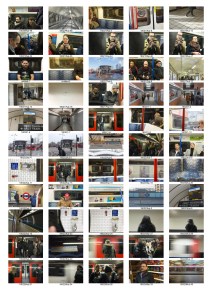
Here is a quick run through: Click on the gallery thumbnails if you want to view them larger.

Prologue

Orientation

Waiting for the train

Arrival

Disembarkation

Embarkation

The lady in the red coat gets on board

Departure

Now it was time to go back to the questions posed by the coursebook (on p.71)

• What order should the images be shown in?
• Are there too many repetitive images?
• Do you need to let go of earlier images because the project has changed?
• Are you too close to some of your favourite pictures and they don’t fit the sequence?
• Do you need to re-shoot any for technical reasons?
• Are there any gaps that need to be filled?

It still needed work, but it was getting there, I thought. The main problem was the number of (repetitive) images in the sections between the arrival and departure of the train.  I had already got rid of a lot of images as the project had changed to concentrate on the Oxford Circus part of my morning commute; the fact that I really liked some of the dropped sequences (the ‘on the Central Line’ section – in the previous post –  works nicely for all sorts of reasons, I think, but it did not fit into the revised timebox), but I don’t think that held me back from putting them to one side.

Order was straightforward. If I was going to build up a sense of the experience of passing through Oxford Circus Station, changing from the Victoria Line to the Central Line, it needed to combine the various passes I had made through the station in a chronological order.

The people waiting (my proxies or in terms of this module, mirrors) needed to build up, a train needed to come; people needed to spill out and the waiting people get on board; the train needed to leave with them on it. Ideally there would be some sense of this being a repetitive cycle as the next lot of passengers began the wait for the next train.

In order to get this across, I needed to create an idea of a place where the action would occur. The final exercise for this part of the course had worked through the idea of different sorts of gaze. The first type of look I had looked at was the one that came out of consciousness of the photographer’s (my) presence. This tied in both with Stephen Shore’s idea of taking ‘a screenshot of my field of vision’ (discussed in this post) and the ideas around producing a subjective representation of an individual’s experience of – primarily urban – life examined in Christopher Butler’s Modernism – a very short introduction. Modernism may be quite old hat (and there is nothing particularly cutting edge about American Surfaces any more either), but this gives a way of establishing me as a participant in the everyday drama that was unfolding in my series of pictures.

The Critical Bin

All the pictures for the central section of my sequences had been taken using a fixed focal length fixed lens from the same viewpoint – to one side of the bin that I used to locate where the correct doors of the correct carriage of the central line train I would take west would  be to allow me to both get on and get off again, by the way out when I got to my destination. (You can see it reflected in the dark windows of the stationary trains in some of the pictures, if you look hard enough.) Standing there, I had tried to keep the camera pointed straight ahead giving me a rectangular stage where the action could unfold.

In order to stop this single frame being both repetitive and flat, I needed the action to move through it on different parallel planes. The trains and people moving along the platform established some of this; I used the direction the people were  the people I was focusing on were looking and the sense of their actual movement to help articulate the transition between the individual pictures:

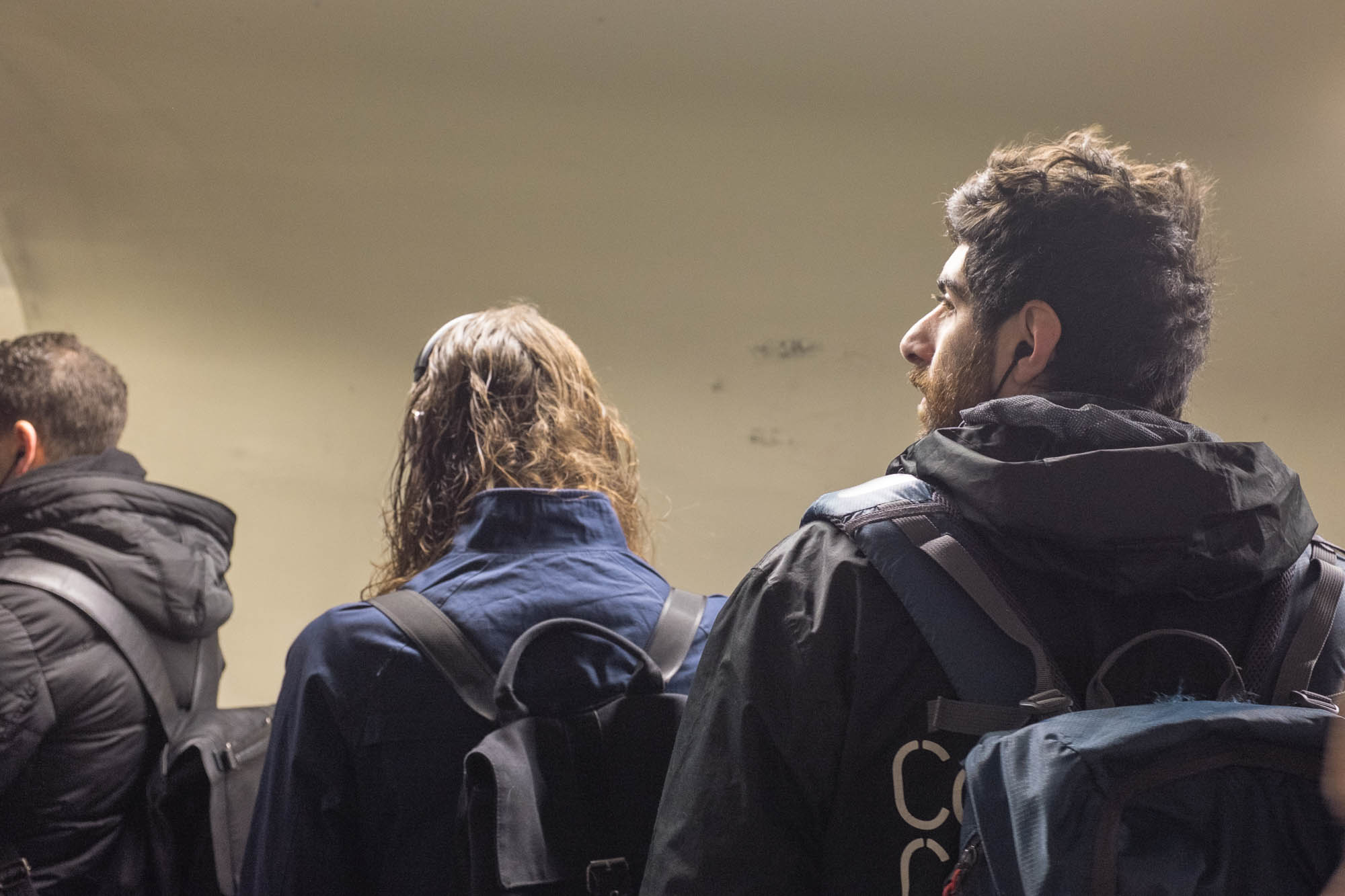
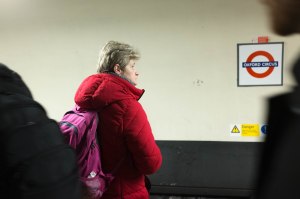
At this point, I also went back to the digital pictures and adjusted the crop of the pictures so to accentuate this sense of movement over the groups of selected pictures.  I also realised that the sequence would hang together better if individuals – the woman in the red coat or the tall man with a beard and a rucksack, for example –  could be followed from sequence to sequence.

The winnowing process could now be carried out again on the sections of the narrative that remained after I had abandoned the initial  idea of spreading the assignment over my entire journey. I had made another another batch of 6×4  prints made from pictures I had taken during the time I was working through the various edits to try and fill gaps (people getting onto the trains were tricky to isolate and I wanted a better train-leaving-the-station picture) and to add in further pictures of people who were recurring throughout the series:

Once this process was complete and I had made a final selection, I needed to work out how to display them. Again, both Short and Hurn and Jay had highlighted how different presentations – a photo story in a a Sunday supplement; an exhibition at a gallery; part of a book – all called for different numbers of images and for them to be sequenced in different ways.

I decided to put together two sequences which will form part of this log: a slideshow which should approximate the main presentation of the images at assessment, when A4 prints will be viewed one after the other as they are moved from one side of a clamshell box to the other; and a layout that could be used to display the prints framed, on the walls of an exhibition space.

Here, and for tutorial purposes, I would treat the slideshow as the primary view, with the exhibition layout acting as a variant.

Also, as a footnote almost, I have varied the size of some of the images within the exhibition view, playing around with the html to use a table to order and size the pictures on the page that will be displayed in your browser. I realise that this sort of thing – like having people smile in portraits – can be frowned upon, but I was very impressed by the variety of sizes of print displayed at Jurgen Tillmans’ retrospective at the Tate last year. The variations in size of the pictures broke things up, forcing the viewer  to move in closer for one picture and then to step back for the next, making it impossible to simply move along the walls, going from picture to picture to picture with them all blurring in one simple sequence. Viewing the pictures became much more active in the process, adding a lot to the experience of viewing the huge number of pictures shown.

Also, to return to the influence of Paul Graham on the development of this piece of work,  the way the pictures are printed and arranged across the pages of his recent collection of  work made in  America, The Whiteness of the Whale (2015)  led me to think about how differing the size of the individual images relative to one another might affect the way they are perceived. In  A Shimmer of Possibility (2005-2007)  irregular sizes within groups of pictures (where a cutaway to a parked station wagon is much larger than the main sequence of a man mowing a grass verge during a rain shower for example) vary the rhythm of viewing them while in  The Present (2008-2011)  each of a pair of pictures is presented the same size, but the size varies from pair to pair. The effect is very different from the regular steady progression from picture to picture as your turn the pages of Walker Evans’ American Photographs or Robert Frank’s The Americans.

I think that what I have tried here  is only the beginnings of experimenting with online layout beyond what is available in basic WordPress, but it is definitely something I would like to develop further as I move on.


Reference:

  • Butler, C (2010) Modernism – a very short introduction. Oxford, Oxford University Press
  • Graham, P (2015) The Whiteness of the Whale. Mack Books


assignment 3 – initial edit

You can create as many pictures as you like but, in your reflective commentary, explain how you arrived at the final edit. The set should be concise and not include repetitive or unnecessary images. Be attentive to this aspect of production.
Some questions to consider are:
• What order should the images be shown in?
• Are there too many repetitive images?
• Do you need to let go of earlier images because the project has changed?
• Are you too close to some of your favourite pictures and they don’t fit the sequence?
• Do you need to re-shoot any for technical reasons?
• Are there any gaps that need to be filled?
IaP coursebook – p.71

Recap: The Initial Idea – A journey in three parts with two entr’acts

Four times a week,  I travel on the tube from Walthamstow Central (a few minutes from where I live) to White City ( a few minutes from where I work). The journey takes around forty five minutes and is broken into two legs: first I take the Victoria line south to Oxford Circus; then I change to a Central Line train which takes me west to my workplace.

Like anyone who wants to optimise their journey, I have worked out exactly where to stand on the platforms and which carriage to get into in order to shave as many milliseconds off my commute as possible. I am sure I am not alone in this…

The previous post details how I got to the point where I had a lrge enough body of photographs to start off a rough edit. My intention was to end up with between 15 and 20 pictures, split into five sequences: Walthamstow; Victoria Line; Change at Oxford Circus; Central Line; White City.

The travelling sequences (two and four) proved easiest to put together…


Sequence 4 – Central Line; Oxford Circus – White City:

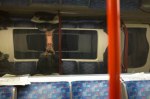
There is an obvious linear order here, and a sense of rhythm and movement provided by red pole cutting each image in two vertically. The pole is of course colour-coded to indicate the Central Line (contrasting with the pale blue of the Victoria Line). And of course, I appear in the second image, distorted in the mirror of the window  – another commuter, but one with a camera – while my newspaper appears at the bottom corner of the third, mirroring that of the woman opposite.

Sequence 2 – Victoria Line; Walthamstow Central – Oxford Circus:

This was another sequence that came together early on. It feels much more crushed and dark, with the movement provided by arrows and diagonals an tilt rather than the repetition of poles.

It would have been easy to go on taking pictures like these, but heeding David Hurn’s warning  not to reshoot the “gimmes” but to get on with the other things you were trying to photograph, I tried to concentrate on the bits that didn’t work yet – the ‘in’ and ‘out’ sequences and the interchange at Oxford Circus.


Sequence 1 – the start of the journey

I had intended to balance the White City/Destination Sequence with an opening group of pictures located at Walthamstow Central Station. It was all a bit literal and ‘sign-y’.

Pictures two and three both could be re-shot (two needs to be taken later in the day, when the sun has moved round to light the flat, north-facing sign; three to remove the woman walking towards the camera) but overall everything starts out well. On the plus side, the first picture managed to contain a lot of red and pale blue which would establish the overall colour palette from the off.

Sequence 5 – White City:

I began trying to arrange the sequences in a less linear fashion. In part this was to try and get around the way the exchange sequence needed to swap direction of travel from left-right to right-left.

Sequence 3 – Change at Oxford Circus

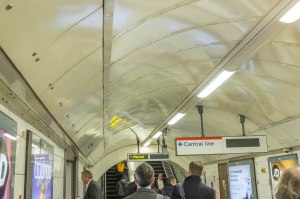
These work as pictures (I particularly like the radiating lines on the ceiling  in fig.1 and fig.3) but lack focus as a description of how I find my way through the station. There are figures who act as my proxy, the signs point the way, and the two escalator pictures continue the change of direction, but it doesn’t work yet as a sequence. I began to wonder how it could be expanded (and how the other sequences could be contracted to compensate).

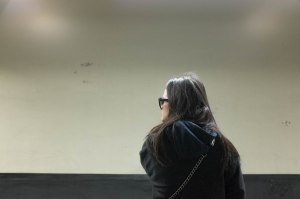
I had already taken the photographs that included the markers (bubbling paint and a plaque with a stripey red line indicating something or other to people in a different sort of know from the one I occupied) I used to indicate where I should stand to get onto the right carriage of the second, central line train:

Building Block 1 – peeling paint marks the spot!

What I couldn’t do was to find a way to fit in the other marker  – a bin that is pretty much directly behind the dark haired woman in the paint sequence:

I took other pictures in an attempt to fix it, but they didn’t really take off either. I made more prints and stuck them to the wall. I grouped different pictures into different sequences, organising them into chronological order or other ways indicating movement:

Building Block 2 – a Central-Line train passes through the station

For Example, I had already assembled this linear sequence. I had a lot of material to go between image 1 (train leaves the station, revealing the wall-plaque) and image two (woman in a parka in front of a train entering the station.

You don’t really see people’s faces on the tube, at least in part because of the rules we’ve absorbed about not staring… I tried to pick up on some other people waiting:

Building Block 3 – A growing sense of anticipation

And then, trying to get some pictures to indicate arrival at Oxford Circus, I took these:

Building Block 4 – Arriving at Oxford Circus

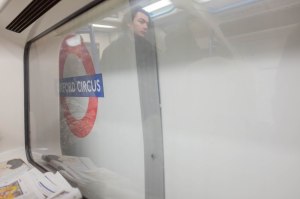
And it was with this group of three  – with a window acting as a fantastic mirror and with the camera and the train moving from darkness into light – that I got the final thing I needed; I thought of Paul Graham. There was movement and the station sign provides a definite location for what is happening. It would work nicely as an in media res (opening in the midst of an action) beginning. Could I lose the pictures that had been penciled in before these? Possibly I could drop everything I had planned to put earlier and concentrate on this stage of the story, while I was moving through Oxford Circus.

Perhaps it could move away from a prosaic description of my everyday reality and become something more subjective, more poetic even. I moved more pictures about on the wall, bluetacking them into new groupings…

I needed something to break up the arrival and departure of the Central Line Train. I had a lot of pictures taken while a train was in the station.

Pre-Selection short-ish-list – people getting onto and getting off trains

This is some of them; when you have people streaming both from right to left and from left to right, and you have people moving towards you from a train and moving away from you into a train, it’s quite hard to get a decisive moment but they could be narrowed down into further related sequences, and I had pictures that included quite a few of the people who featured in the ‘waiting’ pictures.

2 More Building Blocks: Narrowing Down Alighting and Boarding


And then, to finish it off, follow the woman in the red coat from BB3:

…let the train exit the station:


And close on the beginnings of the build up of people waiting for the next train.

I tried to balance the individual sequences as if they were balanced verses in a poem rather than paragraphs of prose, and ended up with eight sequences of 3, 2, 4, 4, 4, 4, 2, 3  pictures respectively (giving 26 pictures in total). It could still come down a bit, but at this point, I felt I had the good first draft that I had been looking for.

getting there – a work-in-progress installation view (the livingroom, home; 3/3/18 – 12/3/18)


assignment 3; mirrors and windows – ideas

Choose a community that you’re already a part of. It could be your child’s nursery or you regular gym class, but it should be something that takes up a substantial amount of your interest and time.

Create a photographic response to how this group informs who you are as a person. What aspects of this group or community reflect on you? What do you share? How does it function as a mirror reflection of who you are?

–  IaP coursebook – p.71

‘Something that takes up a substantial amount of your interest and time’  fits in neatly to Maria Short (in Context and Narrative) and David Hurn and Peter Jay (in On Being a Photographer) suggesting that you start by making a list of potential Subjects (Short) or Projects (Hurn and Jay)  that interest you. I took the list of traits I’d compiled as part of my response to Exercise 3.2 and came up with three areas for investigation here.

  1. Food and Drink – I’ve been taking photographs in restaurants, of the staff, the food and the place for almost as long as I have been travelling a lot for work. Also, I spend a great deal of time doing most of the cooking for my family. I have a half finished post (still in note form) putting together my thoughts about Masterchef (BBC) and its extremely satisfying story-arc…
  2. Travel – A lot of my archive (I have been looking back at my output a lot for this course, I think I am much more aware of what it is that I take pictures of and how it has changed over time) consists of pictures taken when I have been away from home, often on my own and usually for work, although holidays feature quite strongly too.
  3. Change – I am aware of how a large portion of the interest of photographs can come with the addition of time as the thing pictured changes or vanishes entirely. The area of London where I live is gentrifying rapidly while other things – failing shops, my garden in winter – decay and become shabbier before they in their turn are transformed into something new…

In the generally downbeat feedback for my previous assignment, a glimmerof hope was offered by the comment:

‘Your approach of searching and collecting images on a journey or holiday is important.
That’s something you can take from this, the fact that your perception to visual sights
is heightened when you’re not in a customary environment. But this searching and
collecting needs refinement.’

To it, I would add that I have long been aware of the need to be able to apply the same approach to my everyday life and surroundings. I have recently changed job and this has reduced dramatically my opportunities for travel (outside the UK at least). If I’m going to progress as a photographer, I will have to apply myself nearer to home…


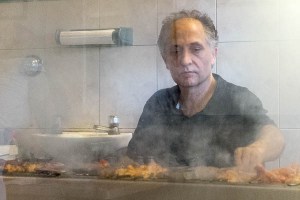
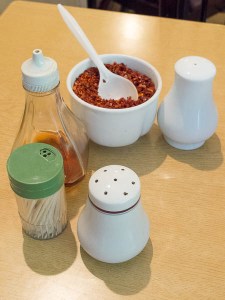
My first idea  (September – early December) had its roots in food and my neighbourhood. Ever since I moved into my flat nine years ago, I have been eating in (and taking food away from) the Turkish restaurant at the bottom of my road. I used to live on Green Lanes in Harringay (which is well known for its large Turkish community and their food)and have had plenty of opportunity to work out what I like. This restaurant – Bodhrum – is a very good one indeed. I get on well with the family who run it and thought I could possibly do a Life-style photo essay on a day at the restaurant, getting behind the scenes and covering the stuff that happened down stairs in the prep kitchen, the food and the grilling of meat and its service in the restaurant itself.

I got as far as asking the owner if I could come in for a few evenings and take pictures, and he was happy for me to do so, but somehow it never quite happened (the pictures above were taken a few years ago, when I was trying out a new camera while waiting for my takeaway to be prepared one Friday). Perhaps my enthusiasm was dampened somewhat by not really wanting to do something a ‘straight’ as my original idea, and possibly i wasn’t feeling up to the amount of interaction with people that would be involved, once you factored in customers (who I do not know) as well as the restaurant staff. I toyed with doing quite formal, lit portraits of all the people who work there to combine with images of the food and of them in action (missing out the customers entirely), but I’d lost momentum somehow.

And also burbling away in the background, I was trying to move house and this began to occupy more and more of my thoughts. So, my second idea (December 2016 – January 2018) began to form.  Having lived in the same place for a while, I know my immediate neighbours quite well and other people who live a bit further away to a varying degree. Perhaps I could do something around this, to form a commemoration of my time here?

If the pictures were captioned somehow with how long people had lived in their flats and where they had come from, some idea of how the community was changing would be able to be established. The longest-resident person was my downstairs neighbour Bill who – incredibly – had been living in his maisonette since 1960, bringing up two children there with his wife, who had died long before I moved in upstairs. We share a garden and I’d taken photographs of him before, but never quite got it right. I was playing around with redscale (reversing the film in the camera, so its red backing acts as a filter to the pictures) when I took this one of him. As is usually the case when I experiment with ‘alternative film processes’, I rather wish I hadn’t; this project would give me the chance to have another go.

Bill downstairs. Moved from Hackney in 1960. Retired.

I began talking to my other neighbours – no one objected in principle, but I failed to get dates in anyone’s diary – and started working out what lighting tests I’d need to make, to allow me to light portraits quickly using portable off-camera flash. Perhaps I could widen it to include the various small shops nearby where I buy the paper, buy milk, buy vegetables, buy meat; perhaps the Bodhrum idea could be incorporated too…

The project and its idea widened, grew more diffuse, and collapsed in on itself; I was going to have to organise and schedule a large number of individual shoots. In the end, I never really got started. The sale of my flat temporarily fell through because of issues with the chain but now it’s back on again (I hope) and while I’d like to follow through on the idea and take the pictures for this, I realised I needed something I could work on without needing to take more time that I don’t really have from my day-to-day life.

I needed a project where I could just start making  pictures.


Back in June, I had changed my job (but not my employer). Apart from the effect this had on my available intellectual energy as I absorbed what I needed to do my new work, the main practical difference was that my daily commute doubled in length. Instead of simply taking the Victoria Line to Oxford Circus, I now changed there and continued to White City on the Central Line. With a day a week spent working at home, I was now spending upwards of six hours a week in the underground system.

My journey to work was taking up a surprisingly  large part of my time – criterion one of the brief had been met (and I also had one of  Hurn and Jay’s key factors in determining the viability of a project – I had regular access to it). It fell into the travel category of my list of subjects while also occupying a place in the unexceptional part of my life (my criterion – work made nearer to home).

For a month or two, it also had taken up a reasonably large part of my conscious thought while I was doing it (criterion two of the brief, and meeting Hurn and Jay’s need for you to know a lot about your subject) as I had expended a considerable amount of thought on working out how to streamline my journey: which carriage should I get into at Walthamstow Central to so as to be in the right place to change at Oxford Circus? did this change if I was travelling in later in the day? – yes! – where should I stand  on the central line platform to be next to the doors that would let me get off next to the stairs out of White City station? I needed to work out how could I spend the least amount of time on my extended journey possible.

And of course, there are other people who do exactly the same thing, every day. Some of them even can be spotted on consecutive days if you get properly in sync. Could I find people to act as my proxy as I recorded my journey? Could people generally be used to motivate the sequence of final pictures internally by the direction they were looking, illustrating my/our journey? That would give you my community – city dwellers, barely acknowledging each other, but using public transport to get to the same place each day.

I worked out (Hurn and Jay again) that I would need around fifteen pictures: 3 at Walthamstow Station – three covering the journey to Oxford Circus – three for changing lines once I’d got there – three for the onward journey to White City – and a final three as I exit the underground at White City. I realised the number would inevitably rise for some of the stages of my journey, but it shouldn’t rise much beyond twenty.

Technically, my options were limited. You cannot use a tripod or artificial lighting on the underground system. I did not want to use an ostentatiously  large camera with an ostentatiously large lens. Possibly I could make a couple of passes with an SLR to catch details like signs and clocks and direction indicators with a longer lens, or wider general views with a very wide one,  once I had worked out which ones I needed to move my narrative, but for now I would use my nicely unobtrusive Fujifilm x100, with its fixed 35mm (equivalent) lens.

The first picture (Victoria Line)

I made a series of test pictures one morning, establishing that – in the steady light of the underground, I could get the right combination of depth of field (f2.8 in the darker tunnels and f4 or even f5.6 on the trains or the brighter parts of white tiled stations) and speed of shutter (1/30th or 1/60th with the option of dropping down to 1/15th if I wanted obvious motion) by working at an ISO of 1250-1600.

So, my technical constraints had been established and the only thing left to do was to just get shooting!

So I did:

This is a selection of the pictures I took during journeys to work between the eighth of February and the first week of March. As I continued to acquire images, I was creating sequences with them and using the next day’s journey to fill in gaps and replace pictures that didn’t quite work, either because of timing, or for technical reasons like poor focus.

Over this time I also made three trips to Boots to get quick 6×4 prints of good, final set  candidate pictures made. By the 3rd of March, I had pretty much all the pictures I felt I needed, bluetacked in sequence order to the plain walls of my living room…


Reference:

  • Short, M (2011) Context and Narrative. Lausanne, AVA Publishing SA
  • Hurn, D and Jay, P (2008) On Being a Photographer, 3rd Edition. Anacortes, Washington; LensWorks Publishing

Assignment 2 – Tutorial + Remake

It was another dispiriting tutorial. I’d been quite happy with the pictures; Robert, my tutor, was not:

“I think what you’re trying to do with regards to the vice versa brief sounds interesting but
is ultimately intractable and over-complicated. […] Your photographs seem to be holiday photos, and so a different project. […]  Actually it isn’t that clear how the concept of vice versa fits with your pictures, but they do seem like candid holiday shots that loosely cover the unaware and the aware categories in Part 2 of the course. […]  They’re very diverse pictures and somewhat ill-fitting as a series.”

I had, in his opinion (and, to be fair, in mine, too), over-thought things without managing to translate enough of the thoughts into something you could see in the pictures…

He did like two of them though (James and Alice in my sister’s kitchen – they’ll be in the assessment set)  but not the other three; he thought  – as with part one – that some of the pictures from the exercises were quite good.

fig.1 –  Alice at her Auntie Laura’s, August 2018

Perhaps  – he thought – I should create a set of varied portraits of James drawn from the mass of unedited pictures of our holiday to replace this set before assessment? Whatever it was that I was trying to say, it did not come across in the pictures. Hmmm…

fig.2 – James at his Auntie Laura’s, August 2017
I think (that word again!) that I was trying to take posed, setup pictures outside and to make un-posed pictures inside. I was also hoping – impressed by the sheer size of the photographs of Charles Snelling’s family album, as shown on Julian Germain’s site, in installation shots of For every minute you are angry you lose sixty seconds of happiness at the Baltic Centre in Gateshead – to do something similar in terms of taking family album shots and, through size ( and context, turning them something, not greater exactly, but different. Of  making the personal, public and giving viewers something to identify with, without their needing to know exactly who the people and places depicted were. What Robert had seen was just my holiday snaps.

There is no denying  that that is what they had started off as; but how could I make them somehow bigger in a way someone else could recognise? How could I transform them into something that other people could identify with, perhaps even into something approaching art?


At this point I went to see two exhibitions that made a big impression on me: Thomas Ruff at the Whitechapel Gallery (with four of his big portraits on display at the NPG by way of a teaser) and the show of Wim Wenders’ polaroids at the Photographer’s Gallery.

In my post about the NPG mini-exhibition (linked above), i included 3 Ruff-inspired portraits of James and intimated that I might include them in a remake of this asignment, at least in part to add more variety to a set of nothing but Jameses. For assessment, I think I’ll use the one of the back of his head, not least because (like surrealists’ photos of people with their eyes shut) this is an impossible viewpoint for anyone to see themselves from in real life, given that (even with mirrors) it is tricky to get anything approaching this clear a view of yourself from behind.

fig.3 – Obverse, James; London; 2018

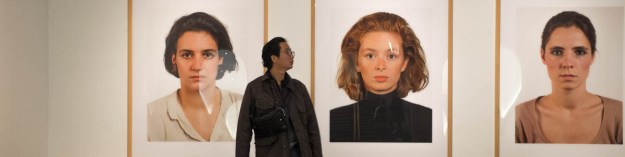
At the Whitechapel Gallery, at the start of his big retrospective, there were two series’ of appropriated and doctored Installation views from long-taken down exhibitions, one (presumably done specially for the retrospective) at the Whitechapel Gallery itself. Since I would not be able to get James’ Ruff-inspired portraits printed as big as Ruff’s originals (the assessment print will be A4 orpossibly A3) , if I wanted to see what it would look like on a truly grand scale I could do worse than re-working my photograph of the three big portraits at the NPG.

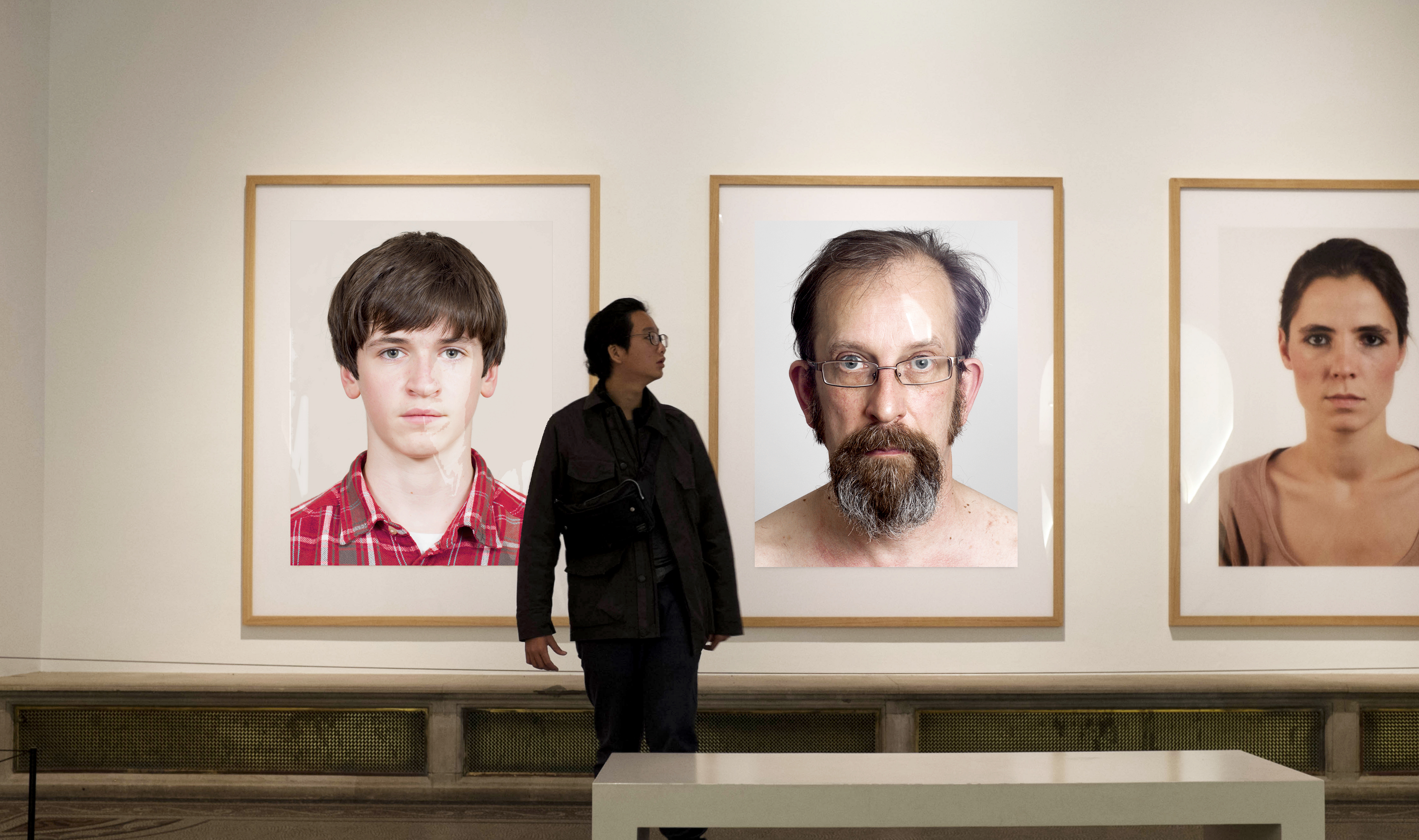
fig.2 – Portraits: J. Gow and S. Chirgwin (with A. Giese); Installation View, The National Portrait Gallery, London, 2017

For good measure I have included one of my base self-portraits for Assignment 3 of Context and Narrative. The most difficult part of this was replicating the reflections in the glass of the pictures, making them feel that they were really there.


Wim Wenders’ pictures at the Photographers’ Gallery were at the opposite end of the scale from Ruff’s – original polaroids, given added dignity by a mask and a frame. You could walk around, listening on headphones to streamed recordings of Wenders reading the relevant section of the text of the book of the pictures. The text turned what could have been mostly seen as insignificant adjuncts to Wenders’ film-making into marvelous chunks of deadpan autobiography. You leant in and peered at the tiny pictures; you smiled and listened to Wenders’ slow delivery of his words. They stopped being a crate of forgotten pictures and became little filmic sequences. Wenders talked about his work having personal relevance for him, but never revealed what was private. This seems to matter too.

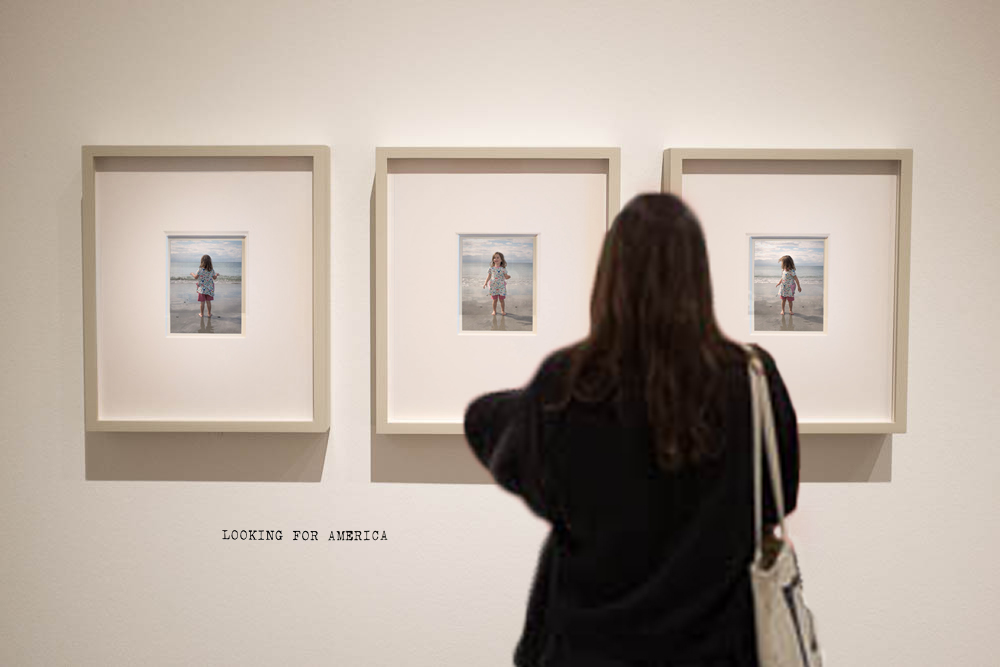
fig.1 – Alice, Skaill Beach 2018; Installation View, The Photographers’ Gallery, London, 2018

There’s nothing in between Skaill bay on the west coast of Orkney and America (Newfoundland, actually); looking out, as a kid I wondered if you might just be able to see it if you really, really screwed up your eyes and concentrated…

So, when I saw that one of Wenders’ sequences was titled LOOKING FOR AMERICA, it seemed obvious that that was the one I should appropriate for the three pictures of Alice at Skaill, one of a number of sequences of three related pictures that I had been unable to include in the original assignment set. The woman looking at them was really looking at Gursky at the Hayward.


I think this covers the opposed ideas of ‘street’ and ‘studio’ quite well. You have unposed, candid pictures taken at Laura’s, a carefully lit and posed picture of James and – taking studio to also mean pictures that are consciously put together – two composites, creating an elevated context for my pictures of my children.

I’ll redo my composite pictures before getting them printed – I was working with relatively small jpegs and they won’t enlarge particularly well. Also, since I did a Gursky pastiche for an exercise during part one of C&N, I have been enjoying the process of putting pictures together from different bits and seem to be improving every time I give it a go. I am aware that there are clumsy things that can easily be improved on (the expansion of the mattes from square to rectangular in the Photographers’ Gallery composite for example)  and In another few months (assessment in November, I’m thinking) I should be able to do an even better job, I hope.

But enough for now – I can procrastinate no more! Time to move on to Assignment 3…


Andreas Gursky at the Hayward Gallery

people looking at art


The picture at the top of this post is – of course –  a composite, made up of parts of three images. While partly this has been done to remove a woman walking through the sequence from right to left, blocking at times the three single figures on in the left half of the final image, it is also a thing I’ve become more and more intrigued by as I’ve moved through level one here, and a thing I’d like to explore further, though probably not during IaP. but who knows?

exercise 3.2 – so, what’s so unique about simon, then?

through a glass, beerily

Make a list of some aspects of your personality that make you unique. Start taking a few pictures that could begin to express this. How could you develop this into a body of work?

– IaP Coursebook, p.66

Well first, there’s all the physical stuff that could be used to identify me in a variety of – not particularly promising – situations: my fingerprints, my teeth or my DNA. Then there is my retina, which could be used at some point to get me into secure buildings. All of these could be turned into pictures, but they wouldn’t be very indicative of my personality or my perspective on things, what I think or indeed who I think I am.

My own DNA is a unique mix of my mother’s and my father’s chromosomes; my personality  – despite my mother’s (often exasperated) statement that I was ‘just like my father’ – is a mix of the two of them in much the same way that – when I look at photographs of them, or myself in the mirror – the lower half of my face is my father’s while my eyes, I think, hidden like hers  behind glasses, are my mother’s.

Both the two proceeding paragraphs use the phrase ‘I think’ quite a lot too. I think that’s characteristic of me and my personality. Here are some other ways I might characterise myself:

  • I’m inquisitive. Or nosy. Or not afraid to stare.
  • I’m interested in things
  • I prefer humour to concern.
  • I tend to approach things from the outside, even though in many ways, socially, I’m an insider.
  • I’m fairly introverted but – like many introverts –  I spend a lot of my time performing.
  • I prefer one-to-one meetings where the contradictory aspects of myself are less likely to be exposed
  • I like to put things (and sometimes people) together; I’m good at association.
  • I have traveled quite a lot.
  • I don’t mind eating alone in restaurants.
  • I can draw on a wide range of cultural references.
  • I am (and can be overly) analytical.

And I have read enough about psychology to know that any process of self-analysis can include a lot of transferred hostility. There could be elements of this in my reactions to this course…


I’ll look more closely now at one of those characteristics – ‘I have traveled quite a lot’ – and see where it leads. You may be able to fit others into my argument as you read…

I’m sure I was not the only person who – opening the curtains after waking up from their first night in a room on the north-west corner of the Hotel Rossiya in Moscow – thought ‘Wow!’ and took a quick snap of St Basil’s Cathedral. Quite a few of them would then have taken a more considered shot later, having worked out how to open the window (it was a sixties’ building, not a totally sealed and air-conditioned box) and got a desktop tripod out of their luggage to take a night shot. Lots of them would have gone on to do a matched night/day pair.


So there is nothing unique about either of these pictures (in fact they’re a visual cliché, signifying ‘Moscow’ as lazily as the Eiffel Tower does ‘Paris’ or Big Ben ‘London’). The rooms on that side of the hotel offered (past tense because the hotel was demolished more than ten years ago now) a good enough vantage point on Red Square for it to have been hired by people looking for a postcard image or similar. I’m sure there are published professional shots which don’t look too different to mine.

But just as most people would only have taken one, quick shot, even fewer people would have stayed at the Rossiya on a number of occasions and have taken pictures of other views from the windows of other rooms. Like this picture from opposite corner of the building, looking south-east down the river towards one of seven great tower blocks, built in Moscow in the late forties,  by German POWs:

fig. 3

This is still a cliché, but to a much lesser degree. Put it with the other two and it begins to become an – admittedly clichéd – response to a place.

I took (made?) these pictures a long time ago and, while none of them has any pretension to art, they aren’t bad as travelogue. They also are great as an aide-memoire. Looking at the two of St Basil’s, I can remember setting the camera up on the tiny tripod and tripping the timer so there wouldn’t wobble as I pressed the shutter; and I can remember the cold of the outside and the tiny flurries of light snow billowing about outside and the great window held back by the curtain. Looking at it, I can almost remember what it felt like to be me, 14 years ago now.

fig.4

Back in the present, I still look out of windows, and I still take pictures of what I see there. Indeed, there have been periods of time (usually when I’ve been travelling) when I have taken a photograph every day, of what I see when I first open the curtains.  Sometimes I’m reflected back at myself, either partially or clearly as if in a mirror. The repetition can be traced back to people whose work I have come across and liked, like Nigel Shafran; embracing the reflections in the windows I look through (and not cursing, and trying to eradicate them by varying the angle or using a circular polariser) after reading Tod Hido’s  ‘On landscapes, Interiors and the nude’ (aperture, 2014). The space I occupy will leave traces on an image what it is that I’m looking at. In cinematic terms, field and reverse collapse into a single, complex plane.

This pair of window pictures have repeating compositional elements: upper left – a rorschach-type blob; a diagonal space running from top left to bottom right; the hard vertical of the reflected banisters in on and the tree’s trunk in the other. And then,  fig. 5 (looking out of Tate Modern) makes me think of of Saul Leiter, reflecting back some of my cultural life; and fig. 6 (from my living room window in Walthamstow) adds the narrative human element of the two men and the child in the street.

I have no idea who they are or what they are talking about, as they stand underneath the nicely lit autumnal tree (the reason I picked up my camera and walked over to the window that afternoon) but they are the why I carried on looking and why I have done something with the picture rather than let it help form another stratum of digital silt on a hard disc in my attic. Not quite a punctum perhaps, but certainly something to  hold my attention, make me wonder and make me think. Hopefully they hold you too, as you try to identify what’s going on.

Three things come together in this sort of photograph: I occupy a space, in time; the point at which I make the picture is determined by the things I am interested in; and then there is an element of randomness, since I cannot control what is going on outside of ‘me’ but can pluck a moment from the chaos that swirls around me.

Physically, I always occupy a piece of three-dimensional space that is mine and – for that instant – mine alone. If I lift my camera to my eye and take a picture of what it is in front of me, I will have a picture that is unique to me and my viewpoint at the moment I took it. Talking about his early-70s work, American Surfaces Stephen Shore has described his process at the time as:

“At random moments, whenever I thought of it, I would take what we would call today a screenshot of my field of vision. What was I looking at? What was the experience of looking, like? And I used that as a reference of how to make a picture, rather than the more conventional language about how a picture is supposed to be constructed.”

https://www.moma.org/audio/playlist/45/717 (accessed 29/1/18)

I used this approach for the diary sequences I made during part 3 of Context and Narrative. It is quite easy to maintain this when you have a finite amount of time in a place that is unfamiliar. It is harder to apply it to your everyday surroundings. This is something I am beginning to work with, creating bodies of work from the normal stuff of my life rather than the bits that are in some way exceptional. I have spent a lot of time recently looking back through my archive. The addition of elapsed time helps with this. Ostensibly dull pictures from ten years ago seem fascinating as things change and what is depicted is no more. The pictures taken in London become as distant as those taken somewhere abroad…

Over time, my photographs become a running commentary on where I have found myself, and what I have seen there. They also contain traces of more than fifty years of cultural input. Put together, it all begin to indicate something of who I am.

Any uniqueness of approach cannot be said to come from the individual pictures, rather it only becomes possible when you put those pictures together into sequences of increasing length and complexity. You could compare the pictures to words (we all use the same lingusistic building-blocks in order to communicate, even if some people do still manage to create neologisms) and sequences to sentences. At this larger level there is still scope for originality, for the unique, even when the individual elements have been worn shiny through use. I’ll close this post with eight words, two of which are repetitions, one of which is repeated twice; all of them consist of a single syllable. Any English speaker will use those words every day; the sentence is nonetheless unique, and – providing the bit of the culture it comes from is a thing that we share – immediately identifiable: 

‘…and yes I said yes I will Yes.’ – James Joyce; Ullysses (1923)

Twelve From 2017

contact scan of part of a roll of film, exposed c.2008 and processed in 2017

For the last couple of years, as Christmas approaches, members of the OCA Photography Level One facebook group have posted twelve pictures that they have taken (or made) during the year that is nearing its end.

Back in December, I should have been finishing off Assignment 3 (it would have been a few days late, but nothing serious); making a considered pre-Christmas post on facebook could be seen as a major act of displacement. Now, three weeks later, repeating the post here could – charitably – be seen as an attempt to jump start further progress with IaP.

Here they are:

fig.1 – January. Caversham Park.

Colours, light and shadow and shapes. Simple and satisfying.

fig.2 – february – regent st in the rain

Chucking it down. I found an awning and watched people more eager than I was running by to get to work.

fig.3 – march – lea bridge road

A mini cab office. Lots of nice rectangles.

fig.4 – april – walthamstow

I always wondered what the deal with buying a pair of shoes was…

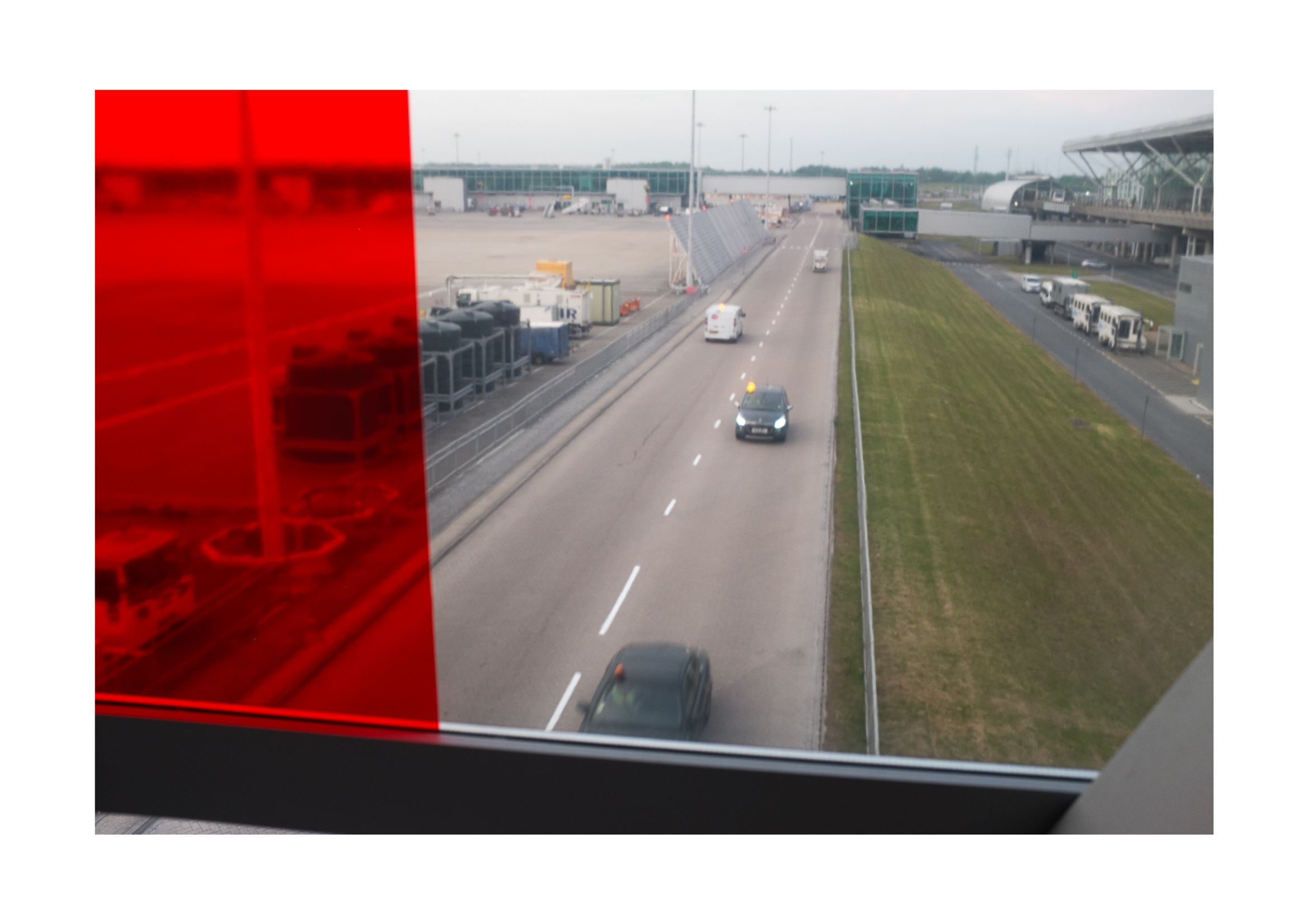
fig.5 – may – stansted

A tricolour. Even though I wasn’t flying to Italy.

fig.6 – june – south of the river

Heading home from a friend’s fortieth birthday party. Nice light for me to feel horribly old in.

fig.7 – july – kyiv

Somewhere off Shota Rustaveli.

fig.8 – august – southend

Idly taking pictures while queuing to go on a rollercoaster.

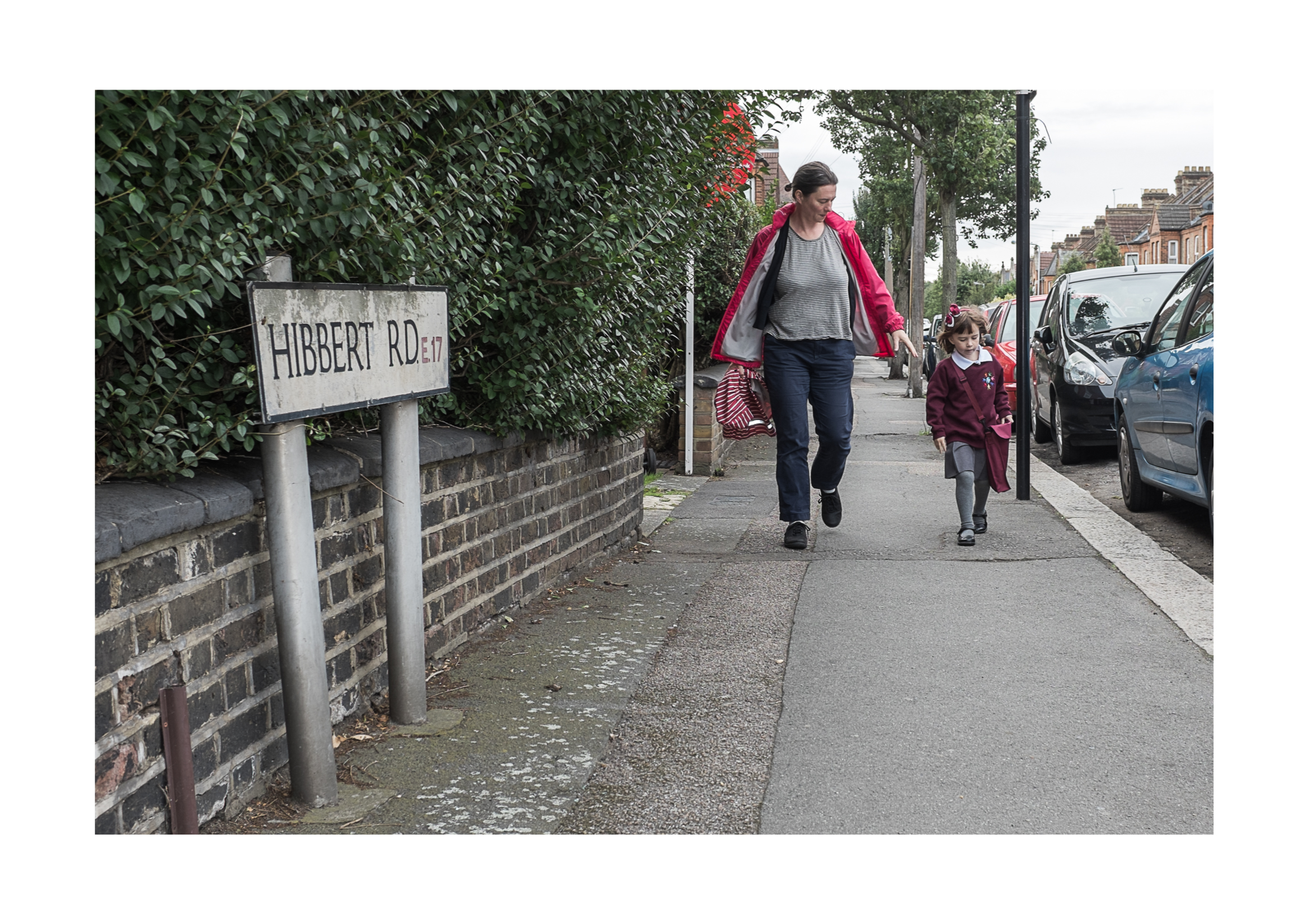
fig.9 – september – walthamstow

Alice starts school.

fig.10 – october – glasgow

Opposite Cessnock Subway. Oddly satisfying.

fig.11 – november – whitechapel

Or maybe Fitzrovia. Delighted at the way the letters on concertina-ed shutters you weren’t supposed to park in front of fell.

fig.12 – december – underground

Bank station. Under renovation.


I captioned the set overall with…

“In the end I narrowed things down by choosing one photograph a month. This is a bit rough on months like July when I was spoiled for choice and conversely rather kind to June.

I have not included any pictures that I’ve used in my log.

If I had to choose again tomorrow, I might not go with the same 12, of course…”

…and posted it at 20.20 on the 20th of December.


I suspect that, at this stage, I should be moving away from individual pictures a bit more than seems to be the case here, although of course, very few of them are just ‘one of a type’ experiments and some of them – February or August, say – could easily be fitted into work done for Identity and Place; December is only the latest of many pictures taken over the last fifteen or so years of underground stations as they are given a facelift; while even the most family-album/documentary-style picture – September, taken on my daughter’s first day at school – is taken in a conscious, thinking way.

It was interesting to work through the thousands of pictures I have on hard drive from last year, if only to get some sort of idea of what I make pictures from when I’m just making pictures. Some themes and styles probably should emerge from this, that will then feed back into my course work. It also is probably part of the process of establishing what my ‘voice’ is.

I said in the text wrapper for the pictures that none of them had been posted here either in response to an exercise or an assignment; I may well use some of them (or ones that got as far as the final long-list) to illustrate the other posts I’m working on now.

The header to this post – while it didn’t make the final cut for the year – possibly comes close to encapsulating at least one of things I use photography for. I finally got round to processing a roll of Agfa B&W film that I had taken back in 2007 or 2008 when friends had bought me a night on The Watercress Line’s Real Ale Train. It was very gloomy and – even though I’d exposed the film as though it was 800 rather than 400 asa – everything came out rather underexposed. Possibly, I should have pushed the film further, but it’s too late to think about that now. However, the reason it almost made my pick of ’17 was because of the way that faces (all belonging to people I am still in touch with) loomed out of the darkness, encapsulating that marvellous time-travel thing that photography is capable of, if only you’ve had the foresight to take the pictures in the first place.

Fiona was in some of the shot’s on the beer train, and there she is in the September picture, walking to school with our daughter; other pictures ripple backwards through other earlier photographs, linked either by subject matter or theme or place. It is hard to harness this in the assignments for the level one courses, but it is definitely there in the photographs I have been taking.


And finally – before I crack on with part three of IaP – by way of further comparison, here are my twelve photographs from 2016:

I could write much more about all this, and try to work out how my work has changed over the last two years, but that would definitely be pure displacement. Time to hit the mid-blue publish button and to open another, save draft for a post…

Four Portraits by Thomas Ruff – National Portrait Gallery, London

at the national portrait gallery – october 2017

There is a landing at the back of the National Portrait Gallery, half-way down the flights of stairs where you are confronted by four enormous heads, three facing you and a fourth on the wall to your left.  Tying-in to the big Whitechapel Gallery retrospective of his work, these four photographs are a small subset of Thomas Ruff’s 1980s’ series, Porträts (Portraits).

I looked at the four women’s faces for a while, and watched other people looking at them; then I went home and found the interview with Ruff referenced at the end of this post. All quotes from Ruff come from this interview; all commentary is mine.


In a way I wanted to blot out any traces or information about the person in front of the camera. I also wanted to indicate that the viewer is not face-to-face with a real person, but with a photograph of a person. Quite often people at the exhibitions say, “Oh, that’s Heinz, that’s Peter, that’s Petra,” because they’re looking through the photograph, confusing the medium with reality. By blowing the portraits up to a colossal scale, I forced the viewer to realize that he is not standing in front of Heinz, but in front of a photograph of Heinz.

At first, I thought the lighting glaring off the – presumably not non-reflective – glass in front of the picture was annoying. But then I began to see it as a further distancing strategy: no matter how close you come to them, either through their sheer monumental scale – I reckon each woman would be about thirty feet tall if these were full-length portraits – or just physically as you are drawn closer and closer, you never get quite close enough to resolve who the person pictured is. And further, as you step in,  you are aware not only of the frame that surrounds each print, but also of the white border around each photograph, drawing attention in turn to the ‘frame’ determined by Ruff as he set up his camera. You are definitely looking at pictures, not at people.


I don’t think that my sitters build stone walls, but rather that they say to the viewer, “You can come this close, but no further.” Maybe my portraits are anachronistic because even though they show every detail of the skin, clothes, and hair of the sitter, they still don’t try to show any of his or her feelings.

Based on Ruff’s discussion elsewhere in the interview, I take ‘anachronistic’ here to refer to the early Victorian view that photographs made ‘automatically’ or without the agency of an operator, inscribed indexically by  ‘the pencil of nature’ rather than the bulb-release of the artist.

The pictures seem to exist somehow outside of history, but Ruff is quite clear that their making was heavily influenced by the zeitgeist of the time of their making in the early eighties. He was working in pre-reunification West Germany; Orwell’s 1984 was being examined as if was a prophecy rather than a cautionary tale written nearly forty years earlier and surveillance imagery was everywhere; in the aftermath of the Baader-Meinhof group’s campaign of bombings and kidnappings, people – and particularly young people, like Ruff and his subjects – in the BRD were continually being asked to produce their identity papers.

It may be that because the ideas contained in Bladerunner are once again in the air (the original was released in 1982; it was the first surround sound film I ever saw, in Aberdeen, the day before I saw Elvis Costello on the Imperial Bedroom tour) but they to me, they look like replicants (Philip K Dick’s term for androids) or maybe, since Ruff is German, Kraftwerk’s robots.

Which in turn moved me onto the Krautrock bands’ (and other groups of European musicians’) attempts to make music that was not rooted in American music – the blues in particular –  instead using repetition (think of Jaki Leibzeit’s drumming with Can or pretty much anything by Neu!) and the rejection of overt emotion (Kraftwerk – the difference between ‘fahr’n fahr’n fahr’n auf der Autobahn’ contrasted with the Beach Boys’ ‘Fun, fun, fun’…) in playing and performance. Is the repetition of the typology in the work of the Bechers happening in the same space as the drumming of Jaki Leibzeit for Can? Is the tension between extreme revelation  of Ruff’s enormous ID pictures somehow linked to Kraftwerk’s cold, yet fascinating and engaging music?

‘Theirs [Arbus and Avedon’s] is a glib, New York version of sentimentality, one that thrills itself with the hysterical belief in antagonism and grit as truth, but that’s sentimentality all the same. Provocative as their pictures may seem to be at first, people love them – perhaps counterintuitively – for that titillating myopia, because they corroborate, rather than challenge, our baser preconceived notions.They never make the more evolved leap to a form that genuinely tries to create a unique means for people to perceive one another.’

As a starting point for further thought, this rejection of American culture seems worth noting. I am of a similar age (or a bit younger) than Ruff, and I remember The Clash being ‘bored with the USA’ and all the other rejections of ‘Rock‘ by the musicians I was picking up on during the late seventies and early eighties. There’s something to explore here, some balancing European photographic tradition to be examined as parallel to the American one developed and sustained by MOMA and Szarkowski…


More immediately though, one of the things that is becoming apparent to me as I work through IaP and receive (somewhat unfavourable) tutor feedback on my assignments is that it is easier to produce art-style pictures of people that you don’t know. Also, as I have already quoted Grayson Perry as saying – if they’re not smiling, it’s probably art (with it’s counterbalancing ‘if they are smiling, it probably isn’t’).

Ruff has already discussed the way that photographing older people  – he uses the examples of Richard Avedon and Diane Arbus – whose story could be said to be written on their face, can lead to a sentimentality of approach separate to the question of whether they are smiling or not (although generally in both Avedon and Arbus, they are not) , before he adds photographing your children into the mix:

All parents want their child’s smile as proof that they’ve done a good job of parenting and that the child is happy. My [Ruff’s] portraits look so Apollonian because the sitters provide a perfect surface onto which the viewer can project anything, bad and good experiences alike. They’re neutral and friendly, like Buddhas. They’re vessels you can fill with all of your wishes and desires.

This is close to Gombritch’s idea (discussed in Bate) of sfumato, or of leaving space for the spectator to project their own self into a picture of a stranger by reducing individual identifying detail in the picture, but it takes it a bit closer to what I was trying to do with some of the photographs in assignment 2. I used pictures of my children, on holiday, and  – in two of them – they were looking happy! 


‘[Ruff’s subjects were] people between the ages of twenty-four and thirty-four, and life hadn’t yet left any signs on their faces. They weren’t babies, but they hadn’t had too many bad experiences, either. They were in that state in which everything is still possible.

I had thought this too, looking at the pictures at the NPG. I had even gone on to think about the difference between the four pictures on display here and the (fascinatingly and variably readable) pre-execution mug-shots taken in Soviet prisons during the great terror that I had sat and watched sliding by as part of the Images of Conviction exhibition at the Photographers’ Gallery last year.

What I had not thought about was how this meant that I would be unable to make a similar portrait of my generation, now as today (when we are moving through our fifties) our faces are too battered, too readable for this approach to work. ‘Sentimentality’ would have reentered the picture space. This raised the question in my mind of whether James (who is fifteen) was old enough to be pictured in this way as a blank canvas, devoid of my sentimental projections as his father (Alice, at four-and-a-half, definitely is not).

I set up Ruff’s 1987 standard portrait lighting (you can see the two diffused strobes, placed right and left, slightly above the eyeline, reflected in the pupils of his subjects) and stood James in front of the most neutral of the living room walls. I told him ‘to look into the camera with self-confidence, but likewise, that [he] should be conscious of the fact that [he was] being photographed, that [he] were looking into a camera.

Unlike Ruff, I did not use a view camera (you could make a significantly larger-than-life print of these from the files produced by camera though) but James did a grand job of being my subject I think; I will include the first picture of the three above in the revised set for Assignment 2 I put in for assessment, next year, replacing the one of him buffeted by the wind on the boat as we headed north. I would not use the profile (too obviously a mugshot reference, and so adding prompts for a reading) but may also put in the picture of the back of his head. We’ll see.


I will go to visit the full retrospective at the Whitechapel Gallery next week, I think. There will probably be a longer, update piece…

All quotes have been taken from an interview with  Ruff by Gil Blank, originally published in Influence Magazine (Issue 2, 2004) and accessed online at Gil Blank’s artist’s site on 12/10/17