Category Archives: Coursework

Exercise 1.3 – Off to one side a bit


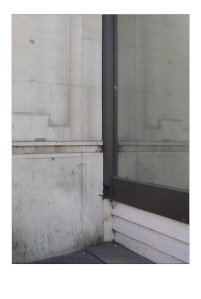
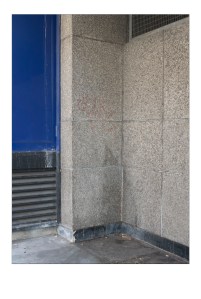
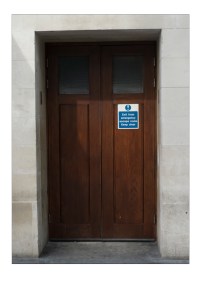
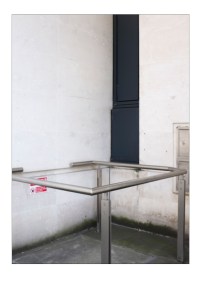
places where people who were smoking outside buildings had been smoking – april 2017


As mentioned in my previous post, easily as many people declined to have their picture taken by me as agreed to be included in my smokers’ typology. After a while, I realised that I could always take a picture of where some of them had been standing, after they had gone. I tried to keep the focus slightly in front of the wall, where the smoker would have been and tried to make interesting compositions that would work with the others in a grid.

Here they are. I quite like the effect and probably would be more likely to have these printed, framed and hung on a wall somewhere than the ones that actually have people in them.

Exercise 1.3: A Typology of My Own

‘In response to Sander’s work, try to create a photographic portraiture typology which attempts to bring together a collection of types. Think carefully about how you wish to classify these images; don’t make the series too literal and obvious.’

– IaP Coursebook p.29

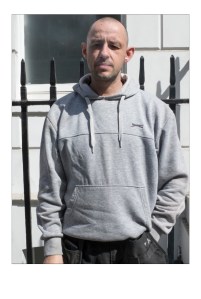
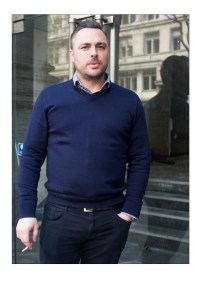
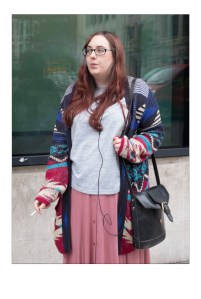
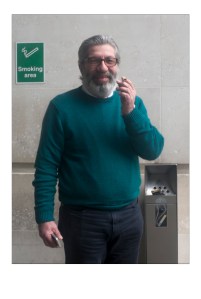
people smoking outside buildings – central london, april 2017


“Excuse me – for an art college project, I’m taking photographs of people smoking outside buildings; you’re smoking outside a building – can I take your photograph, please?

I said this, or some version of this more than a hundred times over the course of six or so lunchtimes back in April. Around forty people said yes and I ended up with around seventy-five pictures (usually two of each smoker: one of them with a cigarette near or in their mouth; the other with the cigarette well out of the way of their face) that I was happy enough with for them to go through to the next stage of the edit. Continue reading

Exercise 1.2: Background as Context

sean in the three judges, glasgow – may ’17

“Make a portrait of someone you know, paying very close attention to what is happening in the background of the shot. Be very particular about how you pose the subject and what you choose to include in the photograph. Ideally, the background should tell the viewer something about the subject being photographed.”
IaP Coursebook, p.26

I have mentioned Sean in my learning log twice before: he was one of the people who helped me generate my self-portrait in part three of  Context and Narrative and he made a cameo appearance as a ‘colleague’ in my discussion of Robert Adams’ Why People Photograph during The Art of Photography.

We both come from Orkney; our sons are in the same class at school; we shared a flat for a while. I have played in bands with him, played in the same Glasgow chess club. He is a rather good photographer and writes proper computer code for a living.  Continue reading

August Sander and Typology

‘What did August Sander (1876-1964) tell his sitters before he took their pictures? And how did he say it so they all believed him in the same way? […] Did he simply say that  their photographs were going to be a recorded part of history? And did he refer to history in such a way that their vanity  and shyness dropped away, so that they looked into the lens , telling themselves, using a strange historical sense, “I looked like this”?’

– John Berger (1979)


The more I look at August Sander’s photographs of people in Germany at the start of the 20th century, the less certain I become of what exactly it is that I’m meant to be looking at. If – as Sander claimed – they form a cross-section of a society, it is not a society that I have personally experienced. 

All my examples are taken from the 1994 reissue of Face of Our Time. Sander died in April 1964, a month after I was born; time has moved on and if I wish to pick up on signifiers that would have been shared by Germans of Sander’s generation, Looking at his pictures, I must act as a historical detective, not as a member of that ‘Our’ in the title.

Continue reading

Exercise 1.1: Jean-Baptiste Frénet – Madame Frénet et fillettes, c.1855.

Madame Frénet et fillettes, c.1855. (Image Copyright, Wilson Centre for Photography)

I went twice to see Tate Britain’s 2015 exhibition Salt and Silver. This picture hung in the final room, Portraits and Presence. Certainly, it was the presence of a woman who must have been dead for nearly a century and a half by the time I was standing in front of her portrait that drew me back to this particular photograph again and again.
Continue reading

KW15 – A Square Mile

“In our earliest years we know a patch of ground in a detail we will never know anywhere again – site of discovery and putting names to things – people and places – working with difference and similitude – favourite places, places to avoid – neighbours and their habits, gestures and stories – textures, smells – also of play, imagination, experiment – finding the best location for doing things – creating worlds under our own control, fantasy landscapes.”

(Professor Mike Pearson)

“Photographers and artists have always found inspiration in their immediate location. There is a concept within Welsh culture called Y Filltir Sgwar (The Square Mile), described above by Professor Mike Pearson. It is the intimate connection between people and their childhood ‘home’ surroundings.

Make a series of 6–12 photographs in response to this concept. Use this as an opportunity to take a fresh and experimental look at your surroundings. You may wish to re-trace places you know very well, examining how they might have changed; or, particularly if you’re in a new environment, you may wish to use photography to explore your new surroundings and meet some of the people around you.”

IaP Coursebook (p.15)

fig.1 – Map of Kirkwall showing a square mile…

In 1983, between my first and second years at Glasgow University, I spent the summer back home in Kirkwall. Nothing much seemed to have changed; nor did it seem likely to change at any point in the foreseeable future. Glasgow, on the other hand, already seemed to be in a permanent state of flux. Almost the first thing I noticed when I returned in the autumn was that the derelict facade of the Grosvenor Cinema on Byres Road had been pulled down and rebuilt.

A simple opposition was established: Orkney- rural, eternal and unchanging, a little bit dull; the city – mercurial, fluid, exciting. My idea of a romantic landscape leant more towards a neon sign reflected in a puddle than some blasted heath or a Turner-esque storm at sea. If anyone asked me whether I missed Orkney, I would answer that it was still there, to be visited any time I wanted.
Continue reading

NFTU #3 – Nikki Bird + Beneath the Surface

bidston-2-colour-edit

Scapa Court, Kirkwall (KW15 1BJ) in 1968/69 and in 2016

‘[Showing] the relationship between the past and the present […] so it’s not just “the past is over here and the present is over here” and that is it’

– Nicky Bird, interviewed on video for the Stills Centre of Photography in Edinburgh

While I was doing some reading on Nikki Bird for part 5 of C&N (around Question for Seller), I came across a later piece called Beneath the Surface, where Bird had worked with people whose part of Scotland had been “wiped away” to combine their photographs with up to date pictures of the places in the pictures. At the time when she first started thinking about this, she had been involved with an archaeological dig in Edinburgh.

Bugger! I thought. Continue reading

The Masks I Construct – Social Media Profile Pictures

reichstag ceiling – used as my cover photo on facebook

‘If you have a social media profile picture, write a paragraph describing the ‘you’ it portrays. What aspects of yourself remain hidden?”

IaP Coursebook p.13

I have several social media profile pictures, using different ones for different sites, representing a different avatar of mine.

‘I’m using “avatar” not in the Hindu sense of embodied deities, but in the modern sense of online creatures who stand for, or in front of, aspects of real life.’

Jackie Ashley, The Guardian, 17/02/17

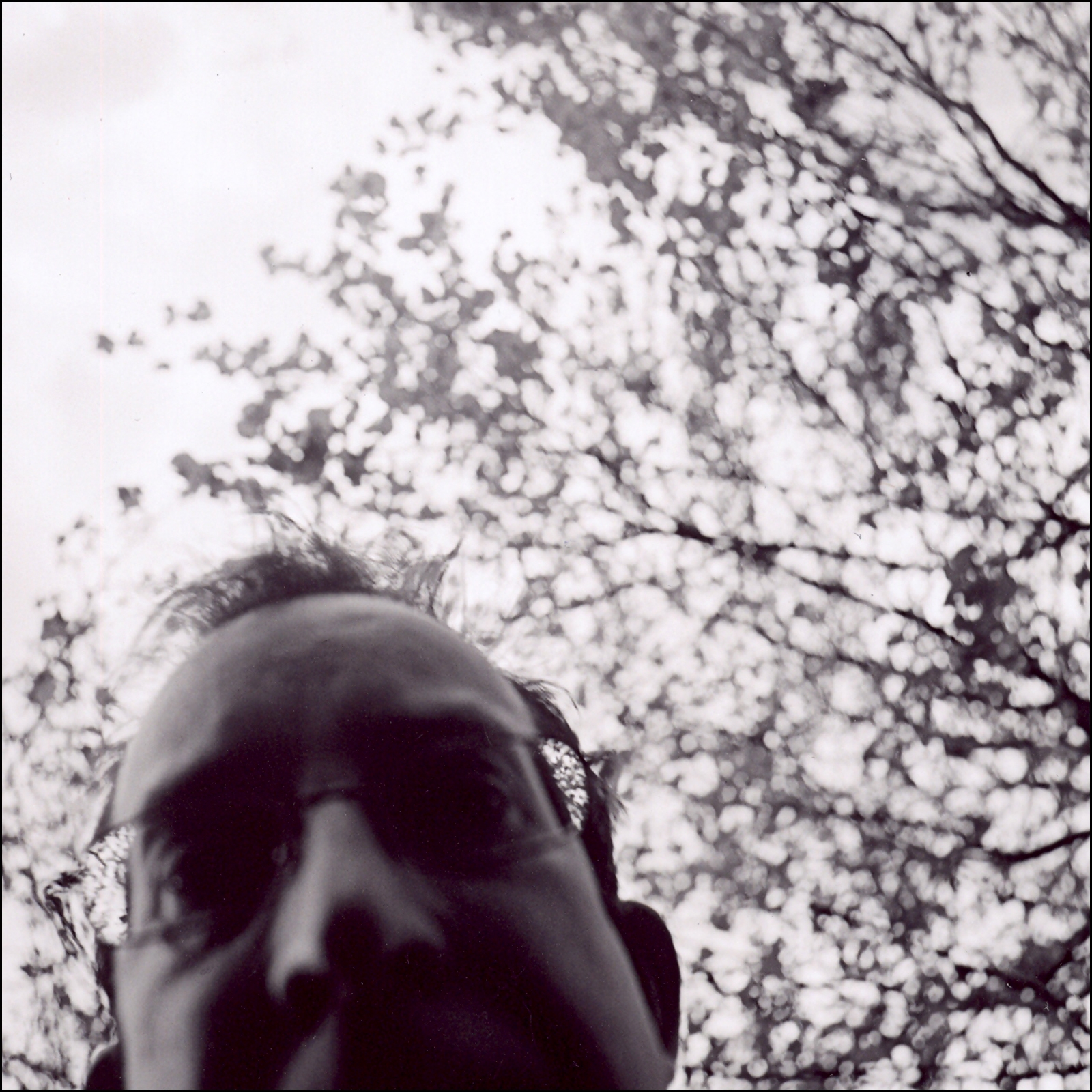
hang on - is that what's the matter? ah! whirr-kerrr-chunkh! (inadvertant self-portrait # 352)This is the one I use (cut down slightly) on Flickr:


 I use this one on Twitter:
avatar_400x400


…and this, on Facebook:

Continue reading