Author Archives: Simon Chirgwin

reflection point – on looking out of train windows

How often do you see people walking and reading their texts or on the train and reading their tablet rather than enjoying the view? What are we missing when we do that?

– IaP Coursebook, p.106

In its final chapter – The City and its Discontents –  of Sudjic (2017), the idea is floated that – by burying themselves in a screen – pedestrian city-dwellers lose their ability to navigate their streets deftly, becoming instead less of a citizen and – like (bloody) tourists – more of an obstacle to people who know where they’re going. Certainly, you become less aware of the space you are passing through. Like listening to music on headphones, you become less present, more abstracted. You have ceased to be in the here and now.

When it comes to journeys, I value the sense of time-out  far too much to try and remain engaged with the quotidian of my regular life. I certainly never try to work, unless I absolutely have to. I may read, or I may play with photography from a train’s window, or just to lose myself in the movement and of being in motion through somewhere. Travel takes place in a corridor as  – in the case of railway, literally – you follow a line through the geography of the country, rarely seeing much beyond a few hundred yards on either side of the track.

So, on a journey to Manchester for work, I put down my newspaper and switched off my laptop, forgetting to take a picture for the series I was making for exercise 5.1; Instead I started to stare out of the window, and – in the spirit of Georges Perec – began making notes of what I saw.

25-vi-18 Stuff seen from the Manchester train, looking east.

  • A cluster of 6 or so wind turbines
  • A remarkable banked tilt as we approached (and then went under) a motorway – vehicles, sheets of metal standing like gravestones and – I think – some real beehives
  • Colwich Memorial Garden
  • A park of OpenReach, Thames Water and (orange) RAC vans
  • A blue portaloo at the far corner of a field, after a caravan with a factory (concrete?) in the background
  • Pink-wrapped hay bales dotted over a field
  • Sheep dotted over a field
  • Industry – modern steel shell and victorian brick
  • Farms
  • Pylons, overhead electricity – POWER!
  • People on Platforms, waiting for trains
  • Graffiti
  • Was that a castle on a hill? With a village?
  • Some sort of huge comms mast on the horizon; contrails overhead (photo)
  • -> Arriving in Macclesfield
  • Steel Fences to keep people off the track
  • Stairs so people can get down to the track if they’ve got keys for the gate
  • A pregnant woman in a red and white striped top at Macclesfield; a man in lycra with a bike; a man with an interesting tube/container thing

fig.1 macclesfield

  • Facing forward, I see what’s coming
  • 5 brown cows on a hillside, straddling a path between some trees. How now.
  • Green (grass, trees) – Blue (sky) – Grey (gravel, stone, concrete)
  • Steps up to a green painted footbridge over the railway
  • Stations we don’t stop at; the signs blur past, too fast to be read
  • ‘Polish flag’ signs at bridges
  • Back gardens glimpsed through trees
  • An old(ish) woman in a shocking pink skirt and bikini top in the sun taking down the washing in the back garden of her cubic postwar house
  • Brown brick; grey slate
  • A train whizzing past, going the way I’ve just come
  • Greened up copper on a roof
  • NCP car parks
  • Tethered bikes and golden dried grass like a horse’s mane poking out of gravel at Stockport
  • Chimneys
  • The tradesman’s entrance to cities
  • Regent House Travelodge (blue); Redrock Stockport (red, funnily enough)
  • A rusty metal footbridge – Ardwick – with the Etihad (?) stadium in the background
  • Cranes, construction all around as we near Piccadilly

There are many precedents for taking photographs from trains, and Dyer in The Ongoing Moment makes a strong case for train travel leading to a different, more serendipitous perspective upon a country than the road trips across the USA made by photographers such as Robert Frank or Gary Winogrand in the sixties. He cites Walker Evans’ in some of his pieces for Fortune Magazine or Paul Fusco’s pictures of people lining the tracks, taken from the train carrying the coffin of Bobby Kennedy from New York to Arlington almost exactly 50 years ago.

Beyond photography, I immediately found myself thinking of Phillip Larkin’s poem, The Whitsun Weddings, where the view from a stopping train leads to a reverie on marriage and what it means and on Larkin’s being single when so many people are not. And how Larkin took photographs (and was good at it, too).

fig.2 – from an earlier journey,  heading home from Nottingham

It’s quite hard, maintaining concentration as you watch the country and the towns slip past and make notes; you do end up making connections and thinking about things, based on what  you have seen and how you relate to it. On your phone (more so than reading a book or the paper – I don’t know) you are abstracted from you surroundings, you are somewhere else rather than in the here and now.

Reference:

  • Sudjic, Deyan (2017) The Language of Cities. London, Penguin
  • Larkin, Phillip (1964) The Whitsun Weddings (in the collection The Whitsun Weddings, Faber and Faber, London)
  • Dyer, Geoff (2006) The Ongoing Moment Abacus, London.


exercise 5.1: still life

fig.1 – a pair of converse; a couple of summers

Create a set of still-life pictures showing traces of life without using people.

You could do this with your camera phone to reflect the vernacular and transient nature of these moments or you could choose to use high-quality imagery to give these moments gravitas, like Nigel Shafran. Your technical decisions should back up your ideas, so write a short reflective commentary detailing these decisions and the reasons for them.

– IaP coursebook p.105

1: Moving House:

For most of the time I’ve been working my way through this module, I’ve have also been in the process of selling my house and buying another with my partner. Last month, after various false starts, all the process turned into reality and we actually moved. I had lived there for nearly ten years and it had been home to Fiona and our daughter Alice for the last five. It’s amazing how much crap you can amass in that time…

I didn’t want to move a load of junk from one house to another, but I didn’t want just to bin it before the move either. I set up a simple plain backdrop (a roll of paper) and lit it with a diffused strobe in my attic workroom. I used this to take photographs of a lot of the things that had been put aside for one reason or another and then even managed to bin some of them. The pair of shoes at the top of this post are one example.

Then,while a lot of the stuff that had built up in corners or on top of wardrobes or in the attic had no real structure to it, other areas had been put together in a considered way. There was the shelf at the top of the stairs up from the front door, the pin board covered in local announcements and post cards sent by friends, the magnets commemorating journeys stuck to the fridge, the galleries of pictures on Alice’s bedroom walls and there was the living room mantelpiece. I wanted to record these carefully, as they had a lot of potential to describe who we were and what we had done while we lived in the house. The living room mantelpiece had the best mix of all of us, so it is the one I include here.

fig.2 – fiona, alice and simon (after mass observation)

This is the mark two (or maybe even three) mantelpiece – I had cleared it before using it as a stage upon which to construct a still life for an early Art of Photography Exercise four years ago and since then the objects on it have shifted and grown in number. I’d tied in the exercise to Mass Observation’s 1937 directive to new observers: REPORT ON MANTLEPIECES which used the objects found on mantelpieces (the idea was you would do your own and then repeat the task with other people’s) as a way to describe the people who lived in a house – picking up on the surrealists’ interest in objets trouve and tying in intriguingly with the idea examined in my previous post of using objects as metaphor. It ended with an exhortion to ‘If possible, also take photographs of mantlepieces.’ So I did.

I wanted the resulting photograph to be detailed and able to be printed pretty much life size. I put my DSLR on a tripod, aligned for a portrait. I fitted my shift lens (which – as well as allowing in camera perspective correction when you’re photographing buildings – allows the lens to be moved to make stitched together panoramas without moving the camera itself. I set up a pair of speed-lights on either side of the mantlepiece, angled fairly flatly along the chimney breast and firing through umbrellas to diffuse the light a bit. I stopped well down to increase the depth of focus and upped the stobes’ output accordingly.

The final, landscape panorama was stitched together from three images in lightroom – one with the lens centred and one each with the lens shifted to the left and the right. You can clearly make out objects and associate them with one or two or all of us. Our new house has no mantlepiece; perhaps this picture could be printed and hung on the wall where one once would have been. Perhaps though, we may just let  a new set of expressions of who we are build up and keep this (and the other photos from Hibbert Road) as a record of what was.

2: Wherever I Lay My Laptop

My main place of work is a ‘hot desk environment’ – when you go home at the end of the day. you are supposed to leave the desk you worked at cleared of all evidence of your having been there, ready for someone else to sit there tomorrow (or later in the day, if people work shifts). I  spend a day a week working at home and when I am visiting my son in Glasgow, that home may not be mine. Sometimes I visit other parts of the UK and work at our offices there; I try to work on trains, or in hotel rooms. As well as my laptop, there is other stuff that is constant: I drink a lot of tea and coffee; there are notebooks containing relevant (and irrelevant) information; if I am not in a  conventional office, I need the single-use code generator that lives with my keys to connect to central servers over the internet. Where these sit in relation to the laptop changes from place to place as I build my working environment each day…

I could do more of these – there is not a picture made at the new house yet, and there are other premises, in other cities where I sometimes find myself working – but this selection gives an idea of something – my laptop and my view of it – remaining constant while the things around it change. It might be too grand to describe my daily construction of somewhere to work as making a daily sculpture, but there is certain degree of ritual to it and – if someone – an observer – looked at what I was doing, there could be seen to be an element of performance in this. These photographs,  taken with my ‘notebook’ camera – a fujifilm X100s, which lives in my work bag – form a partial record of these daily performances and begin to become a part of it. Continuing to take these over a period of time, a viewer could tell a lot about me; other people who have no fixed location for their work could identify with the viewpoint these pictures are taken from; day by day they would grow into a body of work…


And now, is this a still life?

fig.4 – isolated mantelpiece object #7 

I think it may be.

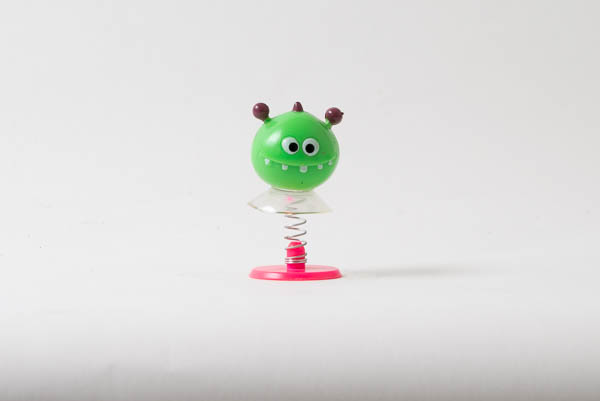
At the same time I was packing stuff away before moving, I set up a diffused stobe and a paper backdrop to act as a small ‘stage’ for taking photographs of individual objects, stripped of their context. This creature can be seen along to the right in the picture of the mantelpiece. Where fig.2 could be placed towards the documentary end of a spectrum running from found to constructed, this lies at the other extreme, tending towards the status of an advertising pack shot. Similarly fig.1 is devoid of context but perhaps alludes to such ideas as ‘walking a mile in someone else’s shoes’ and life as a journey. There is scope for the viewer to inject some of their own sense of self into my photograph, or possibly just to identify something of me and the things I may have done while wearing my battered Converse.

In the chapter on Still Life in Bate (2012) there is discussion of how the blank background of this sort of commercial photography can be seen as representing  death or eternity while the object pictured stands between the viewer and their inevitable demise. I like this as an underlying concept, with its beginning of an idea of what certain strands of my photography may be ‘for’. I think I shall try and develop this further, but probably not during the time remaining to me during this module…


Reference:

Bate, D. (2012) Photography – The Key Concepts Bloomsbury, London

Part 5: Research Point 1 – Metaphor and Photography

We are asked to read Chapter 4 ‘Something and Nothing’ of Charlotte Cotton’s  The Photograph as Contemporary Art and then to consider the following:

To what extent do you think the strategy of using objects or environments as metaphor is a useful tool in photography? When might it fall down?

– IaP Coursebook p.99

There is not a single mention of Metaphor  in Chapter 4 of Cotton, so I decided to do a bit of clarifying research. I found this online:

‘A metaphor is a figure of speech that describes an object or action in a way that isn’t literally true, but helps explain an idea or make a comparison.

Here are the basics:

metaphor states that one thing is another thing

It equates those two things not because they actually are the same, but for the sake of comparison or symbolism

If you take a metaphor literally, it will probably sound very strange (are there actually any sheep, black or otherwise, in your family?)

Metaphors are used in poetry, literature, and anytime someone wants to add some color to their language’

– Alice E.M. Underwood, Grammarly Blog


While I’m not really sure whether a classical rhetorical figure that is primarily concerned with written or spoken language can be applied directly to photographs without some bending and twisting,  to return to Magritte and that pipe that is not a pipe, and the first of Underwood’s statements (‘a metaphor states that one thing is another thing’) every photograph could be seen as a metaphor. What you see is a photograph, not the object portrayed. This just takes us back to discussions of indexicality (the seeming ability of the object photographed to have made its own image) and ontology (what photographs are); but it does not move us any further forward than that.

Then, with a bit more thought, you could take most of the work considered in Cotton’s chapter as the photographer taking a thing (a collection of objects found complete or assembled over the course of the photographer’s day or some action carried out by them) and saying simply ‘This is art!’ or even better ‘This is my art!’ The metaphorical content answers the standard question ‘Why did you photograph that?’ or ‘What is that a photograph of?’

As such, any photograph that is not presented as a documentary record  (another metaphor of course) could be acting out the post-Duchampian  dialogue described by Grayson Perry in Playing to the gallery (2014) – ‘this is art, because I – as an artist – say it is’. Each photograph becomes Post-Modernism in action. Bam! Ka-Pow! (as Roy Lichtenstein might have said).


Traditionally, figures of speech are primarily concerned with the rhetorical use of language, with the creation of specific meaning for an audience. The most obvious way to perform this sort of linguistic task with a photograph is through the titling. The contrast between the words and what is depicted can be used in a way that is productive of a meaning.

As a title,  ‘Quiet Afternoon’ does nothing to tell you what  is literally depicted  (a courgette a carrot and a grater balanced  on a green tablecloth. against a green background) in Fischli and Weiss’ photograph depicted on page 115 of Cotton’s book; it does describe the circumstances that led to its production. As such you can easily imagine the scene – two men, bored, passing the time by making ‘a sculpture’ from things that are to hand. The photograph is a record of their activity during this ‘Quiet Afternoon.’

(Many years ago, during our long summer vacations, my friends and I would sit in the back bar of the Queen’s Hotel in Kirkwall, making towers of our empty beer glasses. A photograph of the tower, could be titled ‘An evening with friends (1983).’ As such, it could be far more evocative than any photograph we actually did take at the time. Other people would be able to extrapolate from it what had been going on and what was depicted. I wish I had taken the time to make that picture, then. Now, in the unlikely event of finding myself in similar circumstances, I hope I would.)

The title ‘Untitled’ takes this one stage further, inviting the viewer to provide their own title and association for what it is they are looking at.  The empty bed depicted in Felix Gonzales-Torres’ 1991 untitled billboard invites your own metaphorical meaning – it becomes a picture of absence, of someone who is no longer in the bed, of the effect AIDS had on beds all over the world. Or there is the ‘Untitled’ of William Eggleston’s Memphis (and elsewhere) prompting the viewer to help in the creation of his semi-fictional 1960s American south…


This is all quite dry and cerebral – I could be over thinking things again – so, by way of an example: in May this year, I was over in Belfast for a couple of days’ work and had the evening to myself. As is my wont, I went for a walk with my camera. I passed an Orange Lodge and a park named after a Presbyterian minister. A number of gable ends had loyalist murals painted on them.

I photographed the murals in passing but knew I would probably never do anything with the pictures. They would form another layer of digital silt (a metaphor, by the way) on one of my hard drives. From time to time, I might see them in passing and then move on to something that would hold my attention for longer. If I am honest, I take a lot of photographs like that.

Then the way the light was falling on some litter in a carpark caught my eye.

There was some tangerine peel. And it was orange!

fig.1: majority – belfast

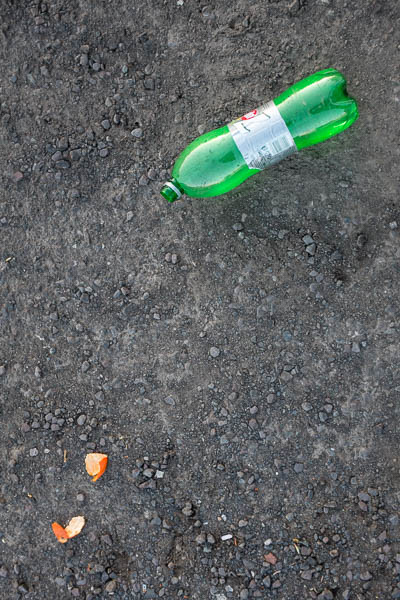
A bottle, caught by the low light, was very green standing out against the neutral grey of the compacted gravel!

fig.2: minority – belfast

I changed my angle to put them together within a single frame  getting an awkwardly balanced composition!

fig.3: power sharing – belfast

And then of course, as I add the pictures to my blog, here, I give the pictures apposite titles. I don’t anchor the text, instead I try to create a relay. Let the viewer find the links. And there you are!

I have succeeded (I think) in capturing and presenting a train of thought. Which is of course, yet another metaphor. There is also the tension between what is actually depicted – rubbish, waste, redundant packaging that has been discarded – and the still all too current (undiscarded) associations of ‘green’ and ‘orange’ in Belfast. It’s not the best thing I’ve ever done, but nor is it the worst.

You can do quite a lot with three images and some words, if only you can find some way of activating their possibilities. Rhetoric and figures of speech can be a way of doing this.


The potential weakness with all this lies in the way that any metaphor’s meaning is both historically and culturally determined. They seldom achieve either universality or constancy over time. If the metaphor’s comparison is outside the viewer’s frame of reference it may go unnoticed or possibly simply be misunderstood. I’m sure there are things in Daido Moriyama’s photographs that I do not pick up on, because I simply don’t know enough about Japanese culture at the time they were produced. Also, metaphors – like radioactive elements – tend to have a form of half-life as they decay and lose their impact with the strangeness that is an important part of their impact dissipating into cliche.

In 1991, Gonzales-Torres’ billboards may have chimed with an atmosphere of AIDS-awareness messages; now, twenty seven years later, that isn’t necessarily the first thing you think of (and Cotton, half-way between then and now already needed to make this association explicit in her book). Meanings change over time; so do associations.


In the end, a metaphor is just another possible punctum consciously placed there for the viewer to find. It may work for individuals, but is unlikely to grab and hold everyone. Over time it may lose it’s impact, becoming a dead metaphor (black sheep of the family is a nice example of this). A metaphor’s strength sis derived from its strangeness. Over time clashing ideas may cease to chime in a viewer’s head; in the end the vivid rhetorical image may lose its tang. After the passage of enough time, you might end up with the photograph just being a photograph…


Sylvia:

‘Colin – your muscles are like bands of steel!’

Colin:

Your similes will get you nowhere, Sylvia – it’s metaphors or nothing with me…

Sylvia (Later, after some research):

 Colin – your muscles are bands of steel!

Colin:

‘My Darling…’


Part of  a lesson on figures of speech given by George Rendall to class 1E at Kirkwall Grammar School, c. 1977. From memory.

If I remember aright, Colin was Colin Liddle and Sylvia, Sylvia Aim.


Reference:

  • Cotton, C. (2014) The Photograph as Contemporary Art (3rd edition) London: Thames & Hudson
  • Underwood, A E.M (2015) Metaphor. Post On Grammarly Blog (https://www.grammarly.com/blog/metaphor/) accessed 26/7/18

part 5 – project one: absence and signs of life

This section of the course opens on a quote by John Szarkowski from his introduction to William Eggleston’s Guide:

The real location, found objects and characters, combined with technology and the photographer’s eye, come together to create a new world, one balanced loosely between recognition and art.‘ (my emphasis)

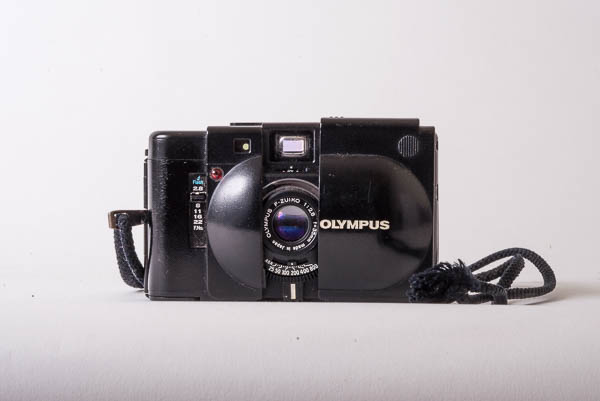
On the cover of the book is (the famous) picture of a tricycle, with some anonymous bungalows and a big American car viewed across the street in the background. One morning, as I walked up Theydon Street to the bus stop, I saw a tricycle parked outside one of the houses. I have known about Eggleston for years and although I had not yet started upon this course of study, I recognised this as an opportunity to make some (referential) art, of entering into the Eggleston’s world and of transplanting a tiny bit of his Memphis into my Walthamstow. I reached into my jacket pocket for the Olympus XA which lived there…

fig.1 – walthamstow c.2013

…and click. Like Eggleston, I took a single frame. It’s not quite right. I couldn’t get far enough away from the trike to centre it in the image (and in the space). The tip of the handlebars is annoyingly cut off. Perhaps I should have put the camera on the ground and abandoned looking through the viewfinder. So, I’ve never done anything with the picture til now, but I always think of it when I see Eggleston’s original.


But I digress. After reading the quote from Szarkowsky, we are asked to reflect upon:

  •  Where does that leave the photographer? As a storyteller or a history writer?

A story teller uses narrative to make sense of the society where they live, as they see it. There may be a level of serious intent to their story telling or they may simply hope to entertain. People like stories. We’ve been being told stories since we were kids. When someone asks us, ‘How was today’ or ‘What happened’ we will generally reply by telling a story of some sort.

A historian is just a specialised type of story teller, telling stories that attempt to give a single path through the chaos of events. ‘History’ tends to exist at some point in the past (when I was at school, it became ‘Modern Studies’ after a hard cut off in 1945; now my son is studying the subject it includes events which I remember happening as news). ‘History’ is an academic subject with rules that historians are supposed to follow; it has sub-genres such as ‘family history,’ ‘local history’ ‘social history’ etc. When ‘history’ becomes about an individual it becomes ‘biography’; when history is about people known to the historian or the historian him- or herself, it becomes an ‘autobiography’ or a ‘memoir’.

‘History’ is expected to be made up from a consideration of ‘facts’ stored as such in archives (public, private or personal). These facts – often contradictory; often subjective; always positioned politically in their own time – are then sifted and sorted and hammered into a – supposedly – definitive ‘truth’. This ‘definitive truth’ is in turn able to be examined as – secondary – source material for later attempts to come up with another even more definitive ‘truth.’

This need for history to be written with a degree of hindsight seems to rule out any idea of the photographer working as a historian; possibly a photographer could view their work as parallel to that of a journalist – writing the ‘first draft of history’ – but I suspect that, for me at least, there is a less noble impulse at work than that. I think I take pictures of things that catch my eye and which interest me with a view to putting them together into more meaningful collections later.

We are not historians, but perhaps we are trying to second guess history and to capture things that later, after they have acquired the patina that time can bestow, will become its building blocks. We lay up images as if they were wines, or cheese, in the hope that the mundane facts that surround us will become objects of fascination later on. Some – holiday snaps, news pictures, fashion photography perhaps – like yoghurt or cottage cheese, can be served almost as soon as they are done (although they may of course become more interesting in time) while others will need to age for longer, like parmesan or stilton, in order to acquire the patina of history.

  • Do you tend towards fact or fiction?

Since every photograph I take is of a thing (or a number of things) that have existed in front of my camera – that old question of indexicality popping up again – the basic building blocks of my practice as a photographer can be seen as somehow factual.  But the real magic happens when I put these building blocks together, when I decide that this 30th of a second, belongs next to that 125th.

Since every photograph I make is the product of a string of my decisions – I should stand here, I should cut off the frame there, I should open the shutter… NOW! – these individual facts are formed of – at best –  subjective truths. I exclude much more of my experience than I include. Where I stand in relation to the subject – to use the famous example, when I photograph a demonstration, am I standing with the protesters confronted by ‘the pigs’ or am I standing behind the policemen, looking at ‘the mob’ – will determine the nature of the fact that I present.

The french word histoire has fewer connotations of an academic pursuit than it does in its modern English form. Henry Fielding’s most famous novel has the full title, The History of Tom Jones, A Foundling; it is of course a fiction. It is also intended to be read as a story, with the reader aware that  – while all the things that happen in the book have probably happened somewhere, sometime – they are intended to draw lessons from it about life and society.

‘A fiction’ is not necessarily to be equated with ‘a lie’; but it does include an awareness of the extent to which it has been constructed from its elements. Eggleston painted a picture of a place that was very like the Memphis he lived in, but managed to distance himself (and the viewer) from any attempt to portray an all-encompassing portrait of the city. He is operating at some distance from W. Eugene Smith’s obsessive and doomed attempt to encapsulate all Pittsburgh. Eggleston tells his story (or possibly more accurately, recites his poem) about a place that is a bit like the real city of Memphis. I have seen him speak (at the National Portrait Gallery two Julys ago now) and when he does – even when he’s being probed by Sean O’Hagan – he’s giving nothing away…

  • How could you blend your approach?

I thinking blending could come from softening (or removing entirely) the relation between the subject matter and its original context. You can picture something in situ or you can take it away for photographic attention  later. If it is too large to move, you could picture it in some way that limits the clues about it circumstances from around it. The less there is to help ground something, the more easily it floats free in time and space. As such it becomes both more and less itself and less rooted in the specificity of where you found it.

The absence of people in Eggleston’s picture of the trike means there are none of the clues that we can read from people’s appearance. The title is vague – Untitled, Memphis c.1969-70. The (koda)colour palate of the film and the styling of the car glimpsed through the space under the trike’s frame help place the frame in time, but no more accurately than the title. The house in the background seems suburban, American. The tricycle, looming huge and abandoned, maybe says something about a type of childhood. Maybe the photographer’s, or maybe yours, the viewer’s.

Then you could take it one stage further and remove the tricycle from the scene entirely, putting it in front of a neutral backdrop. It would cease being something from the place that William Eggleston is guiding you through and become closer to occupying the space of an item from a catalogue of childhood.

  • Where is your departure from wanting/needing to depict reality?

Some things need to stick as close as they can to an objective reality; some things simply matter enormously in the here and now. These things probably will form part of histories yet to be written. Robert Capa’s Loyalist Militiaman at the Moment of Death, Cerro Muriano, September 5, 1936, still would be a striking photograph if it were a set-up, but once you start wondering about its provenance you have much less space in your head to consider what it means for people to be being killed, in Spain, on that hill at that time. This weakens its propagandistic value considerably. The title makes a huge claim for the photograph; if it is ‘a lie’ how can we trust the photographer? How can we trust the people who publish the picture? How can we trust the people who use the picture to gain our sympathy?

‘The camera never lies’ but if in fact it does (or rather the person wielding it lies about the photograph) how can we ever believe anything? We certainly can believe a little less in the cause of the Spanish republic and – if we were suffering this crisis in the nineteen thirties – become less likely to join the International Brigades or to donate money or to lobby our MPs to intervene.

To go back to Grenfell Tower and my previous assignment, it was important not to fabricate anything and to make sure that the pictures taken in the surroundings of the tower were not misdescribed by the words: the Avondale picture was taken from the Avondale Conservation Area; the Ladbroke picture was taken looking out from the heart of the Ladbroke Conservation Area. The blackened tower block with its empty windows needed no trickery in order to be recognisable as itself, even when partially hidden by trees of buildings. The words themselves are real sentences taken from the real planning documents, which are still available online. I have checked. I have been scrupulous.

I don’t think I would ask a militiaman to pretend he’s just been shot, but the way I presented my – verified, fact checked – words in the Grenfell assignment has no correlative in the objective world. I made those pictures from words printed in a ‘typed’ typeface scanned and then layered them onto a photograph of a record card; I rearranged the words from Gary Younge’s article in the Guardian so that they fitted the aspect ratio of my images, and missed out the other words that surrounded them. I tried my best (and I think I have succeeded) to hide my efforts to fabricate these ‘documents’ and, at their heart, the words – ‘real’ words, from ‘real’ records – are really true. The key thing here is that the viewer is not distracted from what the diptychs ‘mean’, by the facts of their construction.

In Barthes’ essay The Rhetoric of the Image, one of the things achieved by anchoring text is a reduction in the myriad number of possible meanings (the polysemous nature of the photograph) that an be drawn from a single image. It is this process of limiting meanings that allows pictures to be used as evidentiary ‘fact’

fig.2 – this is not my olympus xa

Most of the time it doesn’t matter a bit whether there is something made up about my photographs, any more than it does about the made up bits in novels which take place in the past and contain real events and real people – War and Peace, say or Pat Barker’s novels set  during the first world war that feature her imaginings of ‘Siegfried Sassoon’ and ‘Wilfred Owen.’ Where it does matter is when there are real (and notice I haven’t used inverted commas here) consequences to what the fiction means. There may well be corporate manslaughter charges as a result of the Grenfell inquiry; people have died; people may go to prison.

More trivially, a passport photograph has to look enough like the person holding the passport to allow a border official to identify them. While I would never cross a border without my glasses, I have to take off my glasses for a passport photo. I could  have recently grown a beard which will be shaved off years before my shiny new, ten-year passport expires. My passport picture both looks like me and it does not.

History is supposed to be objective; my experience of things that may form part of history is highly subjective, and rendered even more so by the set of decisions I make (consciously or subconsciously) as I take a photograph. All my pictures exist somewhere on a spectrum running from relatively uninflected to really rather constructed. If they seem to warrant a factual treatment, I’ll try to limit the range of available meanings to those that match my own take on the events; at other times, I’m happy to leave a much wider range of meaning for the viewer to piece together their own sense of what the picture is ‘about’ but even then, I try to limit the meanings to ones that fit ones that I’m comfortable with.

It’s all in the telling, I suppose.


When I look at my tricycle picture now, I still see Eggleston’s original, floating behind it (or maybe in front of it) but I also see a constellation of circles – the three wheels of the tricycle of course, three wheels on the cars over the street and the wheel at the side of the wheelie bin. And I really like the way the trike’s seat sits on the wheel of the black car. I don’t mind that it is an imperfect appropriation of Eggleston’s original. It is something else and that is just fine.

fig.3 – walthamstow c.2018

And, of course,  I still find myself thinking of William Eggleston from time to time, when I’m out with my camera.


Reference:

  • Eggleston, W – photographs –  & Szarkowski, J – introduction (1976) William Eggleston’s Guide Museum of Modern Art, New York.
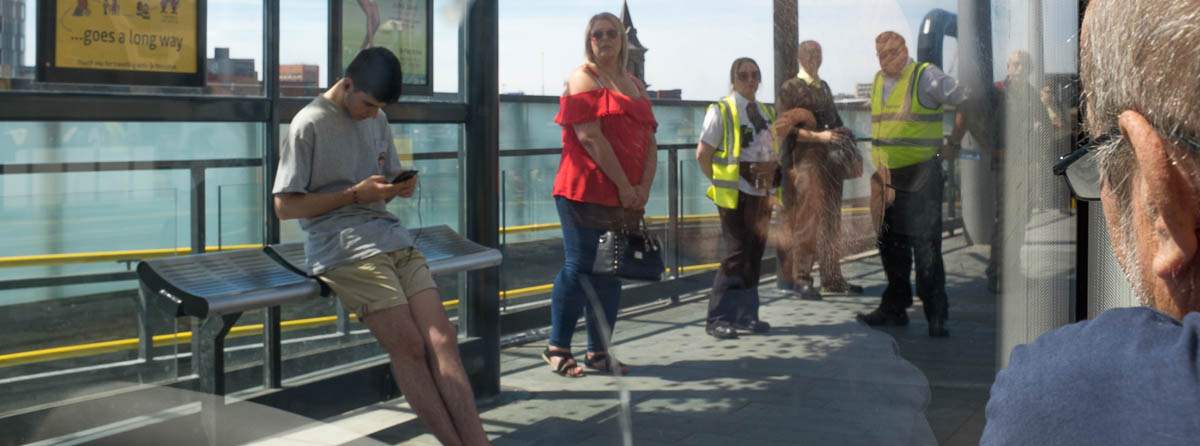
Assignment 4 – Reflection

1: Demonstration of technical and visual skills

I am happy with the pictures I have made for this assignment. There is a roughness about them  – they are not overly aestheticised; the tower tends to be in an awkwardly central, high point in the pictures; the edges of the frame are quite rough, often with ‘stuff’ intruding – and no there is no attempt to overpower the emotions of the viewer. Shot with a long lens (and sometimes cropped to exaggerate this) they are distanced from their subject as I am; they are about the relationship between the things they portray rather than about me and what I feel.

the guardian – journal p.2; 11/05/18

The photographs of the texts have all been created in photoshop: composites of scanned text and a photograph of an A6 record card for the planning quotes and a complete rearrangement of a sentence from the Gary Younge article in the Guardian to isolate the relevant words while still indicating their source.  I think it is interesting that – when looking for something that reads as ‘official’ – I still reach for a typewriter font (Courier) and lined record cards. Possibly a look closer to that of a screenshot would have been better.

I did experiment with some other post-production treatments of my west London pictures. Following on from my third assignment examination of Paul Graham’s recent work  I tried out the heavily over-exposed look he used in the first of his America shot bodies of work – American Night –  trying to find in almost totally white photographs a visual expression of people not wanting to look or to see the squalor and poverty in parts of US society, It was an interesting experiment in trying to make Grenfell Tower disappear even further into the haze above London (and to accentuate the plastic shroud that was being erected as I made my photographic expeditions into Notting Hill, but they added nothing to my project overall.

I also could have made more explicit links back to Rosler’s Bowery pictures: I could have converted the West London pictures back to black and white; I could have created a fake 35mm frame border and superimposed it on all the pictures. I did not, because that would have shifted the balance of the piece away from being about something that has happened and towards being a photographic piece about photography.


2: Quality of outcome

I think the 13 pictures (and one black space for punctuation) work well as a sequence. The texts and the related views develop and take on complexity as you work through them.

I have resisted any impulses to try and make this a more complex work – the temptation is always there to add more and more elements – estate agents’ notices for properties in the area; maps;  other commentaries from the papers; other words; this would only have the effect of diluting the sequence’s impact without adding any greater understanding.

I have tried it out on a number of people without giving them guidance as to what it is that they’re going to see; as a narrative it takes them through a simple sequence with them taking from it something of my desired meaning while leaving them space to interpret it themselves.


3: Demonstration of creativity

Quakerism (I’m not a Quaker, but never mind that here) includes the concept of being ‘moved to speak.’ This is a useful way to describe how I felt when I stumbled across the words that punctuate this short body of work – they pretty much instantly gave focus and a viewpoint onto something that I was already photographing but without really understanding why until that point.

As such it is fairly atypical of both my work and my normal subject matter; it is neither oblique in its politics nor concerned particularly with my own self-expression. However, I don’t think it is the start of my embracing some sort of neo-social documentary approach, but it has allowed me to make work that is definitely not about me. While I cannot rely on being sufficiently moved to make this a prerequisite of my engagement with a subject for other assignments going forward,  it is interesting to see that I can adopt a different and I hope quite powerful stance towards the world around me when the subject matter demands it.


4: Context:

For me, the most interesting thing about the journey I’ve made through this section of the course is just how applicable Martha Rosler’s critique of documentary photography is to images being made now, neatly bypassing the whole development of ‘art photography’ as a galley and auction house phenomenon over the last forty-odd years. Post Modernism may have led to a large number of highly enjoyable art works, but there are times (and subjects) which are not suited to a puckish high-concept approach. Rosler nailed this (and also the tendency of galleries to turn concerned works of the past into art objects) in the early eighties, before Post Modernism won and subjectivity ate everything.

While she did not set out anything approaching a manifesto for a politically committed documentary or even a set of techniques that might be used to develop one, she did provide a model for me to use to examine the relationship between words and pictures, intentions and deeds.

The natural home of documentary photography is not the gallery wall, or displayed boastfully on the walls of big corporations. I have already reflected that Grenfell Tower should not be used as a backdrop for selfies, or as subject matter that says more about the photographer than the thing in front of the camera. Perhaps I should also have stated that pictures of Grenfell probably shouldn’t be made into a limited edition run of enormous prints, designed as investments. Although of course, despite its 1974 premise and her later commentary upon it,  a vintage set of the pictures that make up Rosler’s Bowery would presumably be shockingly expensive if it was auctioned today, regardless of the motivation behind it…


exercise 4.2 – words and pictures

oxford circus as a gallery space

Choose a day that you can spend out and about looking with no particular agenda. Be conscious of how images and texts are presented to you in the real world – on billboards, in magazines and newspapers, and online, for example. Make notes in your learning log on some specific examples and reflect upon what impact the text has on how you read the overall message.

– IaP Coursebook p.79

Pictures on display –

fig.1 – an absense of beaches

The first pictures I see each morning usually are these, hanging outside the bathroom door. They are photo collages, assembled on a photocopier by German artist Ursula Keller  and purchased from the accountant I shared with her (or possibly the owner of the gallery in Glasgow that represented her) at the time they were exhibited there (around 1995).  The common title of the series – ‘Given the obvious lack of beaches’ – is based on a hopeful quote by Glasgow’s provost, Pat Lally, along the lines that ‘Given the obvious lack of beaches in the city, we need to give our visitors some alternatives.’ Keller had provided some beaches (and palm trees, and sunsets) from elsewhere and added them to Glasgow landmarks like the Barrowlands Ballroom and the University tower.  The title opens them up, preventing them from being merely an interesting visual jape and locating them in a place where they can comment on the shift of Glasgow from being ‘about’ heavy industry and razor gangs to being somewhere that was ‘Miles Better’ – a cultural rather than an industrial destination for people who did not live there.

fig 2 – polaroids

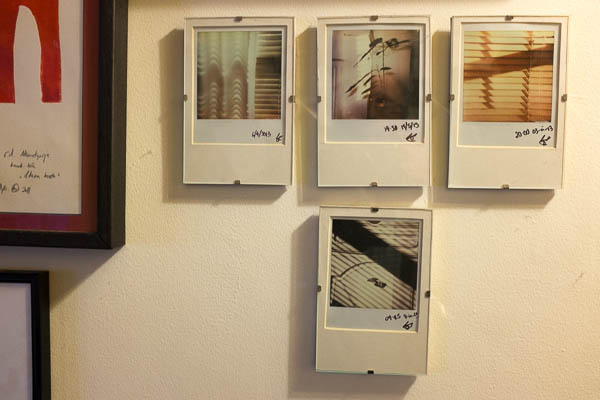
Another grouping of pictures in my house consists of four polaroids taken by me of shadows moving around the house’s rooms.

While Keller’s titles are complementary, these have simple date/time titles orientating the viewer to the point in time when these unique traces were plucked from the sun’s progression around the house.

They’re pretty abstract photographs – you need something to anchor them, if only to let you know that you’re looking at moments in time, and the patterns are made by that .


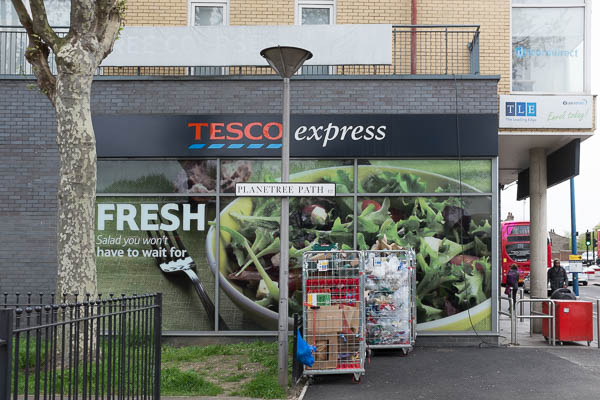
fig.3 – on the way to the tube

Images in the Street – 

As I cycle to the station, I see advertisements – on buses, on hoardings and on buildings. I go into Tesco to pick up the paper. The building itself is covered in pictures (to the left of fig.3 there’s a bowl of curry, labeled EASY) and surrounded by words. The text that jumps out here is the one they want you to notice (whether you are going to buy anything or not) – FRESH; it relates easily to the massive bowl of green salad. But it’s not quite as fresh as all that – like most of the food in an ‘express’ (or ‘local’) grocer’s the salad is preprepared, something covered by the small print – “Salad you won’t have to wait for” – this is a fuel stop, not an artisanal bakery or greengrocer. It’s opposite the station so you can pick up something for supper on your way home. But it’s the word FRESH that hooks you and sticks in your mind so you know that it’s an alternative, next time you need it.

fig.4 – you could be this person too (or if not, that one on the other side)

And then, when you enter the shop, you’re flanked by a pair of larger than life people offering you food (they are literally ‘putting food on the table’). One is male, one female. both are captioned with a very personal description of the food they have just made (from FRESH ingredients; from closer to scratch than popping a ready meal into the microwave) – these are ‘Jane’s Fishcakes for two, or one’ – you are invited to identify with these cooks; they are like you, they care about food, they smile invitingly, proud of their efforts. They even have their own signature dish…


They are also at odds with the reality of the inside of the shop of course, but never mind, you can aspire to the sort of life they seem to embody (even if it is possible to infer from that caption that Jane is currently single, and eating double portions to compensate) and maybe even go to a full-on supermarket (a ‘big’ Tesco) at the weekend, and do some proper cooking then.

I buy my paper and cross the road to the station…


On Public Transport –

On the tube (in the tube?) the sort of adverts and the amount and type of information varies according to how you will encounter them. London Underground is a complex machine for processing people and moving them from one place to another. There are places where people are expected to stand (on Platforms) and places where you really don’t want somebody to even break their step (in the concourses) and places that are somewhere in between (escalators, where people will stand – on the right – and move past the walls at a predictable speed). And then on the trains you will be static (sat, or strap hanging) for long enough to read text and even jot down a URL or phone number (or take your own picture with your phone).

I’m not sure whether it is men or women who are supposed to be drawn by the Heist tights’ ad: I quite like a shapely bum, but I’m not going to bet my bottom that my tights are better than theirs. Am I supposed to buy a pair for Fiona? Or do women look at other women’s pirouetting arses and want to emulate them? It has associated the word Heist in my mind with tights; with nice tights that do nice things to women’s bottoms; perhaps this is all it needs to do.

Versace Jeans are hardly evident in the pictures that line one of the station’s halls, but the pictures  – black and white, moodily lit, medium sized and in frames- combine with the cumulative display to create the idea of an exhibition in a gallery. Versace jeans are ‘art’ they are a cut above more vernacular jeans. But I’m still not likely to exit the station onto Oxford Street and buy a pair. But, again, the brand has stuck in my head with a set of associations. Boo Hoo (also plastered all over the station) clothing is a bit flash, a bit flirty, a bit young, a bit common; Versace is for people a bit older, with a bit more taste.

The London Transport adverts (posters) encouraging approved behaviours in us, the passengers, are obviously drawing on Gillian Wearing’s series from 1992-93 showing people with placards, but without the tension between the words on the placards (which in TFL pictures are printed, so official, rather than the handwritten interior statements in Wearing’s) and the appearance of the person depicted. Again there is a reference to art, but its effect here is to comfort: the people holding the placards smile; if we all did as the words say, the tube would be a nicer place.

(Interestingly at Euston, the same pictures have been modified – presumably by station staff – with the addition of glued on, handwritten statements, like “Welcome to Euston”; these instantly seem less corporate and more personal; I wondered if the particular TFL staff members in the altered pictures worked at that particular station)

Heading home from Oxford Street, who wouldn’t fancy a holiday, somewhere warm with a pool?  Heading home from Oxford Street after a had day’s shopping, feeling a bit skint, who wouldn’t fancy a chance to save some money  on that holiday? Don’t the kids look happy? don’t they seem free (as well as ‘free’)? Doesn’t the water look cool? Wouldn’t you like to be anywhere else but waiting for your train home?

And then, sitting on the train, you have time to look at the pictures arrayed above the heads of your fellow passengers. Often they have exemplary people, ready for you to identify with them and to find out more by reading before signing up to realise your dreams through education or through buying clothes or through  guaranteeing your family’s prosperity by insuring yourself before you die and leave them in penury or through investing in some sure-fire winner.

One of the things that is odd about the ‘Beach Body Ready?’ ad discussed on the OCA Blog  is that it is confrontational rather than aspirational. The Rodchenko-esque (another borrow from art) man looks off, like the woman who has realised her bold dream, into some future-tense middle-distance; the woman in the bikini looks at you daring you to eat her protein-rich whey powder and get into shape for the summer.

And I do wonder whether all the borrowings from art are to make the advertising people feel better about themselves and whether they are dropping in a bit of Rodchenko here, a bit of Gillian Wearing there as a way of nodding to the people who know like me (or you of course most likely if you’re reading this) that they’re capable of more somehow, like an actor saying ‘I don’t have to do this rubbish you know – Larry thought most highly of my Laertes…’


In the Newspapers –

I’ll be writing more about news pictures and their relation to their captions and headlines in a later exercise, but I’ll say something here about layout on the page and the cumulative effect of groups of photographs.

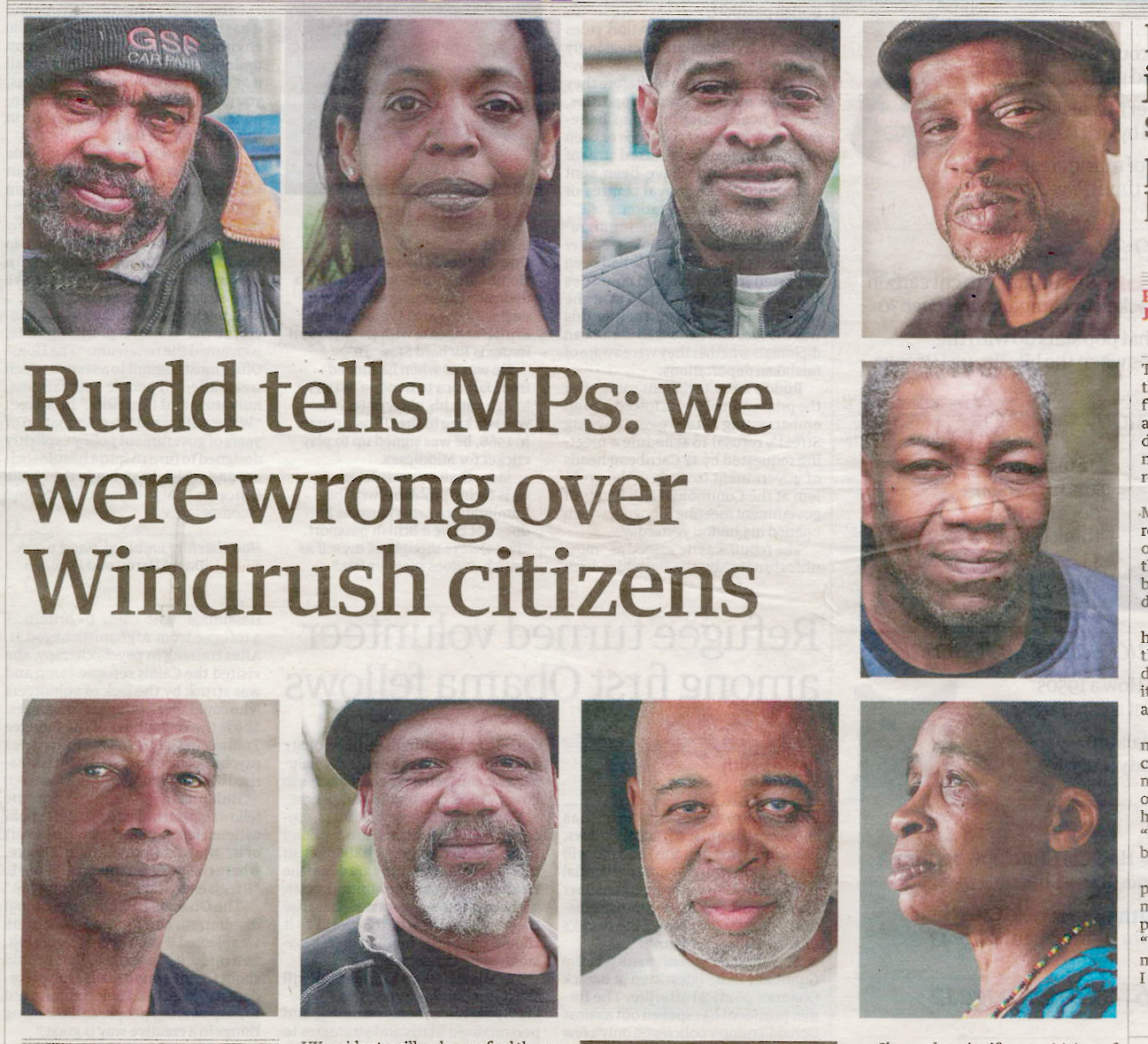
While i’ve been collecting newspaper pictures, there have been two stories that have been illustrated by galleries of faces – London knifings (in the Sun) and the Guardian’s investigation which kick-started the reexamination of how the home office treats immigrants. In both cases you are presented with a typology you don’t want to be a part of. In the first you have the victims of knife crime and in the other, the members of the Windrush generation, caught out by their lack of the necessary documentation and so threatened with deportation.

The knife victims’ pictures are obviously not taken by a professional – everything about them screams ‘cameraphone’; they are dead; the pictures have been provided by relatives or combed from social media sites. The pictures remind the viewer of other galleries – of the world trade centre dead or British armed forces’ personnel killed in Iraq, or last years victims of knife crime in London. You read the headline to find out about the specifics of the story, but you already know its outline.

The Windrush pictures on the other hand have been taken by a professional. Their arrangement still says ‘victim’, but there is still the chance of the shared situation they find themself in improving. After all, they’ve a newspaper and a professional photographer on their side. You read the text to find out who they are and what has been done to them. You hope that something will be done.


Specific, Technical Pictures –

We are in the middle of the process of selling my house and buying another one. We have now reached a point where we are poring over the survey of the house we are buying. It has a number of directly illustrative photographs, showing details of points that are described  in the text:

‘a previous masonry paint finish has been removed in recent years and defective bricks have been sensitively cut out and replaced (see fig. 10 which shows such a repair)’

…and that is exactly what you see when you look at the photo. Taken on their own they would seem a strange set of seemingly randomly chosen details; with the text the are of one thing and of that thing only. Later in the survey, it comments that another described detail is visible on Google Street view which is offered as evidence that a a specific crack has not got worse since the street view pictures were taken in 2008 and so appears to be long-standing and not anything to worry about.

In the survey the pictures are of things you – the emptor – should consider carefully as part of your caveating. There, look – we’ve told you; we don’t think it’s serious, but – if it turns out to be – don’t say you weren’t warned…

You can contrast these tightly composed pictures with the expansive wide shots of my flat (or indeed the house that we are buying) from the estate agents’ sales brochures. There the pictures are about conjuring up as much space as possible and drawing you in to imagine living in such a place with ‘high ceilings’ and a ‘large kitchen diner’ opening onto a ’50 foot garden’… Yes please!


Most of the pictures I see in my day-to-day life are presented to me as hooks, designed to get my attention and draw me into reading some text. That text tends to tell me what it is I’m looking at, particularly if there is any potential ambiguity in what the image ‘is of’.

Assignment 4 – A coda

At the end of my second walk taking photographs for this assignment (down from Ladbroke Grove and through the Avondale conservation area) I noticed a laminated notice cable-tied to the railings of the western-most spur of maisonettes that fan out south from the base of Grenfell Tower. I bent down and read it.

I hadn’t noticed the laminate during my first walk (around the tower site) and so already had a lot of photographs taken from quite close to the tower’s base with a long lens. They showed damage to the tower in considerable detail. I had also taken pictures which showed how the remaining members of the community were both memorialising the fire and it victims while trying to gain some control over the narrative of the fire in preparation for the upcoming enquiry.

At the end of that first walk, as I was waiting to get the tube at Latimer Road station (one of the stations where the platforms are on the surface) I saw the tower looming over the awning on the other side of the tracks. It was quite a striking image. As I raised my camera and a woman told me sternly: ‘Some people round here don’t like people taking photographs of the tower.’ I stopped and thought. ‘Doesn’t it depend what you do with them’ I said? ‘Just saying’ said the woman, turning away while clearly putting herself in the no photographs group. I didn’t take that picture.  But I did make my second walk up over the hill and  down from Holland Park, taking photographs of the tower as I went.

At this point I could have (perhaps should have; still not sure) simply shelved the project and found something else to do for this assignment. I didn’t, so why?


This ties in almost too neatly with the opening of section two of Rosler’s In, around and afterthoughts (1981) where she reflects on the reaction by the residents of the Bowery to being photographed (‘you are likely to be met with hostility, for the men on the Bowery are not particularly interested in immortality and stardom, and they’ve had plenty of experience with the Nikon set’) and where the people can reasonably be described as ‘victims of the camera‘. This  leads on to her discussion of the fearless documentarian, risking all to bring back their despatches from the edge.

I had no interest in using my camera as a tool to make victims of the people who still live around Grenfell Tower or of seeking out survivors of the fire for inclusion here. They were already well advanced in the process of creating their own narrative(s) and memorials and these activities have fed into the enquiry and the press. They have successfully broken down the monolithic idea of ‘the dead’ into a series of portraits of individuals –  real people with lives and hopes and fears. The local community  – supported by sections of the press – are doing this without any help from me. They have a voice and they are using it at the enquiry, in the media and on the streets.

While I did not abandon what I was doing, I realised that I certainly needed to be careful in setting its scope. I already knew that what I was doing involved real, serious subject matter. While I could not untake the pictures I had already taken (I could have deleted them from my hard disks of course, but that is something I have great difficulty doing, even in the case of images which are wildly deficient in some way) I could reassess which of them I would use.

I resolved to use only pictures where there was an obvious distance between the tower and my camera. Ideally there would be some sort of object – a leafless tree, some fencing a row of terraced houses – partially occluding the view. There would be no ‘stolen’ pictures of people (going through my contact sheets, there weren’t any of those anyway). There would be no attempt to aestheticise the pictures or to awaken in the viewer their sense of the sublime. The photographs would show what the tower looked like from outside its immediate area. They would only be there to contrast with the statements from the planning documents. They would not draw attention to me, the photographer.


I think the key thing here is not whether you take photographs  but rather what sort of pictures you do take and what you do with them afterwards. Don’t take selfies with the tower in the background. Don’t stick the pictures up on Facebook or Instagram as if you had just come back from holiday or had a nice meal. Have a clear idea why you are taking photographs in the first place. Remember that getting involved with real events is a political action before it is an artistic one.

(I am, of course, also aware of the irony that this post is in part ‘about me’ and how – while I did not take physical risks in making this work – I have potentially placed myself in a place of moral and ethical hazard. Such is my bravery. Such is my burning need to show you the truth.)

I don’t think the act of taking photographs is automatically hurtful (or for that matter automatically beneficial either). While I made most of the pictures for this assignment with my D610, I don’t aspire to be part of Rosler’s ‘Nikon set.’

I don’t think my assignment is disrespectful either to the dead or to the living. It expresses a truth, but that of course is only a partial truth. There is plenty in the Royal Borough of Kensington and Chelsea planning documents which is not concerned with the visual impact of the refurbished tower. If there is a problem with all this, and my response to it, it can be found somewhere in the certainty with which I seized upon the gap between some words and their visual  contradiction as being suitable raw material for what is simply an assignment making up part of a course…


Assignment 4 – Words and Pictures

Assignment 4: Proposed Installation Layout


1: The Pictures

This slideshow requires JavaScript.

To view the pictures larger, click on fig.1 and then scroll through the rest.


2: Statement

When I started thinking seriously about this assignment in January, I didn’t realise that it would turn out to be as hotly topical as it appears to be now. I did not know that, as I began to write this introduction, the Guardian would be running a week-long series of short biographies of each of the seventy two dead; or that the next issue of the London Review of Books will contain one single article – an investigation into the Grenfell Tower fire and its political aftermath by Andrew O’Hagan. I did not know that the Grenfell enquiry would be finishing its second week as I prepared the pictures for printing. And I did not realise that the fire, its horror and its possible causes would be all over the media once again.

There are a lot of words and a lot of pictures out there at the moment; can mine possibly add anything to them that hasn’t been said or shown elsewhere, better? Possibly not.

But then, most of the media coverage has been aimed straight at the public’s emotions, maybe with the aim of disarming them. We are all angry and we are all looking for individuals to blame. Perhaps we are – once again – being misdirected.

This series should perhaps be seen as structured around a simple rhetorical figure. Each diptych panel comprises an oxymoron – a direct statement of opposites. The texts and the photographs do not easily occupy the same space (or at any rate they should not); in the gulf that separates them, it is to be hoped that the viewer – who, like me, is more likely to be the sort of person who has benefitted from housing policy over the last forty odd years – will find space to consider how the stated goal of an action could fall so short of its mark and of the way the people who actually lived there were never truly at the heart of the rationale for the tower block’s renovation.

The pictures here are mine but – like Martha Rosler’s 1974 photographs of the Bronx – ‘they are not ‘reality newly viewed.’ There are only a limited number of places that you can get a  recogniseable view of Grenfell and in researching this, I have seen minor variations on almost every picture I have taken as I circled the tower and the scaffolding, watching the grey shroud creep up floor by floor and week by week.

The words quoted from the Kensington and Chelsea Planning documents in the first four diptychs shown here are certainly not mine either; while they more closely match my position, nor are Gary Younge’s in the sixth.

What is mine – what I hope comes across here – is the disbelief I felt when I first read the extracts from the planning documents and saw the direct contradiction between the words and their final outcome, shown in the pictures. That, and some sense that something about the whole way we treat where we live needs to change.


Assignment 4 – Work in Progress

underneath the west way

The materials proposed will provide the building with a fresh appearance that will not be harmful to the area or views around it. Due to its height the tower is visible from the adjacent Avondale Conservation Area to the south and the Ladbroke Conservation Area to the east, The changes to the existing tower will improve its appearance especially when viewed from the surrounding area. Therefore views into and out of the conservation areas will be improved by the proposals.

Planning Application, 2014, for the refurbishment of Grenfell Tower, London

I have had my words ready for this assignment since last November: I had taken the short paragraph (a condensation of the planning summary for the refurbishment of Grenfell tower) from the introduction to Darren McGarvey’s book, Poverty Safari: Understanding the Anger of Britain’s Underclass. I made searches online found those paragraphs among the public records on the Royal Borough of Kensington and Chelsea’s planning department site (the case reference is PP/12/04097) and decompiled them, breaking them down into short sentences.

Then, by splitting the reference to the Ladbroke and the Avondale conservation areas into two, I had five short texts and a reference. I also – from the planning proposal documentation had the internal document references for the individual sentences.

To balance the words, one picture for each sentence, I therefore needed five photographs. This later rose to six, after I had decided that a paragraph from a Guardian article – The powerful will only see tragedy when it suits them (11/05/18) – would round the narrative out, opening it up to be about more than the Grenfell fire itself.


By the end of March, I had amassed a number of photographs of Grenfell tower. In addition to those I’d taken from Wood Lane on my way to and from work, I had made four walks around the surrounding areas of west London.

This process repeated my journey around Kirkwall taking pictures from the four points of the compass forming part of my square mile exercise at the start of this module. Just as St Magnus Cathedral stands out from the Kirkwall skyline, Grenfell Tower is ever present – appearing above the roofline of terraced streets or through gaps in the buildings as you move in a wide circle around it.

My first shoot in January took me close to the tower itself. The second ranged up over the hill from Holland Park and down through the two conservation areas named in the planning documents towards the tower. From a bus, I had seen that there was a point on  Holland Park Avenue where you got very clear views of the tower; I went back and took a small number of views.  Finally, I went for a walk up to the north and back down under the A40 to get some pictures from that viewpoint.


Having gathered my words and pictures, I started pulling in the set of references that (I hope) give context to this small body of work made in the streets around Grenfell Tower.

Joel Meyerowitz World Trade Center Archive (and David Campany’s thoughts on late photography) seemed a good place to start. Although Meyerowitz took his photographs as an insider (a New Yorker, he felt a powerful need to be involved in some way in the ongoing narrative of 9/11) I already knew that what I was doing should not aspire to being a ‘mirror’.  I can only act as an outsider looking in at the Grenfell fire. It is not my tragedy and this work cannot reasonably be about me.

I needed something to give me a different formal approach. Martha Rosler was suggested by my earlier reading of the extended examination of Dorothea Lange’s Migrant Mother in Liz Wells’ Photography – A Critical Introduction where it is one of the critical texts discussed by Wells and her co-author, Derrick Price. I had been struck by her juxtaposition of text with flat, uninflected photographs of the fronts of buildings in the Bowery seemed to offer a way to combine words and pictures in a way that managed to be critical of the social position that they were derived from; her description of both strands as ‘inadequate systems’ also neatly captured my sense of powerlessness when confronted by the awfulness of the fire.

I had already decided not to use any of my location photographs that included ‘found’ text.

(fig.1 shows a sign that appeared one morning along my route to work; suspecting it would not be there long, I took a picture; sure enough, it had been removed by lunchtime)

I am not trying to appropriate other people’s words nor to make myself appear closer to the experience of the fire than I am. I am not trying to awaken the conscience of any audience these pictures may have; you are free to draw your own conclusions from them. Of course, I hope your conclusion will be close to my own, but there is – I think – scope for variation.

To achieve this I have appropriated Rosler’s presentation – double-width panels with photographed text on one side and documentary-style photographs on the other – wholesale. Where she worked in black and white (The bowery in two inadequate descriptive systems is a pre-Egglestone, pre-Shore, pre-non-commercial-use-of-colour work) I have chosen colour. It is the way we see the world now, and black and white can seem simply to be an appeal to judge pictures as art, or against photographs taken during the heroic age of photo journalism between the 1930s and the mid-seventies. I have not tried to aestheticise the street views; they are plain pictures which are not aiming for any profound emotional response. Unlike Meyerowitz, I am not reaching for the sublime.

I manufactured the record cards with text which make up six of the thirteen assignment pictures in photoshop – they are not records or sentences, they are pictures of words presented in a way which I hope signifies. They should be read as such.

The brief for this assignment asks for an open narrative (one which does not overly direct the viewer along a specific track to a pre-ordained closure); I have tried to leave space for viewers to work with the words and the pictures, deriving their own meaning as they pass through the sequence of untitled pictures. If the pictures of text are viewed as captions, I hope they act as relays, setting off flurries of association rather than as anchors, keeping the pictures in place as simple illustrations of fact.

The planning permission sentences all concern the surface appearance of the tower, after cladding has been applied. They seem only to be concerned with the needs of people who do not live in the tower. The refurbishment’s effects will not simply be benign; they shall be positively beneficial. The pictures give the lie to this. In the gulf between words and pictures, between intention and result, I think there exists sufficient space for reflection, for the viewer to draw their own conclusions.

If I wished, I could give my assignment the emotive title, The Road to Hell… 

But I shall not. I believe my intentions are good, but there is no sense in tempting fate.


Proposed Installation Layout. With apologies to Martha Rosler.


Reference:

  • The Royal Borough of Kensington and Chelsea, Planning and Building Control CasePP/12/04097  (Accessed Online – 26/5/18)
  • Hattenstone S (text), Healey A (video), Sinibaldi C (photographs): Living with the tower – life in the shadow of Grenfell Guardian (18/11/17) , London (Accessed Online – 26/5/18)
  • ed. Wells, L (2009) Photography: A Critical Introduction. 4th Edition, Routledge, London.
  • Younge G: The powerful will only see tragedy when it suits them Guardian (11/5/18), London (Accessed Online – 03/06/18)

Other works referred to in passing here are referenced fully in the earlier posts which deal with them in more depth.